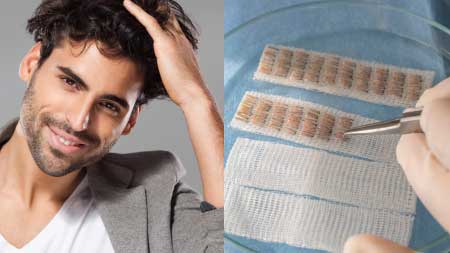
Choi pen
Direct implantation
Density
Unshaven
Precision
DHI hair transplant
DHI, short for Direct Hair Implantation, is a precise way of placing grafts in hair restoration. With the Choi implanter pen, the surgeon places each graft one by one, without cutting channels first, for a natural look that is hard to match. In Istanbul, our surgeons carry it out day in, day out, across thousands of procedures.
The DHI technique in brief
Hospital stay
Outpatient
Procedure duration
6 to 8 hours
Results visible after
10 to 14 months

Medical validation
What exactly is a DHI hair transplant?

Losing your hair is rarely just about looks. What changes is the face you meet in the mirror each morning, and with it, your confidence. Before we get to the fix, let’s look at why hair falls out in the first place.
Why do we lose our hair?
In the vast majority of cases, hair loss comes down to androgenetic alopecia, an inherited sensitivity of the follicles to a hormone: DHT (dihydrotestosterone). This hormone, derived from testosterone, slowly shrinks the hair follicles. The hair grows finer and shorter, until it stops growing back at all.
The pattern is predictable. In men it is mapped by the Norwood scale (from slight temple recession at stage 2 through to complete baldness at stage 7), and in women by the Ludwig scale, two references that the BASP classification has since brought together for both sexes (Lee et al., 2007). Getting to grips with the natural hair cycle and the part DHT plays helps explain why some areas of the scalp thin while others hold firm.

Here is the key point: the hair at the back of the head (the occipital area) isn’t sensitive to DHT. That’s why it’s used as the donor area in a transplant. Once moved, these follicles keep their genetic resistance and don’t fall out, even in an area that was going bald. That is what makes a hair transplant permanent.
The idea behind DHI
DHI (Direct Hair Implantation) is the most advanced hair transplant technique available today. It’s a direct evolution of the classic FUE technique, and the two share the same way of extracting follicles. Where they part company is at the implantation stage.
With FUE, the surgeon first has to create tiny channels in the balding area (using steel or sapphire blades), then place the grafts into them one by one. Three separate steps: extraction, channel creation, implantation.

With DHI, those last two steps merge into one, thanks to the Choi implanter pen. The surgeon loads each follicle into the pen and places it straight into the scalp, controlling three decisive settings: the angle of implantation (to match the natural lie of the hair), the depth and the direction. The needle opens the skin as the graft goes in, so there is no separate channel-cutting stage. How long grafts stay out of the body still depends on the team’s workflow.

And that is exactly what changes everything for the patient. In a hair transplant, every minute counts: the longer a graft stays out of its environment, the more its chances drop. Specialists call this the ischaemia time, and it is one of the main factors in how well grafts take, alongside hydration and gentle handling (Parsley & Perez-Meza, 2010).
The Choi pen: precision in a single tool

Invented in 1992 at Kyungpook National University in South Korea, the Choi pen looks like a thick pen with a hollow needle at its tip. The hollow needle is sized to the follicle being implanted, so the surgeon can pick the right tool for each hair type. The needles are single-use, replaced for every patient.
During the procedure, the team works with 5 to 10 Choi pens in rotation. While one technician loads the freshly extracted follicles, the surgeon implants without pause. This synchronised choreography, which needs at least one surgeon and two trained assistants, makes DHI both quick and gentle on the grafts.
One more point: not every surgeon offers DHI. The learning curve on the Choi pen is much longer than for classic FUE. Mastering direct implantation takes hundreds of hours of practice and a real volume of procedures. That is why the choice of surgeon matters so much.
DHI, FUE and Sapphire: the real differences
You often hear that DHI is “better” than FUE. The truth is more nuanced. Each technique has its strengths, and the right choice depends on your situation. Here is a factual comparison:
| Criterion | Metal FUE | Sapphire FUE | DHI (Choi pen) |
| Extraction | Micro-punch | Micro-punch | Micro-punch |
| Channel creation | Steel blade | Sapphire blade | None (Choi pen) |
| Implantation | Manual (forceps) | Manual (forceps) | Direct (Choi pen) |
| Number of steps | 3 | 3 | 2 |
| Graft survival rate | 85 to 93% | 88 to 95% | 90 to 97% |
| Healing | 10-14 days | 7-10 days | 7-10 days |
| Unshaven transplant | Difficult | Difficult | Possible |
| Max grafts/session | 5000+ | 5000+ | 2000 to 3500 |
| Typical use | Larger areas | Larger areas | Hairline and targeted zones |
| Expertise required | Larger areas | Larger areas | Hairline and targeted zones |

Metal FUE is the original, reliable and well-proven technique. Sapphire FUE improves healing thanks to the fineness of its blades. DHI goes a step further by removing the incision stage and cutting the time grafts spend outside the body. One detail to keep in mind: manual extraction of the grafts (as opposed to the motorised micro-punch) can be used with any implantation technique you choose.
To go further, our dedicated article DHI vs FUE walks through every deciding factor.
The steps of a DHI transplant
Consultation and hair assessment
It all starts with a thorough chat with your surgeon. They examine your donor area, assess the stage of your hair loss (using the Norwood scale for men) and draw your future hairline, taking in the symmetry of your face and what you want. This is also the moment to ask every question and to settle the treatment plan together.
Preparation and anaesthetic on the day
The surgeon marks out the donor and recipient areas with a pen. A needle-free pre-anaesthetic goes on first for your comfort, followed by the local anaesthetic. The team sets up the tray with Choi pens calibrated to the thickness of your follicles. Once the anaesthetic has taken effect, the area itself is numb.
Extracting the follicles
The grafts are taken one by one from the donor area (mainly the nape) using micro-punches 0.7 to 0.9 mm across. Each follicle is checked under a microscope, sorted by how many hairs it holds (single, double, triple) and kept in an enriched saline solution. If the occipital area isn’t enough, grafts can be taken from the beard or chest (BHT).
Direct implantation with the Choi pen
This is the heart of DHI. The follicles are loaded into the Choi pens and implanted straight into the recipient area. The surgeon controls the angle, the depth and the direction of each graft for a result that looks completely natural. The team works in rotation with several pens to keep a steady pace. If your surgeon has recommended PRP, it is carried out during this phase to help the grafts take.
End of the procedure and aftercare instructions
The procedure lasts 6 to 8 hours on average, depending on the number of grafts. For larger cases (more than 3500 grafts), it can be split over two days. At the end, you leave with detailed aftercare instructions. Your first shampoo, done the next day, is supervised by our nursing staff to show you the right way to do it.
How much does a DHI hair transplant cost?
It’s often the first question people ask, and a fair one. The price of a DHI transplant depends on several things, and it varies a lot from one country to the next. The exact figures for our packages sit in the price grid, just below. First, here’s what drives the differences.
What makes the price vary

The number of grafts (the hair follicles to be transplanted) is the first factor. The wider the balding area, the longer the procedure and the more follicles you need. A transplant on the frontal temples (Norwood stage 2 to 3) isn’t the same volume as full coverage of the crown (stage 5 to 6).
The surgeon’s experience weighs in too. DHI calls for more skill than classic FUE: handling the Choi pen, coordinating with the assistants, keeping up the implantation rhythm. The most experienced surgeons, with thousands of DHI procedures behind them, are naturally in higher demand.
The equipment plays its part as well. The Choi pen is a precision, single-use consumable: each procedure gets through 15 to 20 of them, changed for every patient. That added cost is part of why DHI stays a little dearer than classic FUE.
Why Turkey changes the picture

Istanbul has become the hair transplant capital of the world, and that’s no accident. The sheer number of procedures done each year in the city’s clinics gives Turkish surgeons a level of hands-on experience that’s hard to match anywhere else. That concentration of skill shows in the results.
The other advantage, and not a small one, is cost. Having your hair transplant in Turkey means up to 70% savings on UK prices, with no compromise on quality. The gap comes down to the cost of living and running costs, not the standard of care. If you’re weighing up other destinations, our guides compare the options in Hungary and Tunisia, and our dedicated article breaks down the price of a hair transplant country by country. For an honest look at the precautions to take, have a read of our article on the risks of a transplant in Turkey.
What’s included in the Body Expert DHI package

At Body Expert, there are no nasty surprises: our DHI transplant in Turkey package really is all-inclusive. The exact price, technique by technique, is in the grid below. Here’s what it covers.
Before surgery: a pre-op consultation with your surgeon and a personalised design of your hairline.
On the day: needle-free pre-anaesthetic, local anaesthetic, extraction and DHI implantation with the Choi pen, with an unlimited number of grafts.
Your stay: 3 nights in a 5-star hotel with breakfast, and all the airport, hotel and clinic transfers in a VIP vehicle.
Your support: a dedicated personal English-speaking assistant, with you from the moment you land in Istanbul until you leave.
Your follow-up: 12 months of remote follow-up with your progress photos.

Get back to dense, natural hair
Send us your photos for a free hair assessment and a personalised treatment plan, with a reply from our experts within 24 hours.
OUR PRICES AND PACKAGES
DHI
Offre et tarif : DHI
Feel free to scroll through the different prices from right to left!
The benefits of a DHI transplant
Why do more and more patients choose DHI? Here are the four main clinical benefits of the technique.
-
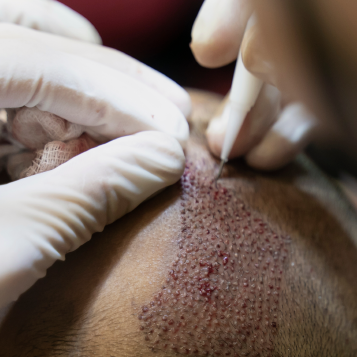 Precision and control over implantation
The Choi pen gives the surgeon precise control over the angle, depth and direction of each implanted follicle. The result: an undetectable hairline and hair that follows your natural growth pattern. It’s the ideal technique for visible areas like the forehead and temples.
-
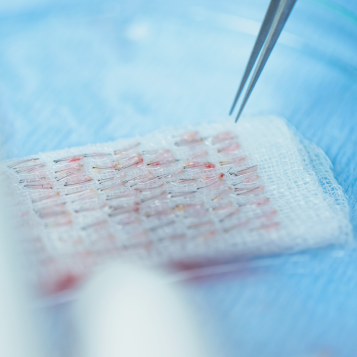 Time outside the body kept to a minimum
With DHI, there is no separate stage of cutting channels before the grafts go in. The follicles are loaded into the Choi pen and placed as the needle enters. Less time outside the body means grafts that take well in experienced hands.
-
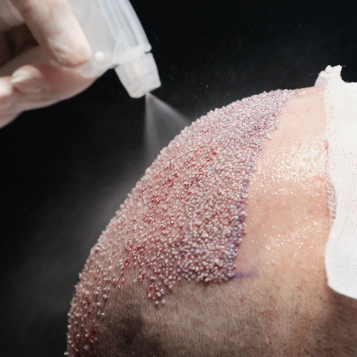 Faster healing, less trauma
The Choi pen does not pre-cut a grid of channels, which can mean a lighter surface wound. Scabs still typically take around 7 to 10 days to drop off, as with other FUE-based methods.
-
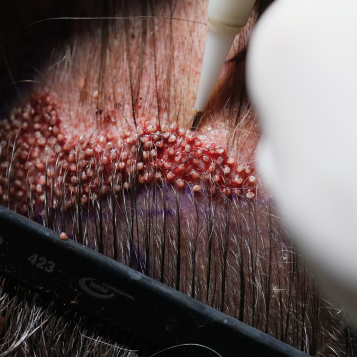 A transplant without shaving the recipient area
This is one of DHI’s big strengths. The Choi pen can implant between existing hairs, without shaving. Ideal for women, for patients who want to keep things discreet, or to thicken a sparse area without touching the rest of the hair.


Results after a DHI transplant: what to expect, month by month
Going ahead with a DHI transplant? Here’s what actually happens next. Hair regrowth is a biological process that follows a set timetable, and it helps to have realistic expectations so you can take the whole thing in your stride.
The first two weeks: healing

Right after surgery, your scalp will be red and tender. Redness is expected. Small scabs form around each implant point. They drop off on their own in 7 to 10 days. A little swelling (oedema) can slip down onto the forehead and around the eyes for 2 to 3 days. Nothing to worry about, it’s a common reaction that clears by itself. Gently massaging the forehead with a moisturiser and drinking plenty of water speeds things up.
During this period, the instructions are strict and non-negotiable:
Sleep. Sleep semi-upright, with your upper body raised to at least 30°, using a neck pillow, for the first 7 nights. It’s essential for protecting the grafts and avoiding swelling. From the 8th night, you can go back to your usual position. Everything is in our guide on how to sleep after a hair transplant.
Hygiene. The first shampoo after a transplant is done at the clinic by our nursing staff the next day. They show you the right technique. For the first 10 washes, you use the lotion and shampoo from the aftercare kit, applied gently, and rinse under a low-pressure jet of lukewarm water. Skip gel, spray and wax for about 1 month, and colouring for 3 months. From months 4 to 9 you can cut and style as usual.
Off-limits activities. Intimacy is off the table for 7 days (the rush of blood to the scalp can undermine how the grafts anchor). No sun exposure, no sport, no wearing a helmet. Alcohol and tobacco are strongly discouraged, as they slow healing.
Our full guide to aftercare sets out each instruction day by day.
Weeks 2 to 6: shock loss (temporary shedding)
This is the phase that worries people most, and yet it’s a good sign. Between the 2nd and 6th week, the transplanted hairs fall out. Almost all of them. This is called shock loss, and it’s completely normal, even encouraging. It means the follicles have anchored properly in the scalp and are entering a resting phase (the telogen phase of the hair cycle) before producing new hair.

During this time, your head can look much as it did before the transplant. That’s hard psychologically, but keep in mind that the roots are firmly in place under the skin. The hairs that fall aren’t “lost”: only the hair shaft has come away, the bulb stays alive and active beneath the scalp. For more on the scabs that appear after a transplant, we’ve written a dedicated guide.
Months 3 to 4: the first hairs appear

The moment you’ve been waiting for. Fine, short hairs start to come through in the transplanted area. They’re often lighter and finer than the final hair, which is perfectly normal. Your hair grows about 1 cm a month. Each week brings a visible improvement, even if the final result is still a way off.
Months 6 to 9: filling in

This is where the change becomes really visible. The hair thickens, darkens and gains texture. Density climbs noticeably week by week. Your hairline takes shape. You can start styling your new hair normally. To see real examples of this progress, take a look at our before and after results and our detailed article on how a hair transplant develops month by month. Some celebrities are now happy to talk openly about their own hair transplant.
Months 12 to 18: the final result

The grafts reach full maturity. Density is at its best. The hair has its final texture, colour and thickness back. The result is permanent: the follicles transplanted from the donor area keep their original genetic code, resistant to DHT, which means they aren’t programmed to fall out. That’s the real strength of a hair transplant.
Our guide to life after a hair transplant is with you at every stage of this change.
Is DHI right for you?
DHI suits a wide range of patients, but some situations make it a particularly good fit. Here’s how to tell whether it’s the right technique for you.
The ideal candidates
You’re a good candidate for DHI if you have alopecia at stage 2 to 5 on the Norwood scale, with a donor area that’s dense enough (nape, temples, or even the beard as a top-up). DHI is especially recommended in the following cases:

Work on the hairline and temples. This is the most visible zone, where the smallest detail counts. The millimetre-level control of the Choi pen creates a natural hairline, with those slight irregularities that make hair look real rather than “planted”. For patients with receding temples, DHI is often the technique of choice.
Thickening sparse areas. If you still have hair but it’s thinning (crown, temples), DHI can implant between the existing hairs without damaging them. That’s a big advantage over FUE, which needs channels cut and so risks harming the neighbouring follicles.
Patients who want an unshaven transplant. It’s possible with DHI, whereas it’s far trickier with FUE. A major plus for anyone who’d rather their friends and family didn’t notice.
DHI for women

Female hair loss is still a bit of a taboo, and yet it affects more and more patients. DHI is the technique of choice for women because it can be done without shaving the recipient area, keeping the existing hair intact for total discretion.
Female hair loss usually shows up differently from men’s: a diffuse thinning over the top of the head, without a receding hairline. DHI is ideal for filling in these sparse areas by implanting between the hairs already there, follicle by follicle.
DHI on afro and coily hair

Afro and coily hair has a particular feature: the follicles curve naturally into a C shape beneath the scalp. That curve makes extraction trickier and raises the risk of transection (a follicle cut during removal). With its implantation precision, DHI is especially useful for these hair types, as it respects the natural growth angle of coily hair.
At Body Expert, our surgeons are trained to work with every hair type, including afro and coily hair. Here, the surgeon’s experience counts for even more than it does with straight hair.
The question of age

People often ask us whether there’s a minimum or maximum age for a DHI transplant. We generally suggest waiting until at least 25, so the hair loss has time to settle. Going ahead too early risks needing touch-ups if the loss carries on. Our article on the right age for a transplant runs through the criteria. A transplant is still perfectly possible after 50, as long as the donor area is viable.
And if DHI isn’t the right option?

DHI isn’t always the best choice. For very large areas to cover (Norwood stages 6 to 7), classic FUE or Sapphire FUE can be a better fit, as they handle a larger volume of grafts per session (up to 5000+ grafts against roughly 2000 to 3500 with DHI). For patients on a tighter budget, FUE is still an excellent technique with proven results.
That’s the whole point of the pre-op consultation: your surgeon looks at your own case and steers you towards the technique that suits you best. The complete hair transplant guide gives you everything you need to prepare for that consultation.
The role of PRP in a DHI transplant
PRP (platelet-rich plasma) can complement a DHI transplant, on your surgeon’s recommendation. It is not a marketing add-on, and it is not included in the package unless your surgeon recommends it.
The idea is simple: a small amount of blood is taken from the patient on the day of surgery, then spun in a centrifuge to isolate the platelet-rich plasma. This concentrate holds growth factors that, once injected back into the scalp at the recipient area, boost the blood supply and help the newly implanted grafts anchor.
A 2025 systematic review reported better density and graft survival in the PRP groups, while stressing that protocols vary and the evidence remains limited (Sindhusen et al., 2025). When it is used, it is done during the implantation phase.
The surgeon’s expertise: the deciding factor
We can’t say it often enough: in a hair transplant, the result depends first and foremost on the surgeon. And that’s even truer with DHI than with FUE.
Why DHI demands more experience

Loading the follicles into the Choi pen without damaging them, implanting at the right angle, the right depth, the right direction, keeping up the pace over 6 to 8 hours: all of that takes intensive practice. A surgeon with little Choi pen training can cause mechanical damage to the grafts while loading them, which directly lowers the survival rate.
The coordination with the assistant team matters just as much. While the surgeon implants, the technicians have to load the next pens with freshly extracted follicles. This synchronised routine, which allows no dead time, is what separates experienced teams from novices.
The Body Expert expertise
At Body Expert, our surgeons benefit from ongoing training in the latest developments in DHI. They use the newest Choi pens and enriched storage solutions to get the most out of every graft. Our ultra-modern clinic of 11800 m² in the heart of Istanbul has 13 operating theatres dedicated to hair transplants, fitted with the latest technology.
Our elite team of expert surgeons has carried out more than 50000 hair transplants between them, a volume that translates into first-rate clinical skill. Every procedure follows a strict protocol that safeguards the quality and safety of your care.
To understand what makes the difference between a successful transplant and a disappointing one, our article on how to get your hair transplant right is well worth a read. And if you’re wondering what can go wrong, our guide on failed transplants and how to avoid them gives you the keys to a good decision.
Might you need a second DHI transplant?
We get this question regularly. The short answer: it’s possible, but far from routine. Most of our patients get a fully satisfying result from the first procedure.
When a touch-up might be worth considering
A second transplant makes sense in a few scenarios. The most common: hair loss that keeps progressing. The transplanted hairs don’t fall out (they resist DHT), but the native hairs around them can carry on thinning over the years. A top-up may then be needed to keep the density even.
Another situation: wanting more density in an area that’s already had a transplant, or treating a new area (moving from the front to the crown, for instance).
Finally, in the rare cases where the first transplant hasn’t given the hoped-for results (usually linked to a surgeon’s lack of experience or to aftercare instructions not being followed), a corrective procedure can be considered.
The conditions for a second session
You need to wait 12 to 18 months after the first procedure to judge the final result. Your donor area has to have recovered enough and keep a viable density for a fresh harvest. That’s why it’s better to avoid “over-harvesting” in the first session, a pitfall that experienced surgeons know how to sidestep.
In summary
A DHI transplant, or direct implantation with the Choi pen, is the most refined level of precision in hair restoration today. The principle: extract the grafts (the hair follicles taken from the donor area) and re-implant them directly, without opening channels first. The upshot is placement without a separate channel-cutting stage, and a hairline that’s hard to tell apart from the real thing.
The technique shines above all on visible areas, on filling in between existing hairs and on unshaven transplants, which makes it a favourite for women as well as for men who value discretion. The regrowth timetable is gradual: shedding of the transplanted hairs around the 3rd week, the first hairs at the 3rd to 4th month, clear filling-in from the 6th month, and the final result between the 12th and 18th month. Full English-speaking support goes with you at every step.
One thing never changes: the result depends first on the surgeon’s expertise. DHI calls for real mastery of the Choi pen and a perfectly drilled team, two things our partner clinic in Istanbul delivers, for up to 70% savings compared with the UK.
Still unsure which technique fits your case? Send your photos to our experts: you’ll get a personalised hair assessment and a free quote within 24h, with no obligation.
Sources and references
- Parsley, W. M., & Perez-Meza, D. (2010). Review of Factors Affecting the Growth and Survival of Follicular Grafts. Journal of Cutaneous and Aesthetic Surgery, 3(2), 69-75. https://pmc.ncbi.nlm.nih.gov/articles/PMC2956960/
- Sethi, P., & Bansal, A. (2013). Direct Hair Transplantation: A Modified Follicular Unit Extraction Technique. Journal of Cutaneous and Aesthetic Surgery, 6(2), 100-105. https://pmc.ncbi.nlm.nih.gov/articles/PMC3764754/
- Lee, W. S., Ro, B. I., Hong, S. P., et al. (2007). A New Classification of Pattern Hair Loss That Is Universal for Men and Women: Basic and Specific (BASP) Classification. Journal of the American Academy of Dermatology, 57(1), 37-46. https://pubmed.ncbi.nlm.nih.gov/17467851/
- Sindhusen, S., et al. (2025). Efficacy of Platelet-Rich Plasma as an Adjunct to Hair Transplantation: A Systematic Review. Cureus, 17. https://pmc.ncbi.nlm.nih.gov/articles/PMC12506585/
Before & After
Discover our patients’ results
DHI

Avant-après

Avant-après

Avant-après

Avant-après

Avant-après

Avant-après

Avant-après

Avant-après

Avant-après

Avant-après

Avant-après

Avant-après

Avant-après
Your hair journey starts here
Send us your photos for a free DHI assessment and a personalised treatment plan, with a reply from our experts within 24 hours.
Our patients talk about us
-
 Ronan's
 -
 Dorian's
 -
 Mickael's
 -
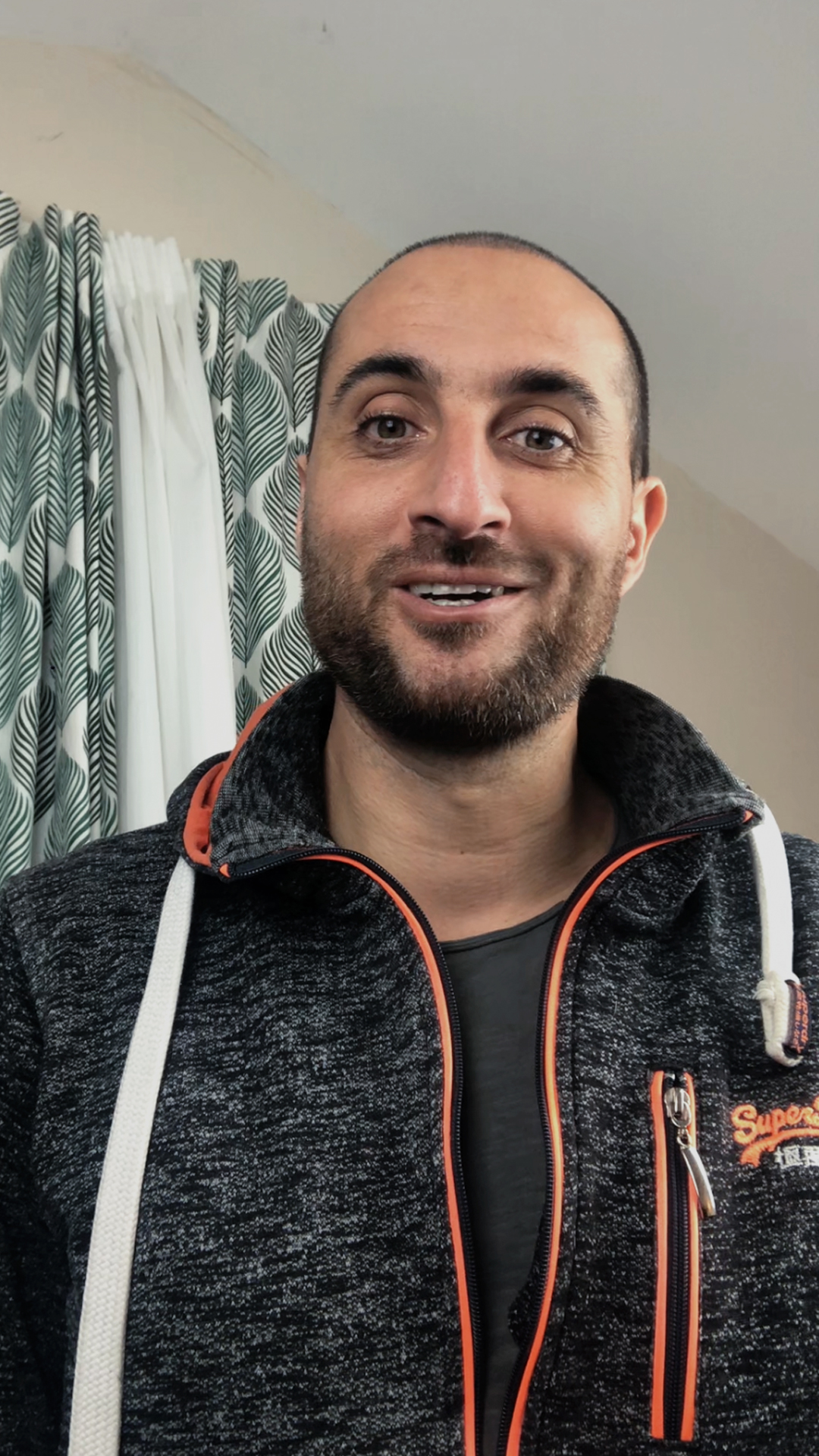 Olivier's
 -
 Jérôme's
 -
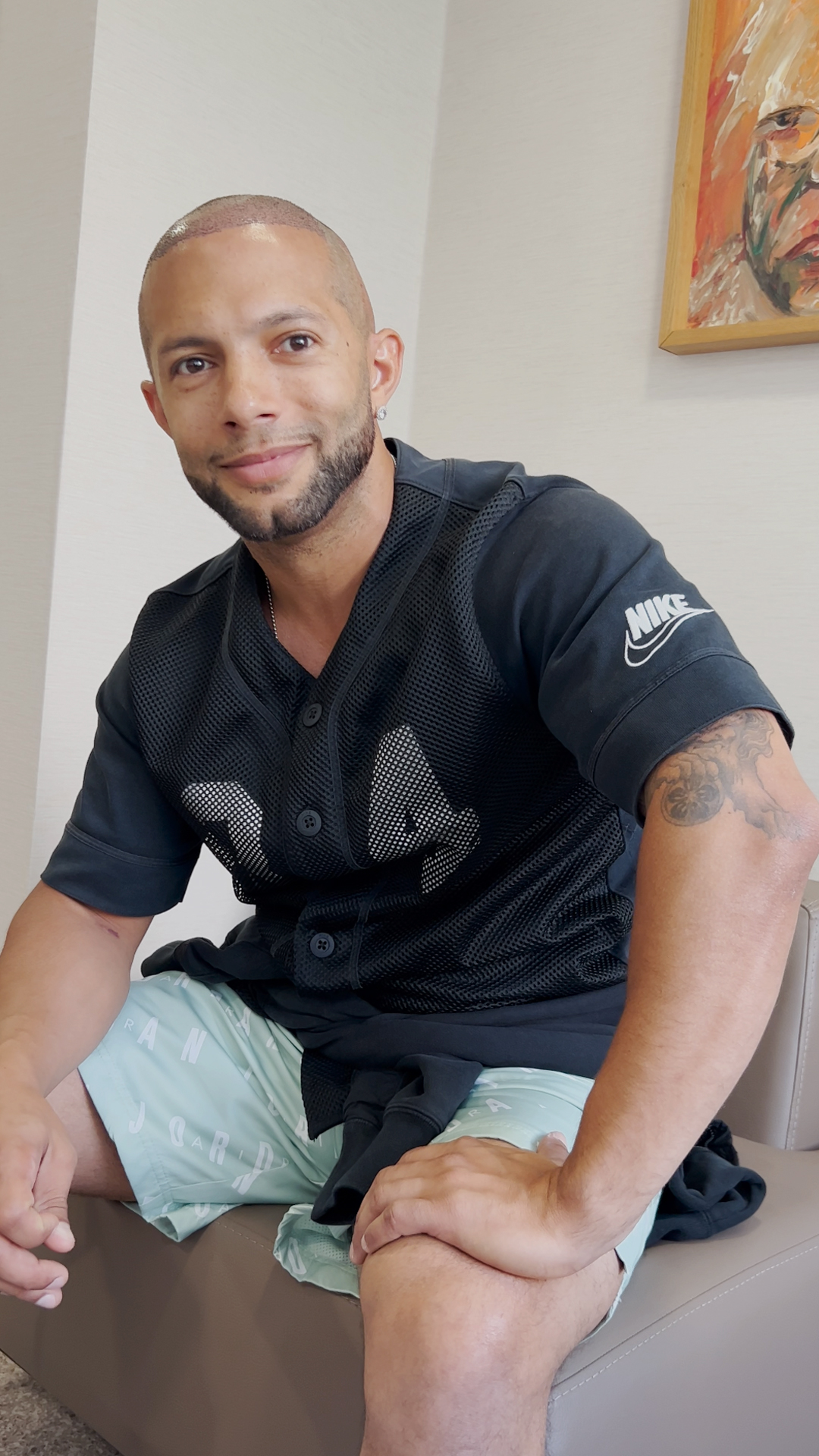 Joachim's
 -
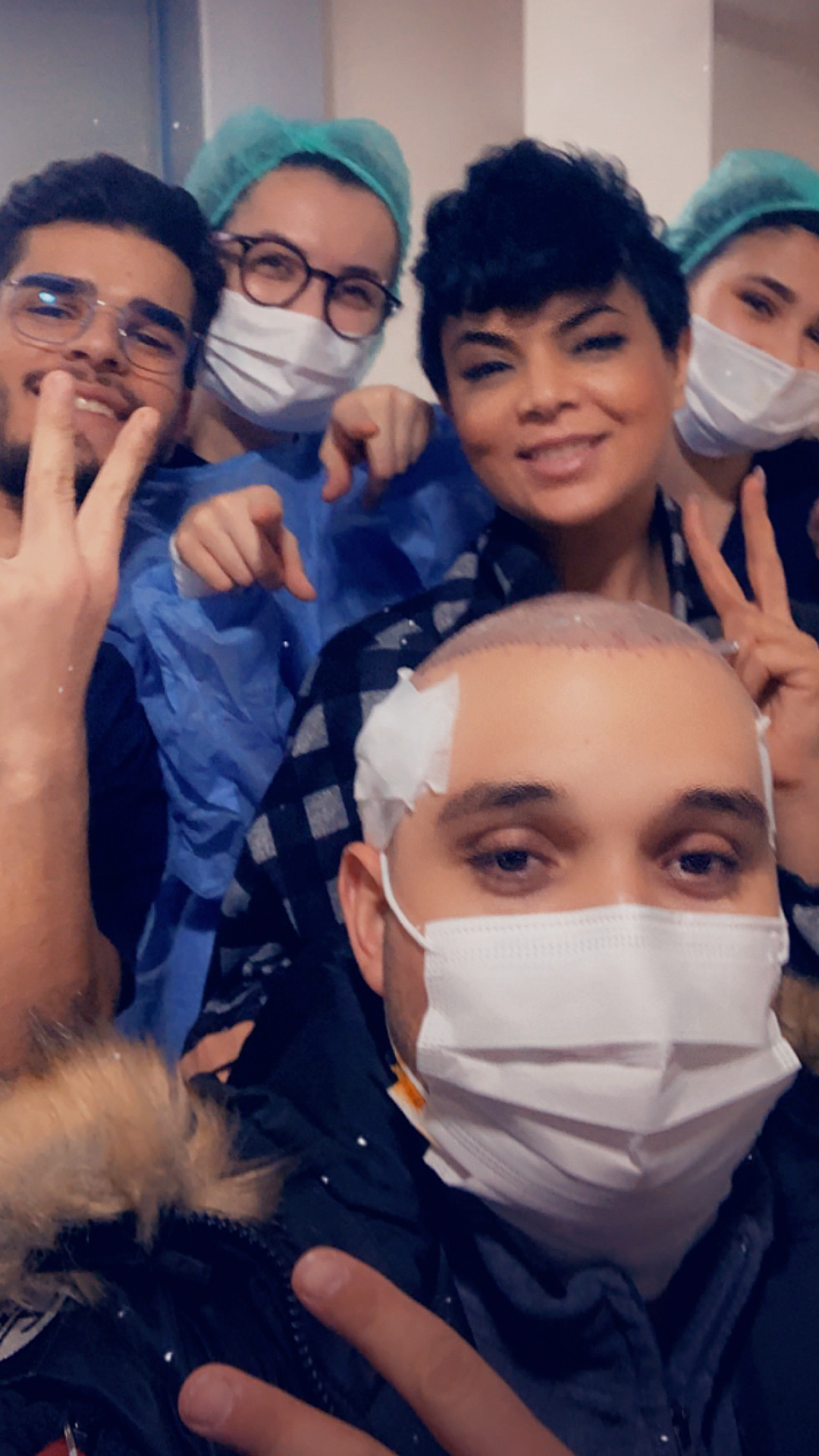 Cédric's
 -
 Karim's


FAQ: your questions about DHI transplants
What’s the real difference between DHI and FUE?
With FUE, the surgeon extracts the follicles, creates tiny channels, then implants the grafts. With DHI, extraction is the same, but implantation is done with the Choi pen, with no channels cut first. Grafts do not wait for a full grid of slits, though out-of-body time still depends on how the team works. Our DHI vs FUE comparison sets out every factor.
Does a DHI transplant hurt?
The procedure is done under local anaesthetic, preceded at Body Expert by a needle-free pre-anaesthetic for maximum comfort. Once the anaesthetic has taken effect, the area itself is numb. Afterwards, any discomfort is mild and well managed with standard painkillers for 3 to 5 days.
How many grafts can be implanted with DHI?
In a single session, our surgeons implant between 2000 and 2000 to 3500 grafts, depending on the density of your donor area. For larger cases, the procedure is split over two consecutive days. At Body Expert, the number of grafts is unlimited in our packages.
Can you have a DHI transplant without shaving?
Yes, it’s one of DHI’s big strengths. The recipient area can be treated without shaving, keeping your long hair and giving you complete discretion. Only the donor area is shaved. All the details are in our article on the unshaven transplant.
What’s the success rate of a DHI transplant?
Graft survival depends above all on ischaemia time (how long follicles spend outside the body) and on how gently they are handled. DHI shortens that time by implanting as it goes. The deciding factor is still the surgeon’s expertise.
Is DHI suitable for women?
It’s actually the technique of choice for women. It can implant between existing hairs without shaving, ideal for thickening the sparse areas typical of female hair loss. Post-op discretion is total.
What age should you have a DHI transplant?
We generally suggest waiting until at least 25, so the hair loss has time to settle. Going ahead too early risks needing touch-ups if the loss carries on. Our article on the right age for a transplant runs through the criteria. A transplant is still perfectly possible after 50, as long as the donor area is viable.
When can you go back to sport after DHI?
Full rest is recommended for the first 7 days. Light activity (walking, yoga without inverted poses) is fine after 2 weeks. Moderate sport after 1 month. Weight training and intense sport after 3 months. Swimming pools and the sea are off-limits for 8 weeks.
Does it affect your sex life?
Intimacy is best avoided for the first 7 days, as it sends a rush of blood to the scalp that can undermine how the grafts anchor. After that, you can get back to normal. Our article on hair transplants and your sex life covers this in detail.
What is shock loss and should you worry?
Are there any risks or contraindications?
A DHI transplant is a minimally invasive procedure. Side effects are rare and temporary: redness, swelling, tenderness. The main contraindications are clotting disorders, some autoimmune conditions, and an insufficient donor area. Our article on the risks of a transplant in Turkey takes stock.
Why choose Body Expert for a DHI transplant?
Body Expert means our partner clinic in Istanbul, selected for its facilities and its surgeons’ experience. You get surgeons who specialise in DHI, with thousands of transplants behind them, and English-speaking support from start to finish. Our packages (VIP transfers, 5-star hotel, needle-free anaesthetic, unlimited grafts and 12-month follow-up) give you up to 70% savings compared with the UK. The full pricing is in our grid higher up this page.
Discussing your project