Neck lift
A neck lift corrects loose skin, the vertical bands of the platysma muscle and a double chin. This page covers the techniques, the procedure, the results and the alternatives, to help you get back a clean, younger-looking profile.
Neck lift at a glance


The neck is often one of the first areas to give your age away: the skin slackens, a double chin settles in, the line of the jaw blurs. The good news is that these signs respond well, and for the long term. A neck lift gives the neck back a clean line and a fresher look by working on the skin, the fat and the muscle all at once. It’s also a chance to bring the whole lower face into balance, sometimes alongside a full facelift. Here we walk through how the procedure works, who it suits, the results to expect and the alternatives for when surgery isn’t needed.

The stages of a neck lift
Your surgeon looks at the state of your neck, your cervicomental angle and the quality of your skin, then settles on the technique that fits best. A few tests, including a blood test, are ordered for your safety.
You stop smoking and come off certain medicines a few weeks beforehand, on your surgeon’s advice. You also get the instructions for the day itself, such as coming in on an empty stomach.
Most often under general anaesthetic, or under local anaesthetic with sedation, the procedure takes 2 to 3 hours: tightening the platysma muscle, removing the excess skin and, if needed, neck liposuction to refine the profile.
You’ll usually stay one night for monitoring, with a dressing and pain relief. You’re given your first instructions for resting.
Set aside a few days to rest. The swelling and bruising fade little by little, and you’re generally back to your activities within 2 to 3 weeks.
The neck redraws itself as the swelling goes down. Regular follow-up supports your recovery all the way to the final result.

Want a younger-looking neck? Let’s talk about your plan
Our experts will call you back within 24 hours with a free, no-obligation quote.
Our prices and packages
Feel free to scroll through the different prices from right to left!
Neck lift techniques
-
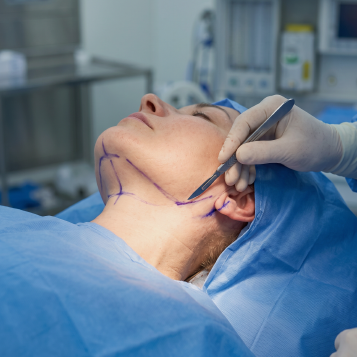 Mini neck lift
Suited to mild sagging, often in younger patients. The incisions are smaller and recovery is quicker.
-
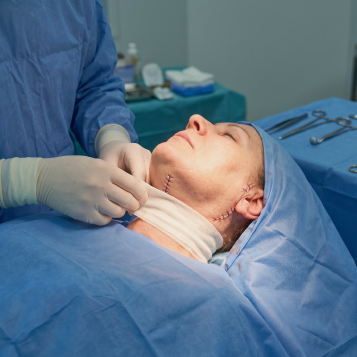 Standard neck lift
For moderate to significant sagging: incisions under the chin and behind the ears, tightening of the platysma muscle and removal of the excess skin.
-
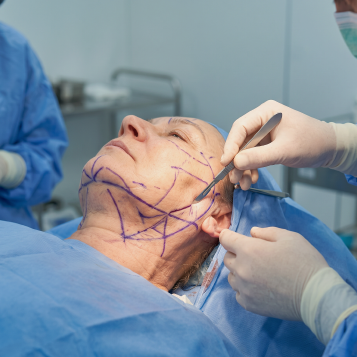 Neck and lower face lift
Treats the neck and the lower face together, for balanced rejuvenation across the whole jawline and contour.


Get your free quote within 24 hours
Our experts look at your situation and put together a tailored treatment plan.
Common questions about neck lifts
What age is a neck lift usually done at?
A neck lift is most often done between 40 and 60, but it’s really the condition of your skin that matters. A consultation is what tells us whether you’re a good candidate.
Is the procedure painful?
Recovery is moderate and eases well with ordinary painkillers. The discomfort drops off noticeably after the first few days.
How long does recovery take?
Allow 2 to 3 weeks before you go back to your activities. The swelling and bruising fade gradually over the following days.
Will the scars show?
The scars are placed under the chin and behind the ears, where they stay discreet. They fade over the following months, though they do not disappear entirely.
Are the results permanent?
Ageing carries on naturally, but the results of a neck lift are lasting, far more so than those of non-surgical treatments.
Can just the double chin be treated?
If the only issue is a pocket of fat, a double chin liposuction can be enough, without going as far as a full lift.
What non-surgical alternatives are there?
Botulinum toxin (Botox), thread lifts, focused ultrasound (HIFU) and radiofrequency all work on mild sagging, but their effects are only temporary.
Can a neck lift be combined with other procedures?
Yes, often with a facelift, a chin reshaping or an eyelid lift for complete, balanced rejuvenation.
What are the risks?
As with any surgery, there’s no such thing as zero risk: a haematoma, prolonged swelling or some temporary numbness are all possible. In expert hands these complications stay rare, and careful follow-up helps head them off.
Why go through Body Expert?
Body Expert gives you access to surgeons who specialise in facial rejuvenation, full English-speaking support and personalised care, from your first enquiry through to post-operative follow-up.
Let’s discuss your project

Neck lift: restoring a firm, redefined neckline
Over the years, the neck often shows your age before your face does. The skin slackens, fat gathers under the chin and the muscles lose their tone. A neck lift is the go-to procedure for correcting these signs and giving the neck back a younger, more balanced look. Here’s everything worth knowing before you decide.

Understanding how the neck ages
The neck sits over a thin, sheet-like muscle called the platysma, which runs from the jaw down to the top of the chest. Over time this muscle stretches and its inner edges pull back, forming two visible vertical cords known as platysmal bands. Add to that loose skin, a build-up of fat under the chin and, sometimes, a downward drift of the lower face.
All of this slowly rubs out the cervicomental angle, the clean line between the chin and the neck that reads as youthful. In a well-balanced neck, this angle sits ideally between 105 and 120 degrees. Beyond that, the impression of a double chin or a heavy neck sets in. The whole point of a neck lift is precisely to restore this angle and redraw the line of the jaw.

The signs that lead people to a neck lift
Several things might have you thinking about a neck lift:
- marked loose skin, often described as a turkey neck
- clearly visible vertical platysmal bands
- a double chin that hangs on despite a steady weight
- a blurred cervicomental angle that muddies the boundary between the face and the neck
- an awkward mismatch between a still-youthful face and a neck that looks older

Are you a good candidate?
A neck lift is mainly for adults with moderate to significant sagging of the neck. It’s most often done between 40 and 60, while the skin still holds good elasticity.
Later on, when there’s more pronounced excess skin and fat, the procedure is readily combined with a facelift for the best result. Good general health, not smoking and realistic expectations are the ideal conditions for success. Age in itself is no barrier: what really counts is the state of your tissues, which the surgeon gauges by hand when you meet. At your consultation, the surgeon studies your anatomy, your cervicomental angle and the quality of your skin, so as to point you towards the technique best suited to your case.

How the procedure works
A neck lift is most often carried out under general anaesthetic, or under local anaesthetic with sedation, and takes 2 to 3 hours on average. Your surgeon makes fine incisions, usually tucked under the chin and behind the ears, to keep the scars discreet. A light compression dressing then supports the neck, and after a night of monitoring most patients head home the next morning.
Depending on what’s needed, several steps come together: a platysmaplasty to tighten and stitch the platysma muscle, a cervicoplasty to remove the excess skin, and sometimes neck liposuction to clear the fat under the chin. When the lower face is involved too, a neck lift can be paired with a facelift or a temporal lift for an even, natural result.

What results can you expect?
The correction holds for years, far longer than non-surgical treatments, though ageing does not stop. A systematic review of more than 2100 patients reports recurrence of platysmal bands in 1.4% of cases, nerve injury in 0.9% and haematoma in 1.8%, at the follow-up recorded in the included studies.
Recovery generally calls for 2 to 3 weeks before getting back to social and working life. A little swelling and some bruising are normal in the first few days, then fade away. The fine stitches come out within a week or so, and the slight tightness in the neck eases as the days go by. To make the benefit last, a healthy lifestyle, careful moisturising and regular sun protection are your best allies. The results settle over the weeks, as the tissues remodel and the swelling clears completely.

Surgical lift or non-invasive alternatives?
Before opting for surgery, some patients weigh up non-surgical options. The main ones are:
- botulinum toxin injections (Botox), which relax the surface muscles
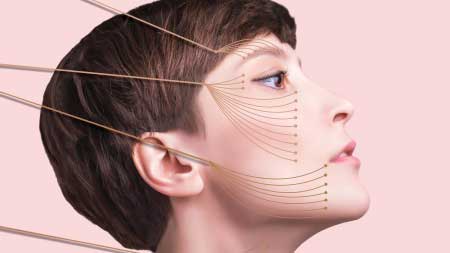
- thread lifts, slipped under the skin to tighten it, whose principle you can read about on our page on thread lifts
- focused ultrasound (HIFU), which prompts the skin to make collagen
- radiofrequency, which firms the skin with heat
These techniques give a worthwhile freshening effect on mild sagging, but their results are temporary. When the slackening is moderate to significant, only a surgical lift brings a genuinely lasting correction. When the concern comes down to a localised pocket of fat, a targeted neck liposuction can sometimes be enough, without going as far as a full lift.

The neck lift and facial harmony
The neck is never treated in complete isolation. For a natural result, your surgeon weighs up the whole lower third of the face. A receding chin, for instance, can play up the look of a sagging neck: in that case, a genioplasty rounds out the work. When excess fat affects the cheeks, a buccal fat removal slims the contour. Some patients also pair their neck lift with a rhinoplasty, a fox eyes canthopexy or a face liposuction for rejuvenation that hangs together as a whole.

Choosing your surgical team well
The success of a neck lift rests above all on the surgeon’s experience and on careful follow-up, before and after the procedure alike. Take the time to check the surgeon’s training, to look through before-and-after results and to ask every question at your consultation. At Body Expert, you have access to surgeons who specialise in facial rejuvenation at our partner clinic in Istanbul, with English-speaking support and personalised care at every step. To browse our other face and body procedures, have a look at our cosmetic surgery options or our VASER liposuction solutions.
In summary
A neck lift, or cervicoplasty, is still the first-choice option when the skin of the neck slackens, the platysmal bands start to show or a double chin settles in for good. By tightening the muscle, removing the excess skin and, if needed, refining the fat under the chin, it restores the clean angle between the chin and the neck, the one that reads as youthful. It’s one of the facial procedures whose results hold up best over time.
For a natural look, the procedure often sits within a wider plan: a facelift, a genioplasty or work on the cheeks depending on your features. Gentler techniques like thread lifts, radiofrequency or HIFU ultrasound can tide you over on mild sagging, but only surgery corrects marked slackening for the long term.
Then there’s the question of budget. By choosing Istanbul with Body Expert, you make up to 70% savings compared with the UK. A 5-star hotel, VIP transfers and 12-month follow-up are organised for you, with surgeons who specialise in facial rejuvenation at partner clinics selected against our quality criteria and English-speaking support from your first exchange onwards.
A question about whether it’s right for you, the technique to choose or how the trip works? Our experts will put together a free, personalised quote within 24 hours, with no obligation. It’s often the simplest step towards moving ahead with confidence.
Sources and references
Cambiaso-Daniel, J., Giordano, S., Agnelli, B., La Bella, L., & Gualdi, A. (2025). Neck lift to treat platysma bands and defining cervical angle: a systematic review and pooled analysis. Facial Plastic Surgery, 41(4), 482-490. Lien: https://pubmed.ncbi.nlm.nih.gov/39406360/
Alexander, L., & Patel, B. C. (2023). Platysmaplasty facelift. In StatPearls [Internet]. Treasure Island (FL): StatPearls Publishing. Lien: https://www.ncbi.nlm.nih.gov/books/NBK563291/
Naini, F. B., Cobourne, M. T., McDonald, F., & Wertheim, D. (2016). Submental-cervical angle: perceived attractiveness and threshold values of desire for surgery. Journal of Maxillofacial and Oral Surgery, 15(4), 469-477. Lien: https://pmc.ncbi.nlm.nih.gov/articles/PMC5083688/
Weinstein, A. L., & Nahai, F. (2021). A layered approach to neck lift. Plastic and Aesthetic Research, 8, 11. Lien: https://www.oaepublish.com/articles/2347-9264.2020.192
OUR ARTICLES ON Cosmetic surgery
-

-
-

-

-
 Breast enhancement and dental crowns in Istanbul: Marie and Océanie tell their story on RTL TVI
 -

-

-