Blepharoplasty: understanding eyelid surgery
Blepharoplasty corrects droopy eyelids and under-eye bags to freshen up the eyes and, in some cases, widen the field of vision.
Blepharoplasty at a glance

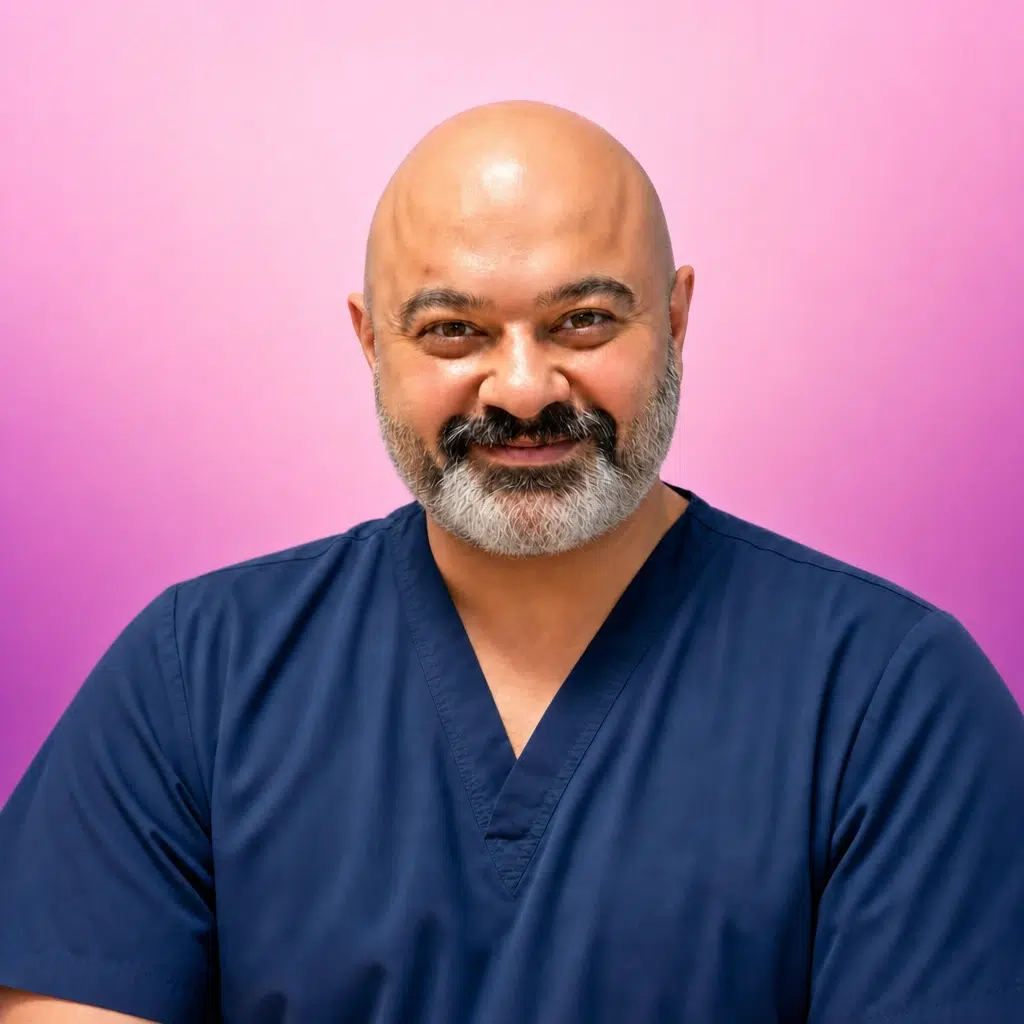
Blepharoplasty: what if it all starts with your eyes?
Heavy-looking eyes, drooping lids, bags that linger however well you’ve slept: the area around the eyes is usually the first part of the face to show tiredness and the passing years. Plenty of patients tell us they look ‘sad’ or ‘washed out’ in photos, when inside they feel full of energy.

That’s exactly what blepharoplasty sets out to address. This facial cosmetic procedure removes excess skin and the pockets of fat on both the upper and lower lids, so your eyes look fresher and more open again. It’s now one of the most widely performed cosmetic operations in the world.
So what can you actually expect? On this page we go through the reasons for surgery, the surgical techniques, how the operation unfolds, the recovery and the results you can genuinely hope for, with no empty promises. And if you’d like to take your plans further, have a look at our dedicated blepharoplasty in Turkey service, built to pair medical expertise with full English-speaking support from start to finish.
The stages of your blepharoplasty
The surgeon examines your eyelids, weighs up the quality of your skin and how pronounced the bags are, listens to what you’re hoping for and checks the health of your eyes. Personalised markings are drawn to prepare for the procedure.
The operation is usually done under local anaesthetic, sometimes general for combined procedures. The surgeon marks the incisions precisely, tucked into the natural creases of the eyelids.
The surgeon removes the excess skin and the pockets of fat, then closes up with fine, hidden stitches. The operation takes one to two hours on average.
Swelling and bruising fade over ten to fifteen days. Follow-up appointments track your healing right through to the final result, at around three to six months.

Want brighter, more rested eyes?
Our experts answer all your questions and call you back within 24 hours, with no obligation.
OUR PRICES AND PACKAGES
Feel free to scroll through the different prices from right to left!
Techniques
-
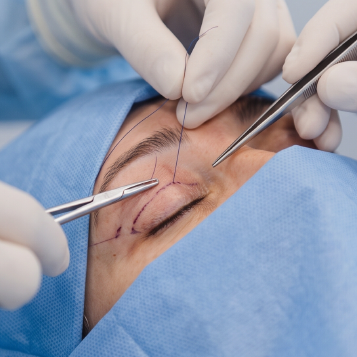 Upper blepharoplasty
Upper blepharoplasty focuses on the top lid. The surgeon removes excess skin and, if needed, the pockets of fat, through an incision hidden in the natural crease of the eyelid. The upshot: a scar hidden in the natural crease.
-
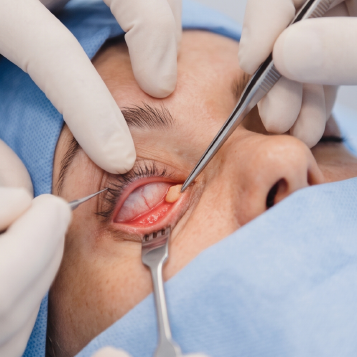 Lower blepharoplasty
Lower blepharoplasty targets the bags under the eyes. It’s done either through an incision just below the lash line, where the scar sits discreetly, or transconjunctivally, on the inside of the lid, with no visible scar.It‘s done either through an incision just below the lash line, where the scar sits discreetly, or transconjunctivally, on the inside of the lid, with no visible scar.
-
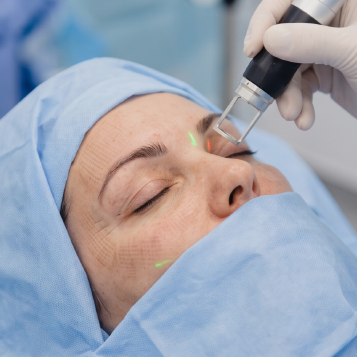 Complementary techniques
A laser, a peel or a canthopexy can round out the surgery to tackle loose skin, smooth fine lines and subtly reshape the eye area.


Let’s build your plan together
Get a personalised, no-obligation quote, put together around your situation and your goals.
Common questions
What’s the difference between upper and lower blepharoplasty?
Upper blepharoplasty deals with excess skin on the top of the eye, through an incision hidden in the natural crease of the lid. Lower blepharoplasty corrects the bags under the eyes, either below the lash line, where the scar sits discreetly, or transconjunctivally (on the inside of the lid), with no visible scar.Lower blepharoplasty corrects the bags under the eyes, either below the lash line, where the scar sits discreetly, or transconjunctivally (on the inside of the lid), with no visible scar.
Is blepharoplasty painful?
The operation is usually done under local anaesthetic, so you should not feel pain during surgery. Afterwards you mainly feel tightness around the eyes, soon eased with ordinary painkillers.The operation is usually done under local anaesthetic, so you should not feel pain during surgery. Afterwards you mainly feel tightness around the eyes, soon eased with ordinary painkillers.
Is it done under local or general anaesthetic?
Most blepharoplasties are done under local anaesthetic. General anaesthetic is kept for combined or more complex procedures, a facelift at the same time, for instance.
When can I go back to work?
Going back to work is often possible after seven to ten days, once the bruising has started to fade.Going back to work is often possible after seven to ten days, once the bruising has started to fade. Our patients usually leave with two simple tips: wear sunglasses and steer clear of dusty places for the first few days.
Is blepharoplasty available on the NHS?
Sometimes, but only where there’s a genuine functional problem, that is, dermatochalasis (excess skin) that narrows your field of vision. In those cases the NHS may fund upper eyelid surgery, subject to local criteria and a specialist referral. Purely cosmetic surgery isn’t covered.
Can a laser be combined with eyelid surgery?
A laser can round out the surgery to smooth fine lines and mild surface laxity. It does not replace a blepharoplasty, because it cannot remove excess skin or fat pockets.
What age is right for a blepharoplasty?
Cosmetic blepharoplasty can be considered from 35 to 40 onwards, with no real upper age limit, as long as your general and eye health allow it.
Are the results permanent?
The results are long-lasting. Removing the lower fat pockets is generally permanent. On the upper lids, natural ageing carries on slowly, but your eyes stay noticeably more open and rested for years.
What scars are left afterwards?
The incisions sit in the natural creases of the eyelids, or entirely inside the lid. Once healed, they become all but invisible within a few months. If marks worry you, the discreet placement is what makes this surgery so well suited to the eye area.If marks worry you, the discreet placement is what makes this surgery so well suited to the eye area.
Can blepharoplasty be combined with other procedures?
Yes, blepharoplasty is often paired with other facial procedures for a balanced result, such as a facelift or buccal fat removal. And if you’re thinking about a trip, take a look at our blepharoplasty in Istanbul package too.
We discuss your project

Blepharoplasty: making sense of eyelid surgery
Blepharoplasty is a facial cosmetic procedure that freshens up the eyes by correcting droopy lids and under-eye bags. The area around the eye is a genuinely delicate one: the skin here is up to five times thinner than on the rest of the face, the muscles are at work constantly with every blink, and the small pads of fat that cushion the eyeball gradually shift over the years. That’s why this area so often shows tiredness before any other. Little by little the skin loosens, the muscles slacken and the fat pads, known as fat herniations, start to show: the eyes look tired, sometimes older than you feel. According to worldwide ISAPS figures, eyelid surgery actually became the most performed cosmetic surgical procedure in the world in 2024, with more than 2.1 million operations recorded.became the most performed cosmetic surgical procedure in the world in 2024, with more than 2.1 million operations recorded.

What are the reasons for blepharoplasty?
There are two broad groups of reasons, cosmetic and functional, and they often overlap in the same person. Pinning down what’s driving you helps the surgeon choose the approach that best suits your face.

Cosmetic reasons
Natural ageing, sped up by the sun, smoking or stress, slowly changes the look of the eyelids. Blepharoplasty can then treat several tell-tale signs:
- excess skin on the upper lid, which sometimes forms a fold hanging over the lashes
- pockets of fat under the lower lid, which give a tired look
- hollow dark circles and fine lines that mark the lower eye
- a general drooping that closes and weighs down the eye
This procedure can be considered from 35 to 40 onwards, with no real upper limit, as long as general health allows. Plenty of patients choose it when they feel their eyes no longer reflect the energy they have inside.

Functional reasons
Beyond looks, blepharoplasty also answers a real functional problem. When there’s a lot of excess skin on the upper lid, it can cover the edge of the lashes and narrow the field of vision: this is called dermatochalasis. People affected often describe heavy lids by the end of the day and the feeling of having to raise their eyebrows constantly to see better. This situation, sometimes alongside a ptosis (a drooping of the lid itself), can justify partial NHS funding on strict medical grounds. A specialist assessment, sometimes with a visual field test, is essential to confirm it.

The pre-operative consultation, a make-or-break step
It all starts with a proper conversation with the surgeon. This consultation isn’t just a technical exam: it’s there to understand what you’re hoping for, to look at the quality of your skin, how the fat pads sit and where your eyebrows are, then to rule out any eye-related reasons to hold off, such as marked dryness. It’s also the moment to go over your medical history, your current medicines and your daily habits, so the procedure can be tailored to you and the recovery anticipated. A thorough work-up and an honest conversation are still the best guarantees of a natural, balanced result.

The surgical techniques
The surgeon adapts the technique to your anatomy and your wishes. There are three main approaches:
- upper blepharoplasty, done through an incision hidden in the natural crease of the lid, which leaves no visible scar once healing is complete
- lower blepharoplasty, done either below the lash line or transconjunctivally, that is, on the inside of the lid, with no visible scar at all
- complementary techniques, such as a laser, a peel or a canthopexy (re-tightening the corner of the eye), which refine the result and treat loose skin
This surgery often sits within a wider plan to balance the face: it can be paired with other procedures such as an otoplasty, a genioplasty or thread lifts, as part of a bespoke facial cosmetic surgery plan.

How the operation goes and what recovery looks like
The operation takes one to two hours on average and is usually done under local anaesthetic, as a day case: you go home the same day. Recovery is generally straightforward, but it does call for a few precautions. In the first few days, swelling and bruising appear, then settle over 10 to 15 days. To recover well, a few simple habits really help:
- wear sunglasses to protect the area while it’s still fragile
- avoid any sport for at least three weeks
- don’t rub your eyes, to protect the healing
- apply cool compresses for the first forty-eight hours to keep the swelling down
Residual swelling continues to settle over two to three months. Complications stay rare:Residual swelling continues to settle over two to three months. Complications stay rare: a haematoma, a passing bout of dry eye or a slight asymmetry that occasionally needs a small touch-up.

What results can you expect?
The results of a blepharoplasty are among the most appreciated in cosmetic surgery. The eyes open up, the tired look fades and the face gains a bit of life, for a natural, lasting finish. The research points the same way: a large multicentre prospective study of more than 2,100 patients measured, using the validated FACE-Q questionnaire, a clear improvement in satisfaction and psychological well-being, with patients reporting they looked on average 3.3 years younger after surgerywith patients reporting they looked on average 3.3 years younger after surgery. Other quality-of-life work shows a benefit that goes beyond the purely cosmetic, with a positive effect on self-confidence and social life. A recent meta-analysis of randomised trials adds that muscle-sparing techniques limit complications while keeping satisfaction high.
The final result shows at around the third to sixth month, once healing is complete. The benefits hold up over the long term, even as natural ageing carries on: the eyes stay noticeably more open and rested. The key to a balanced result? Above all, the quality of the pre-operative work-up and the surgeon’s experience, tailoring every step. To weigh up your own situation and build a plan that fits, the simplest thing is to talk it through with our team over a free personalised quote.

In summary
Blepharoplasty, or eyelid surgery, is still one of the safest and most rewarding ways to freshen up the eyes. Whether it’s removing excess skin on the upper lid, smoothing away under-eye bags or easing a visual problem, it gives the face a rested look without freezing it. The operation is short, usually done under local anaesthetic as a day case, with a fairly gentle aftermath: a few days of bruising, then eyes that open up week by week. The result settles over a few months and holds for years.
What really makes the difference is the quality of the pre-operative work-up and the surgeon’s experience. That’s where Body Expert comes in: surgeons who specialise in facial surgery, partner clinics selected to our quality standards and English-speaking support from start to finish, from your very first question through to your after-care. Having surgery in Turkey also means saving up to 70% compared with UK prices.Having surgery in Turkey also means saving up to 70% compared with UK prices.
Want a clearer picture of your own plans? Our team looks at your case and puts together a free personalised quote within 24 hours, with no obligation whatsoever. A simple chat is often all it takes to answer your questions and move forward with confidence.
Sources and references
- Domela Nieuwenhuis, I., Luong, K. P., Vissers, L. C. M., Hummelink, S., Slijper, H. P., & Ulrich, D. J. O. (2022). Assessment of patient satisfaction with appearance, psychological well-being, and aging appraisal after upper blepharoplasty: A multicenter prospective cohort study. Aesthetic Surgery Journal, 42(4), 340-348. Lien : https://doi.org/10.1093/asj/sjab389
- Todorov, D., Mitchell, S., Al-Hashimi, M., Dajani, Z., Sunn Hoah Yap, K., Imtiaz, H., Daneshi, K., & Khajuria, A. (2025). Functional and aesthetic outcomes after upper blepharoplasty: A systematic review and meta-analysis of randomized control trials. Aesthetic Surgery Journal, 45(6), 554-562. Lien : https://doi.org/10.1093/asj/sjaf022
- Vasović, D. D., Karamarković, M. L., Jovanović, M., Stojičić, M., Rašić, D. M., Marjanović, I., Kalezić, T., & Jeremić, M. (2024). Comprehensive evaluation of quality of life following upper eyelid blepharoplasty: A prospective analysis. Medicina, 60(3), 500. Lien : https://doi.org/10.3390/medicina60030500
- International Society of Aesthetic Plastic Surgery. (2025). ISAPS global survey on aesthetic and cosmetic procedures performed in 2024. Lien : https://www.isaps.org/discover/about-isaps/global-statistics/global-survey-2024-full-report-and-press-releases/
OUR ARTICLES ON Chirurgie esthétique
-

-
-
-

-
 Breast enhancement and dental crowns in Istanbul: Marie and Océanie tell their story on RTL TVI
 -

-

-