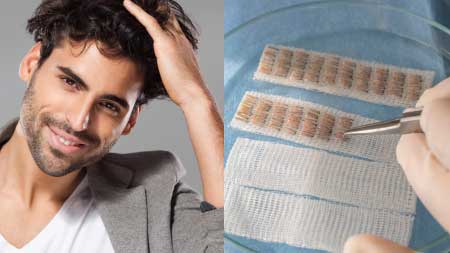
Hair transplant for women in Istanbul
DHI and FUE techniques suited to female hair loss
A discreet, no-shave transplant is possible in most cases
Natural, dense and lasting results
Full English-speaking support in Istanbul

They're talking about us


Our prices and packages
DHI
Offre et tarif : DHI
Feel free to scroll through the different prices from right to left!
Your patient journey in Istanbul
Personalised online consultation
Send your photos and hair history to our experts. Within 24 hours you receive a full assessment: your stage on the Ludwig scale (the classification used to grade female hair loss), the estimated number of grafts and the technique we’d recommend.
Arrival in Istanbul and pre-operative check-up
Your English-speaking assistant arranges your transfer to the hotel. A blood test and a thorough hair examination then take place at the clinic to confirm the implantation plan.
Surgery in our clinic
Our surgeons, who specialise in female hair transplants, carry out the extraction and then the follicle implantation, using the technique best suited to your profile. All under local anaesthetic, in reassuring surroundings.
Post-operative follow-up and going home
Before you leave, a post-operative check is carried out at the clinic. You go home with your aftercare products and a detailed protocol. Our team stays reachable for the following 12 months.

Regain dense, feminine hair
Our hair experts, who specialise in female transplants, will advise you free of charge and with no obligation.
Before & After
Discover our patients’ results
Women's Hair Transplant

Avant-après

Avant-après

Avant-après

Avant-après
Get your free hair assessment
Send your photos and get a personalised analysis from our experts within 24 hours, with no obligation.
Body Expert Istanbul: your clinic of excellence

Free consultation
You benefit from a complete, free hair analysis carried out by our surgeons. Our French-speaking team guides you through your choices, in complete confidentiality and with no commitment.

All-inclusive stay
VIP transfers, 5-star hotel with breakfast and a dedicated assistant who speaks your language: your stay on site is organized from A to Z.

Rigorous post-operative follow-up
Once you are back home, our medical team follows your progress for 12 months by video call. Every stage of your regrowth is monitored.
Why choose Body Expert?

Our accreditations


Our patients talk about us
-
 Ronan's
 -
 Dorian's
 -
 Mickael's
 -
 Olivier's
 -
 Jérôme's
 -
 Joachim's
 -
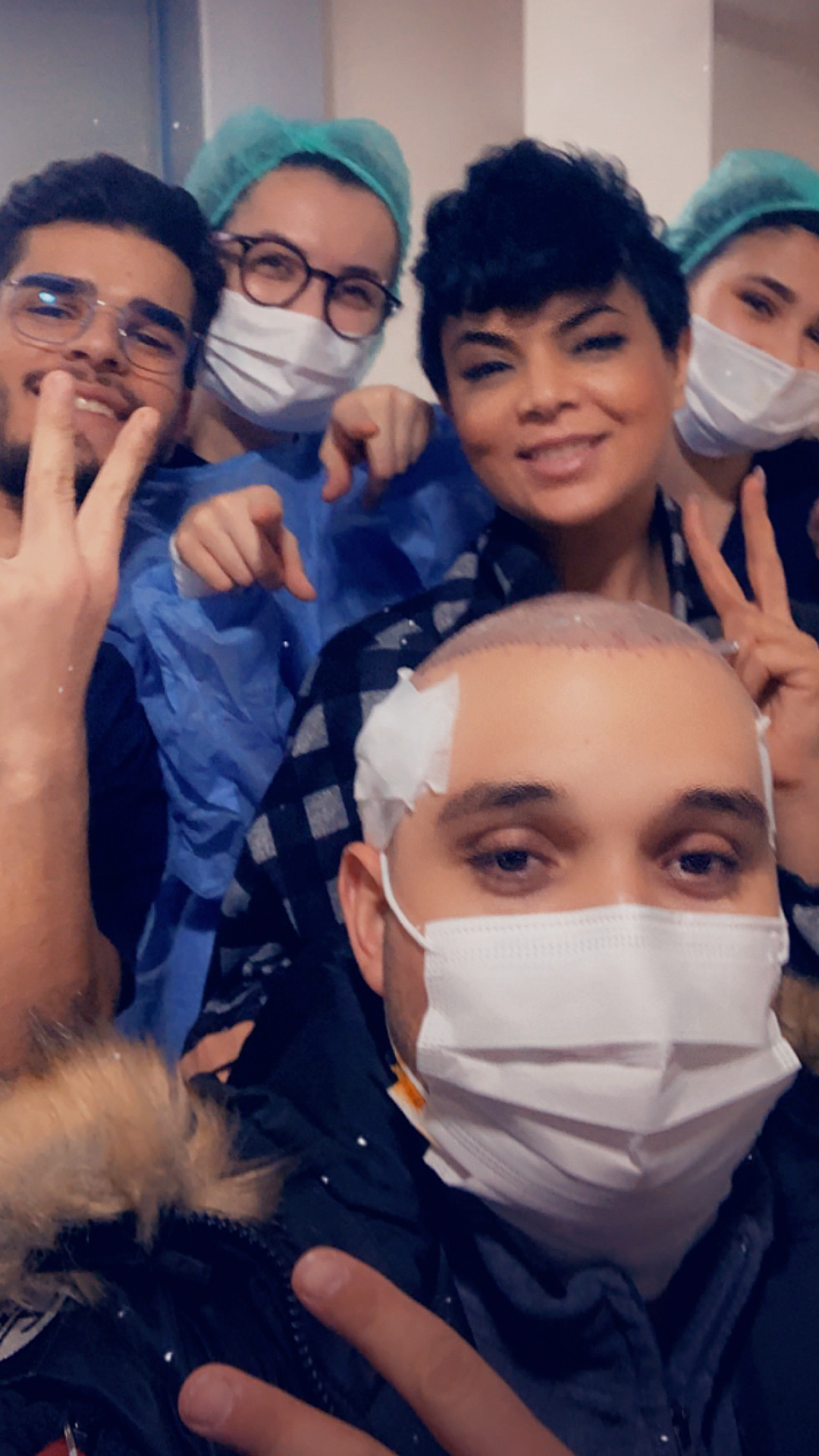 Cédric's
 -
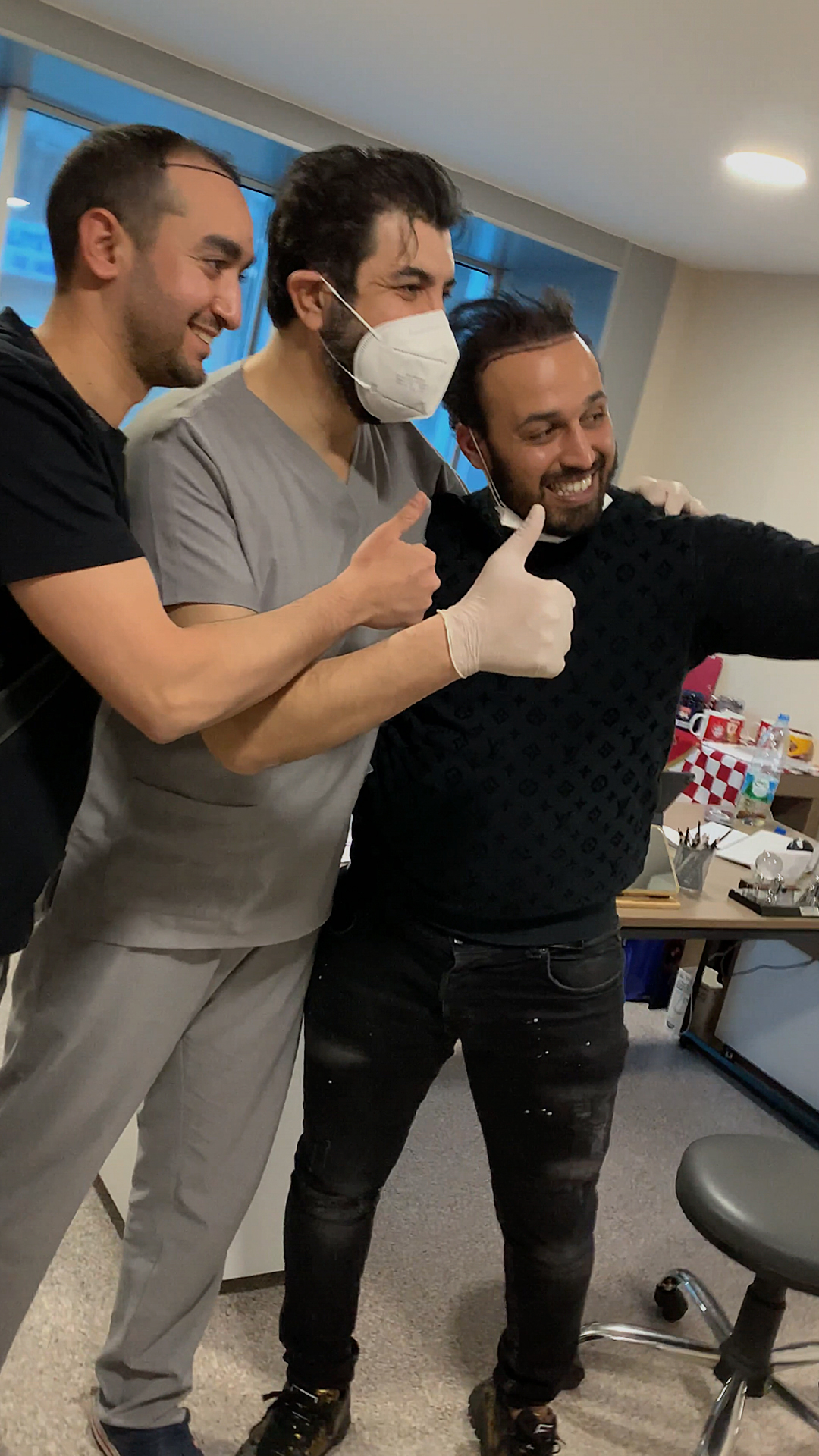 Karim's


Up to 70% savings on your transplant
The same high standards as in the UK, for a fraction of the price. Get a free, detailed quote within 24 hours, with no obligation.
Common questions about women’s hair transplants in Istanbul
Am I a good candidate for a hair transplant in Istanbul?
The best candidates have a donor area that’s still well covered at the back of the head, hair loss that has stabilised and good general health. Our surgeons assess whether you’re eligible during a free remote consultation, based on your photos and your medical history. Women at stages I to III on the Ludwig scale are usually good candidates for a transplant.
Which technique is recommended for women?
The DHI technique with the Choi implanter pen is often preferred for its precision: it implants between existing hairs without damaging them. Sapphire FUE is better suited to larger areas. The right choice is made during the pre-operative check-up, based on your hair profile.
Does a woman’s hair transplant need the head to be fully shaved?
No. A no-shave transplant is possible in most cases, especially at Ludwig stages I and II. Only a small donor area may need partial shaving, quickly hidden under the surrounding hair. This option is always discussed with you before the procedure.
When will I see the final results of my transplant?
The first hairs come through at around the 3rd or 4th month. Density then builds gradually, and the final result becomes fully visible between 12 and 18 months. A temporary shedding of the grafts in the first few weeks is normal and doesn’t affect the final outcome.
How does follow-up work once you’re back home?
Our team provides remote follow-up for 12 months. You have video check-ins at 1, 3, 6 and 12 months. Using your progress photos, our surgeons track how the regrowth is coming along and adjust your care if needed.
What are the possible risks and side effects?
A hair transplant is a safe procedure with a very low complication rate. In the first few days you’ll mainly notice redness and slight swelling, which fade quickly. Shock loss, the temporary shedding of the grafts, can happen between the 2nd and 6th week; regrowth then resumes naturally.
How many grafts does a woman need?
It depends on the stage of your hair loss. On average, a female transplant uses between 1000 and 4000 grafts: 1000 to 1500 for stage I, 1500 to 2500 for stage II, and 2500 to 4000 for stage III. The exact figure is set during the pre-operative assessment.
Our specialities in women’s hair transplants
-
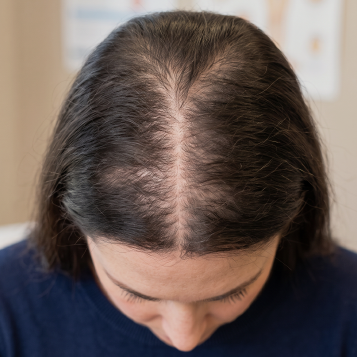 FEMALE ANDROGENETIC ALOPECIA
The most common type of hair loss in women: the parting widens and the crown thins, while the frontal hairline holds firm. A transplant re-thickens these areas by blending in among your own hair, for a natural look.
-
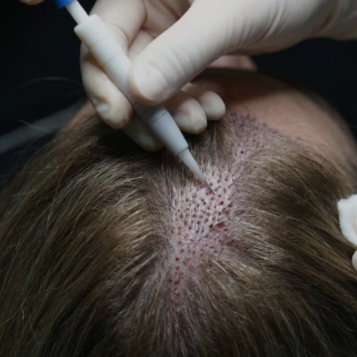 NO-SHAVE TRANSPLANT
Our patients’ favourite option. With the DHI technique, the grafts are implanted between existing hairs without cutting your hair. You go home with nothing on show.
-
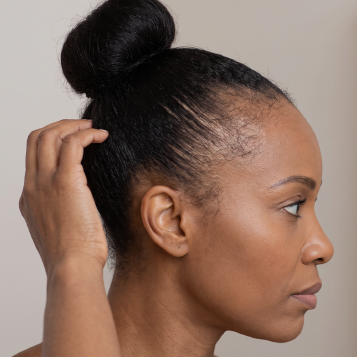 TEMPLES AND TRACTION ALOPECIA
Extensions, braids or tight buns gradually thin the temples and the frontal edge. A transplant rebuilds these weakened areas and redraws a balanced hairline.


Discussing your project

Hair transplant for women in Istanbul: what to know before you start
Hair loss in women is still something we rarely talk about, even though it affects around one in four women at some point in their lives, most often after the menopause. No, hair transplants aren’t just for men. According to the census by the International Society of Hair Restoration Surgery (ISHRS), the number of women having the procedure actually rose by 16.5% between 2021 and 2024: demand among women is real, and it’s growing.
At our partner clinic in Istanbul, we’re seeing more and more women who want to bring back volume and density. Our surgeons, who specialise in hair transplants in Turkey, work with protocols designed for female hair loss, from the first assessment through to the final result.

Understanding female hair loss
What causes hair loss in women
Female hair loss doesn’t really look like male baldness. It has several causes, and it shows up differently. The most common cause is androgenetic alopecia, linked to follicles that are particularly sensitive to androgen hormones. Testosterone is mainly a male hormone, true, but women produce small amounts too, through the adrenal glands and the ovaries. In women who are genetically predisposed, this testosterone converts into dihydrotestosterone (DHT), a hormone that shortens the hair cycle and leads little by little to thinning, then shedding.
But genetics don’t explain everything. Other factors play a part in female hair loss: the hormonal upheavals of pregnancy, the menopause or a change of contraception, an iron or vitamin deficiency, a thyroid problem, ongoing stress, or the traction alopecia caused by hairstyles worn too tight (braids, buns and extensions, day in, day out).

The Ludwig scale: rating the stage of hair loss
In women, the extent of the loss is measured with the Ludwig classification, which sets out three stages.
Stage I: a subtle thinning appears at the top of the head, and the central parting widens a little. At this stage, the patient is often the only one who notices. A session of 1000 to 1500 grafts is usually enough to correct it.
Stage II: the thinning becomes more obvious, the scalp shows more around the crown, and the middle parting widens clearly. Expect 1500 to 2500 grafts to restore volume.
Stage III: the thinning is significant across the whole top of the head, even if the frontal hairline holds firm. This stage, rarer in women, calls for a bigger procedure, sometimes combining several techniques, with 2500 to 4000 grafts.

Female versus male hair loss: the key differences
The key difference with female hair loss comes down to one word: diffuse. Where a man thins in clearly defined areas (the temples and crown), a woman loses hair in a spread-out way, across the whole scalp. The good news: the frontal hairline usually stays intact, which helps enormously in blending the transplant naturally into the existing hair.
The flip side is that this diffuse pattern can also affect the donor area, at the back and sides of the head. Hence the importance of a proper work-up before any decision. That’s why our surgeons always carry out a trichogram (a hair analysis) and a full hormonal blood panel beforehand.
The transplant techniques suited to women
The DHI technique with the Choi pen: precision and discretion
The DHI technique (Direct Hair Implantation) is often the most suitable for women. The Choi implanter pen inserts each follicle straight into the scalp, without making an incision first. A real advantage in a female transplant.
In practice, this method gives precise control over the angle, depth and direction of every graft. The result is a very natural look that follows the way the existing hair grows. It also lets the surgeon implant between existing hairs without damaging them, which matters a great deal in diffuse hair loss, where the aim is to add density without touching the healthy follicles.

FUE and Sapphire FUE: versatile and effective
FUE (Follicular Unit Extraction) removes the follicles one by one with a micro-punch, before reimplanting them in the sparse areas. Its Sapphire FUE variant opens the micro-incisions with sapphire-stone blades, which are finer: healing is quicker and the implantation density better.
For patients who need a large number of grafts (Ludwig stages II and III), Sapphire FUE has the advantage of covering wide areas in a single session. Here too, the choice is made case by case, during the pre-operative check-up.

The no-shave transplant: an option women favour
It’s the question that comes up at every consultation. The good news: a no-shave transplant is possible in most cases, especially at Ludwig stages I and II. Only the donor area may need partial shaving, very easy to hide under the surrounding hair. For bigger procedures, a limited shave of the recipient area is sometimes advised for precision, but nothing is decided without you.
The patient journey in Istanbul with Body Expert
Why choose Istanbul for a female hair transplant
Istanbul has become the world capital of hair transplants. The city brings together high-level surgical know-how and first-rate medical facilities. Our partner clinic, in the centre of Istanbul, has the latest equipment and a team well versed in female hair restoration.
Choosing Body Expert here means direct access to our surgeons, with no middleman, and up to 70% savings compared with the UK, at an equivalent standard of care. The figures are set out in our price table, higher up this page. The package covers accommodation, transfers, the procedure and follow-up: no nasty surprises.

Support tailored to women
We know the whole thing is personal, and at times emotional. That’s why our team takes particular care over how it looks after women, from the first online consultation through to the remote checks after the operation. An English-speaking assistant is with you from start to finish: one point of contact, who knows your case.
The procedure itself takes place in calm, comfortable surroundings. A needle-free pre-anaesthetic followed by local anaesthesia makes the procedure pain-free. Our teams take as long as each patient needs, because a successful female transplant is, above all, a matter of precision and patience.
Results and follow-up after the transplant
The regrowth timeline
The first results of your hair transplant show at around the 3rd or 4th month, as the new hairs gradually come through. Before that, it’s normal to see some of the transplanted hair fall out in the first few weeks: this is shock loss, a passing phase that in no way compromises the result.
Between the 6th and 9th month, density climbs noticeably and the texture refines. The final result can be judged at around 12 to 18 months. That hair is here to stay: it comes from the donor area, which is naturally resistant to DHT.

Aftercare
Follow-up after a hair transplant makes a real difference to the result. Our protocol spells everything out: how to wash, how to sleep, when to go back to sport. A course of Minoxidil may be prescribed alongside, to strengthen the native hair and limit shedding in the areas that weren’t transplanted.
PRP sessions (platelet-rich plasma), which boost blood supply to the scalp and speed up regrowth, can complement the transplant if your surgeon recommends it.
Success rate and satisfaction
Carried out by experienced surgeons, after careful selection of candidates, female hair transplants show success rates above 90%. It all comes down to the assessment beforehand: a donor area that’s well enough covered, hair loss that has stabilised and no medical contraindication are the conditions for a good result.
Want to go further? Our complete guide to women’s hair transplants sets out the techniques and results, with real cases to back them up.

In summary
A hair transplant for women in Istanbul offers a lasting answer to female hair loss, that diffuse thinning which usually spares the frontal hairline. The principle: take follicles from the donor area at the back of the head, then reimplant them one by one where density is lacking, respecting the angle and direction of the existing hair. The DHI technique with the Choi pen, often doable without shaving, stands out for its discretion; Sapphire FUE takes over on larger areas.
On the numbers, expect 1000 to 4000 grafts depending on your Ludwig stage, visible regrowth from the 3rd month and a final result between 12 and 18 months. Success rates top 90% when the indication is well judged. In Istanbul, you benefit from leading surgical expertise and up to 70% savings compared with the UK, without giving anything up on the quality of care.
At Body Expert, everything is taken care of from start to finish: online assessment, a fully organised stay, the procedure and 12 months of follow-up, with an English-speaking assistant by your side. A question about whether you’re eligible, the number of grafts or organising the trip? Ask for your free, personalised quote and you’ll get a detailed answer within 24 hours, with no obligation.
Sources and references
- Ho, C. H., Sood, T., & Zito, P. M. (2024). Androgenetic Alopecia. StatPearls. https://www.ncbi.nlm.nih.gov/books/NBK430924/
- Ludwig, E. (1977). Classification of the types of androgenetic alopecia (common baldness) occurring in the female sex. British Journal of Dermatology, 97(3), 247-254. https://doi.org/10.1111/j.1365-2133.1977.tb15179.x
- Goldin, J., Zito, P. M., & Raggio, B. S. (2025). Hair Transplantation. StatPearls. https://www.ncbi.nlm.nih.gov/books/NBK547740/
- International Society of Hair Restoration Surgery. (2025). 2025 Practice Census Results. https://ishrs.org/2025-practice-census-results/