


OUR ACCREDITATIONS

Blepharoplasty in Turkey: expert surgery, brighter eyes
Up to 70% savings
Experienced surgeons in Istanbul
Dedicated English-speaking coordinator
12 months of post-operative follow-up

They're talking about us


Our prices and packages
Blepharoplasty
Offre et tarif : Blepharoplasty
Feel free to scroll through the different prices from right to left!

What if your blepharoplasty cost less?
Our English-speaking team calls you back within 24 hours to go over your plans, with up to 70% savings on the table.
Why trust Body Expert?


Your blepharoplasty plans start here
Send us your photos and get a free quote within 24 hours, with no obligation and a first opinion on your eyelids.
The types of blepharoplasty
-
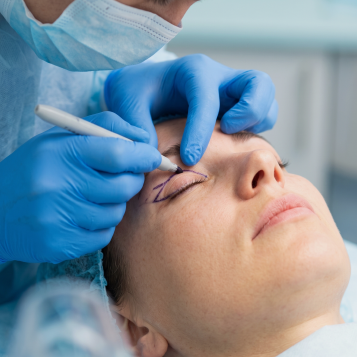 Upper blepharoplasty
The operation removes the excess skin that weighs the crease down and adjusts the orbital fat when the volume calls for it. The incision follows the natural crease of the eyelid.
-
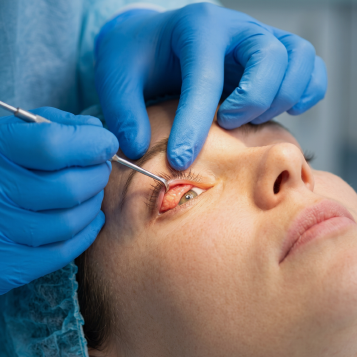 Lower blepharoplasty
The lower lid is treated mainly for its bags. The surgeon reaches them either from inside the eyelid, leaving no scar on the skin, or through a very fine incision under the lashes.
-
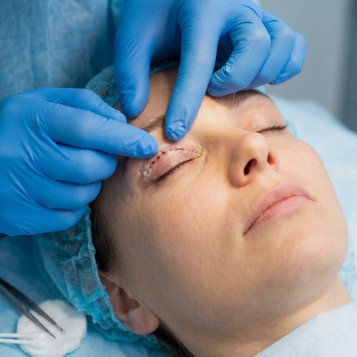 Combined blepharoplasty
When the upper and lower lids are both involved, the two procedures follow on from each other in the same session. One trip is then enough to treat the whole eye area.
-
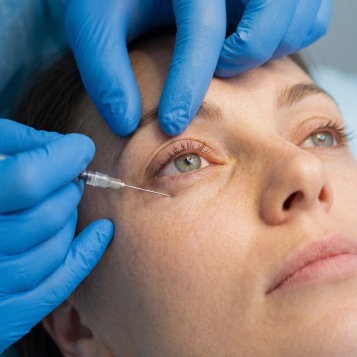 Hollowing and hyaluronic acid
The eyes sometimes look slightly hollow once the swelling has gone down, or a discreet asymmetry shows up. Hyaluronic acid then restores the missing volume, if the surgeon decides it is worthwhile.


Surgical approaches
-
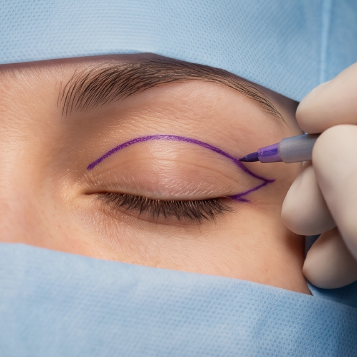 Incision in the crease
On the upper lid, the incision slips into the crease and extends a little past the inner and outer corners. Once the redness has faded, it follows the line of the fold.
-
Transconjunctival approach
On the lower lid, the surgeon can work from inside the eyelid. This route leaves the skin untouched and suits cases where the work is on the orbital fat.
-
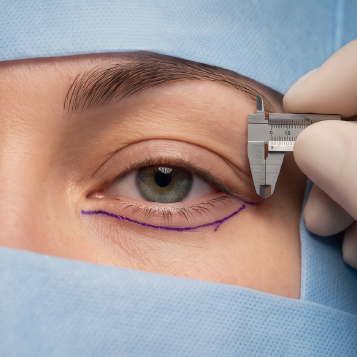 Subciliary approach
The transcutaneous route follows a very fine line placed under the lashes. The surgeon settles on it at the examination, depending on the state of the skin and how much fat there is to treat.
-
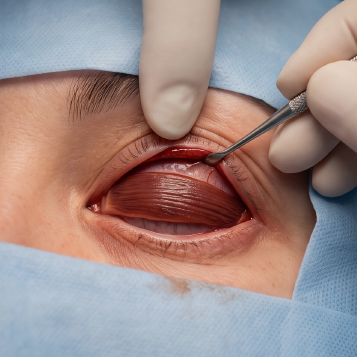 Sparing the orbicularis muscle
Techniques that spare the orbicularis muscle, the one that closes the eyelid, reduce the risk of lagophthalmos. Lightening the eyes without compromising eye closure remains the goal.


FAQ
How long do I need to stay in Istanbul for a blepharoplasty?
The length of the stay is worked out with the team, depending on whether the operation involves the upper lid, the lower lid or both. The first few days are spent on site, the time it takes for the check-up, the aftercare and the green light before you fly home. The 5-star hotel and the VIP transfers are arranged, your flight is down to you, and the exact number of nights is set out on your quote.
Will the scars show?
On the upper lid, the incision follows the natural crease: that line pales within a few weeks and blends into the fold already there. On the lower lid, the transconjunctival route leaves no visible scar on the skin, and the subciliary route follows a very fine line. Send photos at rest and smiling: the surgeon will place the line and tell you what can be hidden.
What are the risks of a blepharoplasty?
Swelling, bruising, dry eyes and a slight temporary asymmetry are part of the first few days. A meta-analysis of 450 patients shows a drop in dry eye symptoms after an upper blepharoplasty, above all where the orbicularis muscle is spared. On the lower lid, a review of 36 articles reports no major vision complication. The 12-month follow-up covers your return home.
What does the Body Expert package come with?
The Body Expert package comes with the 5-star hotel and breakfast, VIP transfers, a dedicated English-speaking coordinator and 12 months of post-operative follow-up. Your quote reaches you free of charge within 24 hours, with no obligation, and you book your flight yourself. Any add-on, such as hyaluronic acid, is decided with the surgeon. The same framework applies right across the aesthetic surgery in Turkey that Body Expert supports.
Can hollowing be corrected after the operation?
Yes, it happens and it can be put right. When a hollow or an asymmetry persists once the swelling has gone down, an injection of hyaluronic acid can give the volume back. A review of 5 studies, covering series of 5 to 109 patients, describes a result that often holds beyond 12 months, with no severe complication reported. The surgeon judges whether this add-on is worthwhile case by case.
How does recovery go after a blepharoplasty?
Recovery usually takes 7 to 10 days. You apply cold compresses several times a day, clean the eyes gently and put in the ointments prescribed, with sunglasses on whenever you go out. Activities then pick up again gradually. The result really shows at around two to three months, once the swelling has gone completely.
What types of blepharoplasty are there and how do I choose?
Upper blepharoplasty corrects eyelids that fall onto the crease and weigh the eyes down. Lower blepharoplasty targets the bags above all, through the transconjunctival route or a discreet incision placed under the lashes. The combined operation treats the upper and lower lids in one session and saves a second trip. The plan is settled after photos, an examination and a frank talk about what the operation can reasonably bring.
Who is a good candidate for a blepharoplasty?
The typical candidate has excess skin on the upper lid, bags on the lower lid, an asymmetry or a tired look that shows from the moment they wake up. This picture appears mostly after the age of forty, sometimes earlier when a parent had heavy eyelids. The indication rests on anatomy and on realistic expectations rather than on age. True eyelid ptosis calls for a different operation.
Let’s discuss your project

Reasons for a blepharoplasty
Heavy eyelids, bags under the eyes, excess skin that weighs on the eyes: these signs give the face a tired look that rest will not fix. Blepharoplasty (eyelid surgery) treats them by removing the excess skin and fat, on the upper lid, the lower lid or both at once. The operation has spread widely: in 2024, eyelid surgery became the most performed surgical cosmetic procedure in the world, with more than 2.1 million operations and a rise of 13.4%, ahead of liposuction.
That tired look rarely comes down to sleep. Most often it comes from excess skin, from orbital fat pushing forwards and from a muscle that has lost some of its hold. Blepharoplasty removes or repositions this surplus tissue, and it also clears the field of vision when the overhanging skin starts to get in the way, a condition known as dermatochalasis. So the cosmetic side and the functional side often meet: when the excess skin presses on the lashes, the patient raises their eyebrows all day long to clear their sight, and the operation aims at that relief too.
It is worth putting this operation in its proper place, though, because it acts on the eyelids and on nothing else. Crow’s feet, the position of the brow or a sagging cheekbone call for other treatments, which the blepharoplasty guide sets out if what you are asking for goes beyond the eyelid area. Blepharoplasty plays its part in rejuvenating the upper third of the face, working alongside the look of the brow and the cheek without changing those structures. The surgeon also tells it apart from a neighbouring diagnosis picked up at the examination, true eyelid ptosis, where the muscle that lifts the eyelid weakens and another operation is needed.

Who is a good candidate?
The most common profile brings together excess skin on the upper lid, fatty bags on the lower lid, which medical terminology calls steatoblepharon, an asymmetry between the two eyes and a tired or aged expression that is already there on waking. These signs usually settle in around the age of forty, sometimes a good deal earlier when heavy eyelids run in the family. The indication rests on anatomy and on realistic expectations far more than on age.
Drooping upper eyelids that narrow the field of vision, known as dermatochalasis, eyelid asymmetry, an impression of tiredness or ageing in the expression of the eyes and the presence of fatty bags make up the main indications. Fine lines and wrinkles around the eye often come with this picture without being the target of the operation. The examination is there precisely to sort one from the other, because the result depends on the real cause of the tired look: excess skin or fat responds well to eyelid surgery, while a dropped brow or a sagging cheekbone calls for another treatment.

Contraindications
Several situations rule the operation out or mean putting it off, such as glaucoma, diabetic retinopathy, a clotting disorder, uncontrolled high blood pressure or ongoing smoking. Smokers are asked to stop nicotine several weeks before the operation, and at the very least 15 days before the planned date, because it affects the healing of skin as thin as the eyelids. General health and the expectations you set out weigh as much as this medical history in the decision, and it is the consultation, backed by your photos and the clinical examination, that allows a date to be booked.
Preparing for the operation
Preparation covers blood tests, a thorough eye examination that measures tear production with a Schirmer test, an assessment of skin elasticity and a close reading of the bone contour and the soft tissue around the eye. The area around the orbit leaves little margin, and the operation is calibrated to what the eye, the skin and the bony support can reasonably take.
In the days beforehand you will be asked to stop certain medicines such as aspirin and anti-inflammatories, to arrive without any make-up and, if the type of anaesthetic calls for it, to fast for at least 6 hours before the operation. Your English-speaking coordinator goes through this list with you point by point and checks that nothing has been forgotten before you travel.

Techniques to suit your eyes
Upper blepharoplasty
This one is for eyelids that droop, sometimes far enough to hide the crease. Through an opening set in that crease, the surgeon removes the excess skin, then repositions or reduces the fat when the volume calls for it. The incision extends a little past the inner and outer corners, classically 4 to 5 mm above the medial and lateral canthus, which keeps it within the natural lines of the eyelid.
A meta-analysis of 12 randomised trials, covering 450 patients, found a clear drop in dry eye symptoms after this operation, with the risk more than four times lower than before surgery (odds ratio 0.22). Techniques that spare the orbicularis muscle, the one that closes the eyelid, reduce the risk of lagophthalmos, that difficulty in closing the eye fully, while satisfaction stays high. The whole difficulty lies in taking out just the right amount of tissue, enough to lighten the eyes, never so much that the eye is left half open.
Lower blepharoplasty
The lower lid is treated mainly for its bags. The surgeon reaches them from inside the eyelid, the transconjunctival route, which leaves no scar on the skin, or through a fine incision under the lashes, the transcutaneous route. That choice depends on the quality of the skin, on the amount of fat and on what the examination brings out. The work most often involves the fat around the eye, which is repositioned or reduced, and eyelid lifting techniques come in on top when skin laxity calls for it.
A review of 36 articles sets out a fairly low complication profile for this operation, with no major eye or vision complication reported in that summary. Most functional or cosmetic difficulties resolve with conservative treatment, sometimes with a touch-up. The technique is well codified today, and its usual after-effects stay manageable as long as follow-up is organised.
Combined blepharoplasty
When the upper and lower lids are both involved, the two procedures follow on from each other during the same operation. Time in theatre is longer, but one trip is enough and recovery happens in one go. The surgical plan is settled once you have sent your photos, after the clinical examination and a frank discussion about what you are hoping for and what the operation can reasonably bring. An upper eyelid on its own takes noticeably less time, and the surgeon tells you that duration along with the plan chosen.

How the operation works
Anaesthetic
The operation is done under general anaesthetic or under local anaesthetic with sedation, and that choice is discussed at the consultation. A local anaesthetic stays active for two to three hours, the length of the operation itself, while a general anaesthetic needs a monitored recovery and can take up several hours. The decision depends on how extensive the operation is, on your medical file and on what the surgeon settles on with you.
Incisions, fat and sutures
On the upper lid, the incision slips into the crease, while on the lower lid the surgeon opts for the internal route or the skin route according to what the examination showed. The surgeon then removes or repositions the fat, then excises the excess skin, measuring exactly what comes out, because over-correction would leave the eye half open. Closure uses sutures suited to the fineness of eyelid skin, sparing the structures that hold the eyelid up and close it.
Average duration
Times vary with the type of blepharoplasty: 60 to 90 minutes for an upper blepharoplasty, 90 to 120 minutes for a lower blepharoplasty, and 2 to 3 hours for a combined blepharoplasty. These ranges help you picture how the day goes, without replacing the precise plan the surgeon gives you once the operation is defined.
As you come out of theatre, your English-speaking coordinator stays with you to relay the surgeon’s instructions, repeat them as often as you need and answer your questions about the rest of the stay. VIP transfers then take you back to the 5-star hotel, where the first aftercare starts straight away, with cold compresses, the prescribed ointment and sunglasses for going out.

Recovery and after-effects
After the operation, recovery usually takes 7 to 10 days. The first week is where the swelling, the bruising and a prickling feeling in the eyes are concentrated, temporary after-effects that settle on their own. You manage the discomfort with the painkillers prescribed, you apply cold compresses regularly to reduce the oedema, you clean the eyes gently each day, you put in the eye ointments and you wear sunglasses outdoors. Screens and sport, for their part, wait for the surgeon’s go-ahead.
Getting back to everyday activities happens gradually, as the most visible swelling settles, and going back to work becomes possible at the end of that first stretch. The eyes carry on refining for several weeks. Plenty of patients judge the result at around two to three months, once the swelling has come down.

Risks and complications
Like any surgery, a blepharoplasty carries risks worth knowing about before you commit. The first few days commonly bring swelling, bruising that mixes haematomas and ecchymoses, a feeling of dryness, a small temporary asymmetry, sometimes a passing difficulty in closing the eyes fully, called lagophthalmos, and more rarely an infection. The published data stay fairly reassuring on these two operations, since a meta-analysis of 450 patients found less dryness after an upper blepharoplasty, and a review of 36 articles described few heavy complications for the lower lid, most of them manageable without particular gravity.
More serious complications, such as loss of vision from an orbital haemorrhage, remain possible in very rare cases. Hygiene and sterilisation protocols, together with structured post-operative follow-up, are aimed precisely at limiting these complications. At Body Expert, that follow-up carries on for 12 months after you get home: at the slightest unusual sign, you flag the problem without waiting and send a clear photo, then the team decides with the surgeon whether to watch, massage or correct.
Hollowing and volume after the operation
The eyes sometimes look slightly hollow once the swelling has gone down, or a small asymmetry shows up. Hyaluronic acid can then be used to restore the missing volume. A systematic review pooling 5 studies, with numbers ranging from 5 to 109 patients, reports volume held beyond 12 months in most cases, with no severe complication observed. This add-on is discussed with the surgeon, case by case, and is not part of the package as standard: it is only considered once the surgical result has settled.
For an opinion on your eyelids, simply send your photos to our team. They will tell you whether a blepharoplasty answers what you are asking for, whether a low brow calls for a different treatment plan, or whether it is wiser to wait. The quote is free and reaches you within 24 hours.
Sources
- Todorov, D., Mitchell, S., Al-Hashimi, M., Dajani, Z., Sunn Hoah Yap, K., Imtiaz, H., Daneshi, K., & Khajuria, A. (2025). Functional and Aesthetic Outcomes After Upper Blepharoplasty: A Systematic Review and Meta-analysis of Randomized Control Trials. Aesthetic Surgery Journal, 45(6), 554-562.
- Gimenez, A. R., Rohrich, R., Borab, Z., Fisher, S., Fagien, S., & Rohrich, R. J. (2025). Safety and Complications in Lower Eyelid Blepharoplasty: A Systematic Review. Plastic and Reconstructive Surgery Global Open, 13(9), e7102.
- Safia, A., Abd Elhadi, U., Merchavy, S., Batheesh, R., & Bathish, N. (2025). Role of Hyaluronic Acid in Post-Blepharoplasty Volume Restoration and Complication Management: A Systematic Review. Journal of Clinical Medicine, 14(13), 4572.
- ISAPS. (2025). ISAPS International Survey on Aesthetic/Cosmetic Procedures Performed in 2024. International Society of Aesthetic Plastic Surgery.