Nose
Nasal septum
Breathing
Facial aesthetics
Nasal correction
Septorhinoplasty
Septorhinoplasty brings two procedures together in a single operation: straightening the nasal septum (the wall inside your nose) that’s making it hard to breathe, and refining the look of your nose. You end up breathing more easily, with a profile that sits better, and without going through two separate operations. Our surgeons, who specialise in nose surgery, work towards natural, lasting results in Istanbul, with English-speaking support from your first message to your last check-up.
Septorhinoplasty at a glance
Hospital stay
1 day
Wait before showering
4 days
Procedure duration
1 to 3 hours

Medical validation
Understanding septorhinoplasty
A perfectly straight nasal septum barely exists. Most of us live with a slightly deviated septum, and most of the time we never even notice it. The trouble starts when the deviation gets pronounced enough to block the airflow: a permanently blocked nose, hard breathing at night, snoring, one sinus infection after another. Your quality of life takes a knock, and often it has done for years.

Septorhinoplasty, sometimes called rhinoseptoplasty, combines two procedures that go together: septoplasty (straightening the deviated nasal septum) and rhinoplasty (reshaping the nose for aesthetic reasons). In a single operation, you deal with both the breathing problem and whatever bothers you about the shape of your nose. That way you avoid two operations, two anaesthetics and two recoveries.
Who is it for?
This operation is for you if you have both: trouble breathing linked to the septum, and the wish to change how your nose looks. The most common cases combine a chronic blocked nose with a hump, an asymmetry, a drooping tip or a nose that feels too wide. It’s usually done from 16 to 18 years of age, once the nose has finished growing.

At Body Expert, it all starts with a thorough consultation. Using digital simulations and a full clinical examination, our surgeons build a plan around you, one that answers your breathing needs as much as your aesthetic goals.
Your full septorhinoplasty journey
Consultation and pre-operative assessment
Your surgeon examines your nose and septum in detail. Digital photos and, when useful, further tests such as a CT scan help them plan the operation. You leave with a detailed quote and a schedule made for you.
Getting ready for surgery
Our teams guide you through everything to sort out before the operation: stopping smoking at least 4 weeks ahead, pausing blood thinners as directed by the anaesthetist, arranging your stay in Istanbul. Your dedicated assistant coordinates every detail, so you never have to manage it on your own.
The day of the operation
Under general anaesthetic, the surgeon first corrects the deviation of the septum, then reshapes the bone and cartilage. The operation takes between 1 and 3 hours depending on how complex your case is.
The first 48 hours
If internal packing is used, it usually comes out the next day. A little swelling and some bruising around the eyes: that’s normal and expected. Pain stays mild and is well controlled with ordinary painkillers.
The first week
The nasal splint comes off around day 7. The bruising fades, and going back to work becomes possible depending on your job. You’re given your full medical file before you head home.
The first month
The swelling goes down and your nose starts to show its new shape. Light exercise can start again after 3 weeks, but keep intense effort for later: allow 4 to 6 weeks.
From 3 to 12 months
The upper part of the nose sets by around 3 months, the middle by 6 months, and the tip can keep changing for up to a year. Your breathing, though, improves within the first few weeks. Check-ups are scheduled at 1, 3 and 6 months.
The cost of a septorhinoplasty
For a lot of patients, cost weighs heavily on the decision. By choosing Turkey, you make up to 70% savings compared with UK prices, and that’s without giving anything up on the quality of care. The gap comes down to something simple, a lower cost of living and lower overheads, not a lower level of expertise.
At Body Expert, the price is set out in advance. Everything is organised for you: a 5-star hotel, VIP transfers, English-speaking support and 12-month follow-up. Your personalised quote arrives within 24 hours. You can also compare what’s included on our rhinoplasty in Turkey page.

What about NHS or insurance cover?
In the UK, the functional part of a septorhinoplasty, meaning the correction of the septum, can sometimes be covered by the NHS when the operation is judged medically necessary. That’s typically the case when a severe deviation causes documented breathing problems. The aesthetic part, though, is down to you.
It’s worth looking closely at what your private health insurance covers: some policies add towards functional nose surgery. If you’d like to apply for cover, our team can help you put your case together.

Breathe better, live better
Our English-speaking advisers will send you a personalised quote, free and with no obligation, within 24 hours.
Our prices and packages
Rhinoplasty
Offre et tarif : Rhinoplasty
Feel free to scroll through the different prices from right to left!
The surgical techniques for septorhinoplasty
There isn’t just one way to operate. The choice of technique depends on how severe the deviation is, the state of your septum and the aesthetic changes you’re after. Your surgeon settles on the approach that best suits your anatomy.

The open approach
Here, the surgeon makes a small incision on the columella, the thin strip of skin between the two nostrils. That gives a full view of the structures inside the nose. It’s the approach of choice for complex cases: major septal corrections, cartilage grafts, reconstructions. The scar, tucked into a natural fold, becomes almost invisible within a few months.

The closed approach
This time, every incision is made inside the nostrils. It’s the one surgeons reach for with mild to moderate corrections. There is no visible scar and, as a rule, less swelling afterwards. Recovery is often quicker, which appeals to patients whose septal correction stays modest.

Recent advances
Nose surgery has come a long way. Autologous cartilage grafts (taken from your own body) reinforce weakened structures without anything foreign. So-called preservation techniques aim to keep as much of your original tissue as possible, which lowers the risk of complications. And minimally invasive methods, with finer incisions, speed up recovery.

A little anatomy
The nose combines bone, in its upper part, and cartilage, lower down. The nasal septum divides the two nostrils. When it deviates, it narrows one side and throws the airflow off balance. Published work reports anywhere from 26% to 97% of cases depending on the population and how it’s measured (Alghamdi et al., 2022). Put another way, a crooked septum is almost the norm.
The aim of a septorhinoplasty is twofold: straighten what’s deviated inside, and reshape the outside. The surgeon removes or repositions the deviated parts of the septum, then adjusts bone and cartilage for a balanced profile. It’s this double demand, to breathe and to please, that calls for real expertise.

What the results show
The published figures are reassuring. Across 55 patients followed in Turkey, the ROE satisfaction score rose on average from 46 to 79 out of 100 after surgery (Kemal et al., 2022). A UK study of around a hundred patients, with an average follow-up of three years, reported an average ROE score of 73%: 75% of those operated on were happy with the result, and 83% would have the operation again without hesitation (Biggs et al., 2015).
These findings confirm something simple: done well, a septorhinoplasty improves breathing and, for most patients, the way you feel about your own nose.
The risks, plainly
Like any surgery, a septorhinoplasty carries risks worth knowing before you go ahead. The largest study available, covering 175842 patients, found a revision surgery rate of 3.3% on average (Spataro et al., 2016). It drops to 3.1% for a first operation and climbs to 11% for a revision, a reminder that a second septorhinoplasty is always trickier.
The most common complications are bleeding, infection (rare, thanks to strict hygiene protocols), temporary changes in sensation and bruising that can be slow to clear. At Body Expert, close follow-up means these are spotted early and dealt with quickly if needed.
To get a concrete idea of what recovery looks like, day by day, the recovery after a rhinoplasty follows the timeline set out above.
In summary
A septorhinoplasty sorts out two problems at once: a deviated nasal septum that gets in the way of your breathing, and a nose shape that doesn’t suit you. Rather than going through a functional septoplasty and then an aesthetic rhinoplasty, everything is treated in a single operation, under general anaesthetic, in one to three hours. Recovery then follows a predictable rhythm: splint off around day 7, bruising faded within a fortnight, the nose revealing itself over three to six months and the tip sometimes sharpening for up to a year.
Two approaches exist, open or closed, chosen according to how complex your case is, and modern preservation techniques favour your own tissue for a natural, lasting result. The clinical data are solid: high patient satisfaction, a clear improvement in breathing and a low revision rate for a first operation. On budget, having the operation in Istanbul means up to 70% savings compared with the UK, in a partner clinic selected for its facilities and with surgeons who specialise in nose surgery.
Then there’s peace of mind: English-speaking support from your first message to your last check-up, a dedicated assistant and a price set out in advance. Still unsure, or have questions about your particular case? Ask for your free quote within 24 hours, with no obligation, and talk it through directly with our team.
Sources and references
- Alghamdi, F. S., et al. (2022). Nasal Septal Deviation: A Comprehensive Narrative Review. Cureus, 14(11), e31317.
- Kemal, O., et al. (2022). Impact of Functional and Aesthetic Factors on Patient Satisfaction in Septorhinoplasty. Turkish Archives of Otorhinolaryngology, 60(1), 36-41.
- Spataro, E., et al. (2016). Revision Rates and Risk Factors of 175842 Patients Undergoing Septorhinoplasty. JAMA Facial Plastic Surgery, 18(3), 212-219.
- Biggs, T. C., et al. (2015). Patient reported outcome measures in septorhinoplasty surgery. Annals of the Royal College of Surgeons of England, 97(1), 63-65.
Before & After
Discover our patients’ results
Rhinoplasty

Avant-après

Avant-après

Avant-après

Avant-après

Avant-après

Avant-après

Avant-après

Avant-après

Avant-après

Avant-après

Avant-après

Avant-après

Avant-après

Avant-après

Avant-après

Avant-après

Avant-après
Thinking about a septorhinoplasty?
Our English-speaking advisers will send you a personalised quote, with no obligation, within 24 hours.
Our patients talk about us
-
 Nadia's
 -
 Laura's
 -
 Manon's
 -
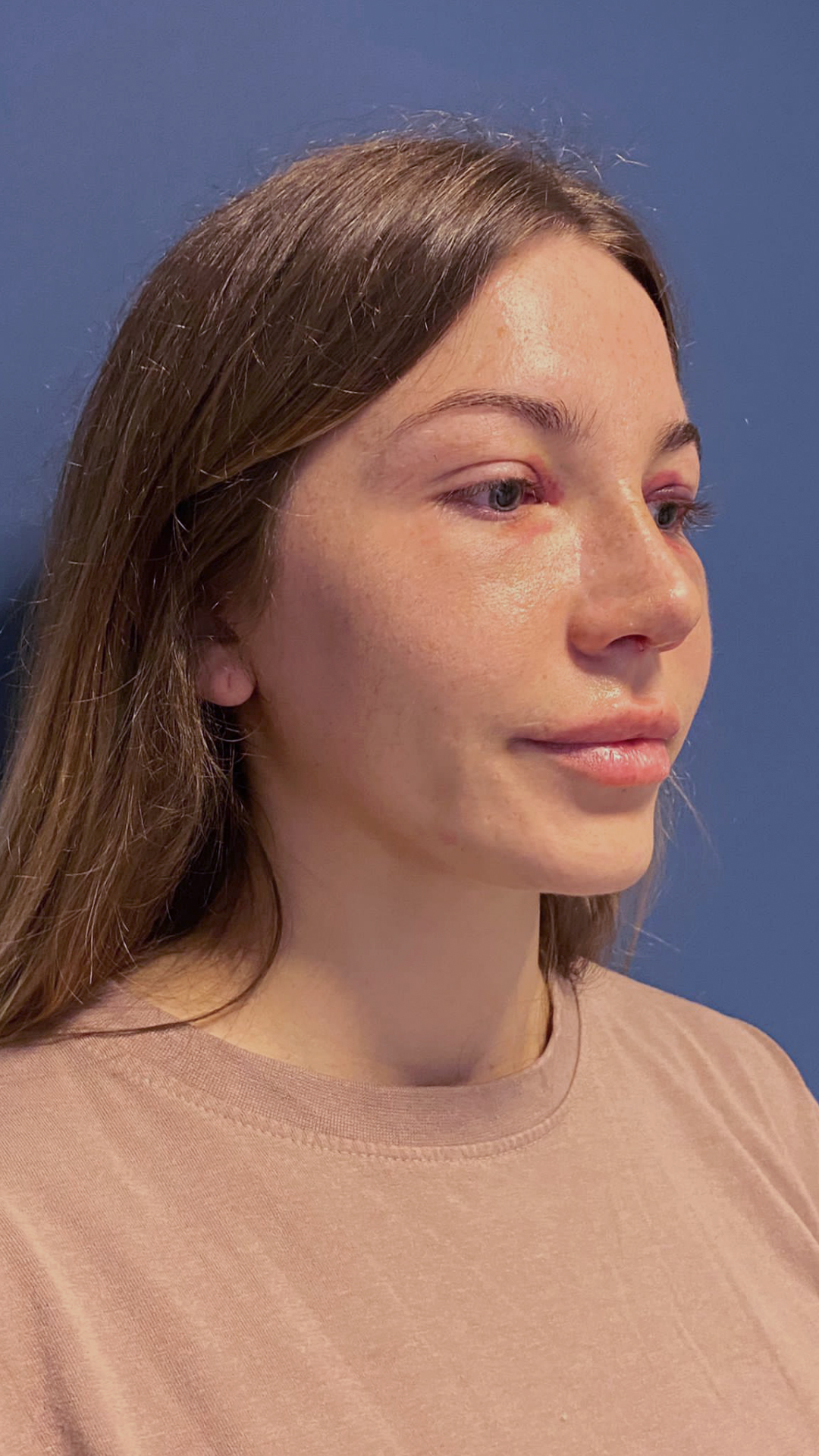 Marie's
 -
 Najat's


Septorhinoplasty FAQ
What’s the difference between septoplasty and septorhinoplasty?
Septoplasty only touches the nasal septum: it straightens it to help you breathe better, without changing anything about how the nose looks. Septorhinoplasty adds an aesthetic reshaping of the nose to that functional step. If you want both to breathe better and to change the shape of your nose, this second operation is the one for you.
Am I a good candidate for a septorhinoplasty?
Probably, if you have both a breathing problem linked to a deviated septum and the wish to fine-tune how your nose looks. It’s usually done from 16 to 18 years of age, once growth has finished. The safest thing is to talk it over in a consultation: our surgeons assess your nose and tell you honestly what’s realistic.
What actually happens during the operation?
Under general anaesthetic, allow 1 to 3 hours depending on complexity. The surgeon starts by correcting the deviation of the septum, then reshapes the bone and cartilage following the plan agreed with you in your consultation. You then spend one night under observation before heading to your hotel.
Is a septorhinoplasty painful?
Less than you’d think. Pain after the operation stays mild and is well managed with ordinary painkillers. The real nuisance is more the blocked feeling in the nose; if packing is used, it usually comes out the next day. Most of our patients talk about discomfort rather than pain.
When can I get back to my usual activities?
Work usually starts again after 7 to 14 days, depending on your job. Light exercise waits about 3 weeks, and intense effort 4 to 6 weeks. Your surgeon gives you advice suited to you, since everyone heals at their own pace.
When will I see the final result?
The first changes show as soon as the splint comes off, around day 7. The swelling then goes down over 3 to 6 months, and the final shape settles between 6 and 12 months, with the tip always the slowest to take form. As for breathing, the improvement is felt much sooner, within the first few weeks.
Is a septorhinoplasty covered?
In the UK, the functional part, correcting the septum, can be partly covered by the NHS if it’s medically justified and the surgery is done there. That does not apply to a private operation in Turkey, which you pay for yourself. Some UK insurers look at functional nose surgery case by case; our team does not handle those claims.
Pourquoi choisir Body Expert pour une septorhinoplastie aWhy choose Body Expert for a septorhinoplasty?
Because you’re looked after from start to finish, in our partner clinic in Istanbul, selected for its facilities, by surgeons who specialise in nose surgery. A 5-star hotel, VIP transfers, a dedicated assistant who speaks your language, 12-month follow-up and up to 70% savings compared with the UK. For the details, ask for your free quote within 24 hours.
Let’s discuss your project