Face
Neck
SMAS
Anti-ageing
Anti-ageing
Face and neck lift: rejuvenate your face and figure
When the skin has lost its firmness, the jawline starts to sag and tiredness drags the features downwards, a facelift is still the most effective way to rejuvenate the face deep down, and for years to come. Here is what you need to know, jargon-free, before you take the plunge.
Face and neck lift at a glanceFace and neck lift at a glance
Hospital stay
1 day
Wait before showering
4j - lower body
Procedure duration
2 to 4 hours

Medical validation
Understanding the facelift
With age, the skin loses firmness and the contour of the face slackens. It’s natural, though often hard to accept when the mirror no longer matches the energy you feel inside. A facelift works where creams and surface treatments run out of steam: it repositions the deep tissues to restore a rested look, without leaving you frozen.

It’s part of a wider approach to rejuvenation, alongside blepharoplasty or non-surgical beauty treatments. You’ll be guided towards the option best suited to your face and your expectations.
Your facelift journey with Body Expert
First chat and consultation
It all starts with a personalised assessment, which can be done online. The surgeon talks through what you’re hoping for, works out which type of lift suits you best and walks you through exactly how it works.
Getting ready for surgery
You have a pre-operative check-up, along with clear instructions such as stopping smoking and which medicines to avoid. We also help you plan your trip with none of the stress.
Arriving in Istanbul
From the moment you land, transfers are arranged between the airport, your hotel and the clinic. You meet the medical team for a final consultation before surgery.
The operation
The procedure is carried out under the right anaesthetic for you (general, or local with sedation). How long it takes depends on the area treated. Every technique and incision is explained to you beforehand.
The first hours after surgery
You’re monitored in the recovery room, with pain and swelling kept under control. The first dressings and care are put in place, along with precise instructions.
Heading home
A final check-up confirms you’re doing well before you leave. We arrange your transfers to the airport and give you your aftercare instructions along with a dedicated emergency contact.We arrange your transfers to the airport and give you your aftercare instructions along with a dedicated emergency contact.
Post-operative follow-up
Your follow-up continues remotely with our English-speaking team: checks on healing, adjustments to your care and support all the way to full recovery.

Your facelift journey starts here
Our experts review your situation and call you back within 24 hours.
Our prices and packages
Facelift
Offre et tarif : Facelift
Feel free to scroll through the different prices from right to left!
The types of lift
-
 Face lift
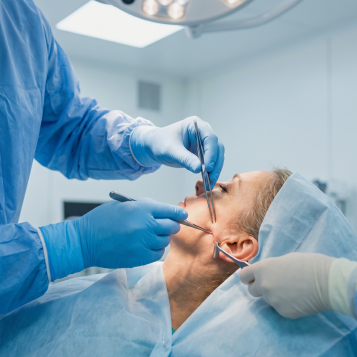
It corrects sagging cheeks, jowls and the jawline for an all-round younger look.
-
 Temporal lift
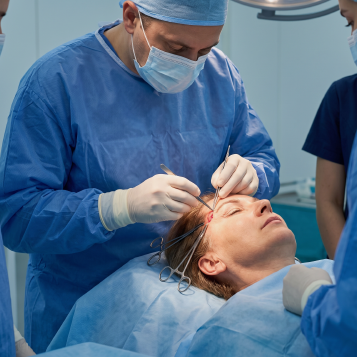
Focused on the upper face, it lifts the tail of the eyebrows and opens up the outer eye.
-
 Neck lift
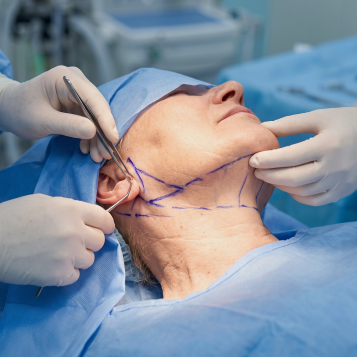
It tightens the skin of the neck, reduces fullness under the chin and redefines the angle between chin and neck, often alongside a face lift.
-
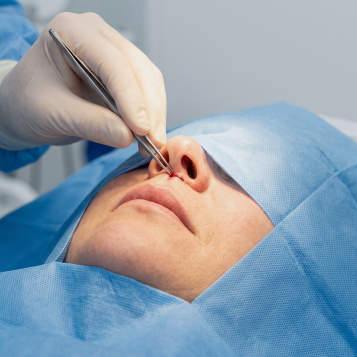 Lip lift
It shortens the philtrum (the space between nose and lip) and shows more of the upper lip.
-
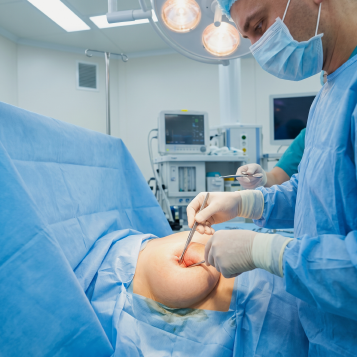 Breast lift (mastopexy)
It raises and reshapes sagging breasts, with or without implants.
-
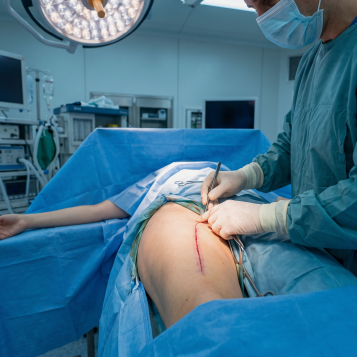 Thigh lift
It firms the inner or outer thighs, common after major weight loss.
-
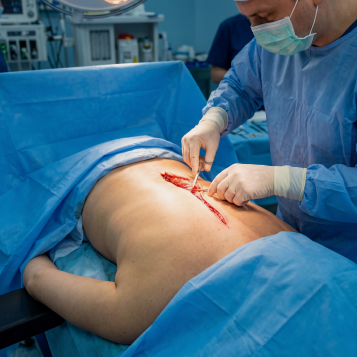 Back lift
It removes excess skin from the back, again often after significant weight loss.


Before & After
Discover our patients’ results
Facelift

Avant-après

Avant-après

Avant-après
Avant-après
Avant-après

Avant-après
Avant-après

Avant-après

Avant-après

Avant-après

Avant-après
Avant-après
Avant-après
Avant-après
Avant-après
Avant-après
Rejuvenate with complete peace of mind
Get a personalised, transparent quote with no obligation.
Frequently asked questions about facelifts
Is there a right age for a facelift?
There’s no ideal age. A facelift suits healthy adults who have visible sagging. Most patients are between 45 and 65, but it comes down to the condition of your skin, not just the candles on your birthday cake.
Is a facelift painful?
Honestly, less than most people expect. Pain is usually mild and well controlled with standard painkillers. What you mainly feel is tightness and swelling in the first few days.
How long is recovery after a facelift?
Allow 1 to 2 weeks of rest, then a return to work around 2 to 3 weeks. Swelling keeps settling for three to six months, and the final result is there at around a year.
How long do facelift results last?
The results usually hold for 7 to 10 years. A facelift doesn’t stop ageing, but it turns the clock back noticeably. You’ll carry on ageing, but from a younger starting point.
SMAS or deep plane facelift: what’s the difference?
The SMAS technique tightens the musculo-aponeurotic layer, a fibromuscular sheet that supports the soft tissues of the face: it’s reliable, with a simpler recovery. The deep plane works deeper and gives a stronger result across the midface, cheekbones and cheeks. The choice depends on your anatomy and how much sagging there is to correct.
What are the risks of a facelift?
Like any surgery, there are some: haematoma, infection, delayed healing, and temporary numbness of the cheeks or ears, which is common and usually settles. Injury to a motor nerve of the face stays rare.
Does a facelift leave visible scars?
Scars are tucked into the natural creases of the face and the hairline, where the eye doesn’t go looking. Over the months they fade until they’re barely noticeable.
Can a facelift be combined with other procedures?
Yes, and it often is. A facelift pairs very well with a rhinoplasty or blepharoplasty to harmonise the whole face in one go.
Why have your facelift in Turkey?
For up to 70% savings compared with the UK, with experienced surgeons and English-speaking support from start to finish. Everything is organised for you: a 5-star hotel, VIP transfers and 12-month follow-up.
Let’s discuss your project

The facelift, the go-to procedure for lasting rejuvenation
A facelift (or rhytidectomy) is still the most effective cosmetic procedure for correcting marked skin sagging. Where surface treatments quickly reach their limits, it works deep down: it repositions the tissues, tightens the skin and redraws clean contours. Demand isn’t slowing down either. According to the ISAPS, procedures on the face and head passed 6.5 million in 2023, up nearly 20% in a year.According to the ISAPS, procedures on the face and head passed 6.5 million in 2023, up nearly 20% in a year.
At Body Expert, your facelift is carried out directly in our Istanbul clinic, by surgeons who specialise in facial rejuvenation, with English-speaking support from your first chat right through to healing follow-up.

Why skin sags with age
Facial ageing isn’t only about the skin. Over the years, several things happen at once, and that’s why creams eventually stop being enough:
- Loss of collagen and elastin, which leaves the skin less firm and less supple.
- Sagging of the deep tissues under the pull of gravity.
- Loss of fat volume, which hollows the features and deepens the folds.
- Muscle slackening around the neck and jawline.
A facelift targets these structural causes precisely. By working on the SMAS (the superficial musculo-aponeurotic system, a fibromuscular sheet that supports the soft tissues of the face), it does more than pull the skin: it re-tensions the deep framework for a natural result that holds over time.

The different types of lift
The word ‘lift’ actually covers several procedures, each targeting a specific area. Here are the main ones, with the detailed guide that goes with each:
- Face lift: it corrects sagging cheeks, jowls and the jawline for an all-round younger look. Read about the face lift in detail.
- Temporal lift: focused on the upper face, it lifts the tail of the eyebrows and opens up the outer eye. See the temporal lift.
- Neck lift: it tightens the skin of the neck, reduces fullness under the chin and corrects the angle between chin and neck, often paired with a face lift. Everything about the neck lift.
- Lip lift: it shortens the philtrum (the space between nose and upper lip) and shows more of the vermillion. See the lip lift.
- Breast lift (mastopexy): it raises and reshapes sagging breasts, with or without implants. Read about the breast lift.
- Thigh lift: it firms the inner or outer thighs, common after major weight loss. See the thigh lift.
- Back lift: it removes excess skin from the back, again often after significant weight loss. Everything about the back lift.
For drooping eyelids, the go-to procedure is still blepharoplasty, often done at the same time as a face lift for a harmonious result. A facelift also combines very well with a rhinoplasty or an otoplasty when the aim is to rebalance the whole face.

The surgical techniques of the face lift
Not all rhytidectomies are the same. The choice of technique depends on your anatomy, how much sagging there is and, above all, the surgeon’s expertise.
The SMAS facelift
This is the reference technique, widely documented. The surgeon tightens the musculo-aponeurotic layer before redraping the skin. Khoury et al. (2025) report a satisfaction rate of around 88% and a lower overall complication rate than the deep plane, which makes it a reliable option for most patients.
The deep plane lift
The deep plane releases the ligaments that hold the face and mobilises a thicker flap, skin and muscle together. Khoury et al. (2025) report satisfaction of around 94%. Which technique lasts longer remains under debate. In return, the dissection is deeper and calls for sharp surgical expertise.
The mini facelift
Less invasive, the mini facelift is for moderate sagging. The incisions are shorter and recovery is quicker, but the effect is more limited over time than a full facelift.

A facelift at home or in Turkey: what to expect
Having your facelift in Turkey mainly changes one thing: the budget. Prices are far more affordable than in the UK, with up to 70% savings depending on the area treated and the technique used.
One thing that reassures a lot of patients: with Body Expert, everything is organised for you: a 5-star hotel, VIP transfers, an English-speaking coordinator and 12-month follow-up, all set out in advance.everything is organised for you: a 5-star hotel, VIP transfers, an English-speaking coordinator and 12-month follow-up, all set out in advance. No nasty surprises, and easy to compare with a quote back home. For an overview of everything on offer, see our cosmetic surgery in Turkey page.

Recovery and the timeline of results
Patience is part of the treatment. Recovery follows fairly predictable stages:
- In the first week, the focus is on rest and managing swelling and bruising.
- During the first month, the swelling eases noticeably and you gradually get back to your activities.
- Between three and six months, the tissues settle and the contours refine.
- After a year, the final result is there and the scars have faded.
Nerve effects stay rare and are usually temporary: they generally settle on their own. Done well, the results of a facelift hold for 7 to 10 years, without freezing the natural ageing process.

Making your results last
A good facelift is helped along by a healthy lifestyle. A few simple habits really do make a difference:
- Hydrate and nourish the skin every day, alongside anti-ageing serums.
- Apply a high sun protection daily: UV is still the main accelerator of skin ageing.
- Look after your lifestyle: a diet rich in antioxidants, enough hydration, regular sleep.
- Consider maintenance treatments such as mesotherapy or light peels to keep your glow.
Non-surgical alternatives, such as thread lifts or lipofilling, can extend or complement the results in some cases. For the contours of the neck and chin, neck liposuction or genioplasty are sometimes offered alongside.

Why choose Body Expert in Istanbul
Body Expert isn’t just a middleman: it’s our clinic, our surgeons and our team who look after you, from the first consultation to healing follow-up. You get experienced surgeons and English-speaking support at every step, for natural results and a calm stay in one of the great capitals of facial rejuvenation.
In summary
A facelift, or rhytidectomy, is still the most reliable way to correct marked sagging of the face and neck. By repositioning the deep tissues rather than just pulling on the skin, it restores a clean jawline and a rested look, without freezing your expressions. The aim is never to transform a face, but to give it back the glow it had a few years earlier. Depending on what you need, it takes several forms: face, temporal, neck or lip lift, but also breast, thigh or back lift. On technique, the SMAS offers an excellent balance of result and recovery, while the deep plane aims for deeper rejuvenation of the midface.
Results hold for 7 to 10 years, as long as you protect your skin from the sun and look after your youthful capital. Having your facelift in Istanbul with Body Expert means bringing together experienced surgeons, partner clinics selected against our quality criteria and English-speaking support from start to finish, for up to 70% savings compared with the UK.for up to 70% savings compared with the UK. Still unsure about the technique or the type of lift that suits your face? Our experts look at your situation and send you a free, personalised quote within 24 hours, with no obligation at all. It’s the best place to start for a project you can feel calm about.
Sources and references
ISAPS. (2024). ISAPS international survey on aesthetic/cosmetic procedures performed in 2023. International Society of Aesthetic Plastic Surgery. https://www.isaps.org/discover/about-isaps/global-statistics/global-survey-2023-full-report-and-press-releases/
Khoury, S., Almubarak, Z., Khan, H., et al. (2025). The deep plane versus SMAS facelift: a systematic review and meta-analysis. Aesthetic Plastic Surgery, 49, 5895-5903. https://doi.org/10.1007/s00266-025-05118-x
Meretsky, C. R., Hausner, P., Flynn, B. P., & Schiuma, A. T. (2024). A systematic review and comparative analysis of reconstructive rhytidectomy: advantages, disadvantages, and patient outcomes. Cureus, 16(10). https://www.ncbi.nlm.nih.gov/pmc/articles/PMC11539935/
Gordon, N. A., & Sawan, T. G. (2025). Deep-plane rhytidectomy: pearls in maximizing outcomes while minimizing recovery. Facial Plastic Surgery, 41(1), 2-11. https://pubmed.ncbi.nlm.nih.gov/38049109/