

Vaser liposuction in Turkey
High-definition body sculpting with ultrasound
Surgeons who specialise in Vaser liposculpture
Save up to 70% compared with the UK
Silhouette that refines over a few weeks

They're talking about us


Our prices and packages
Liposuction
Offre et tarif : Liposuction
Feel free to scroll through the different prices from right to left!
Before & After
Discover our patients’ results
Liposuction

Avant-après

Avant-après

Avant-après
Avant-après

Avant-après

Avant-après

Avant-après
Avant-après

Avant-après

Avant-après

Avant-après
Avant-après

Avant-après

Avant-après

Avant-après

Avant-après

Avant-après

Avant-après

Avant-après

Avant-après
Avant-après
Avant-après
Avant-après
Avant-après
Avant-après
Avant-après
Avant-après
Avant-après
Avant-après
Avant-après
Avant-après
Avant-après
Avant-après
Avant-après
Avant-après
Avant-après
Avant-après
Avant-après
Avant-après
Avant-après
Avant-après
Avant-après
Avant-après
Avant-après
Avant-après
Avant-après
Avant-après
Avant-après

Shape your silhouette for less
Our English-speaking coordinators look over your plans and call you back with a free, personalised quote, no strings attached.
Why trust Body Expert?


Our accreditations


Our patients talk about us
-
 Dalhia's
 -
 Lila's
 -
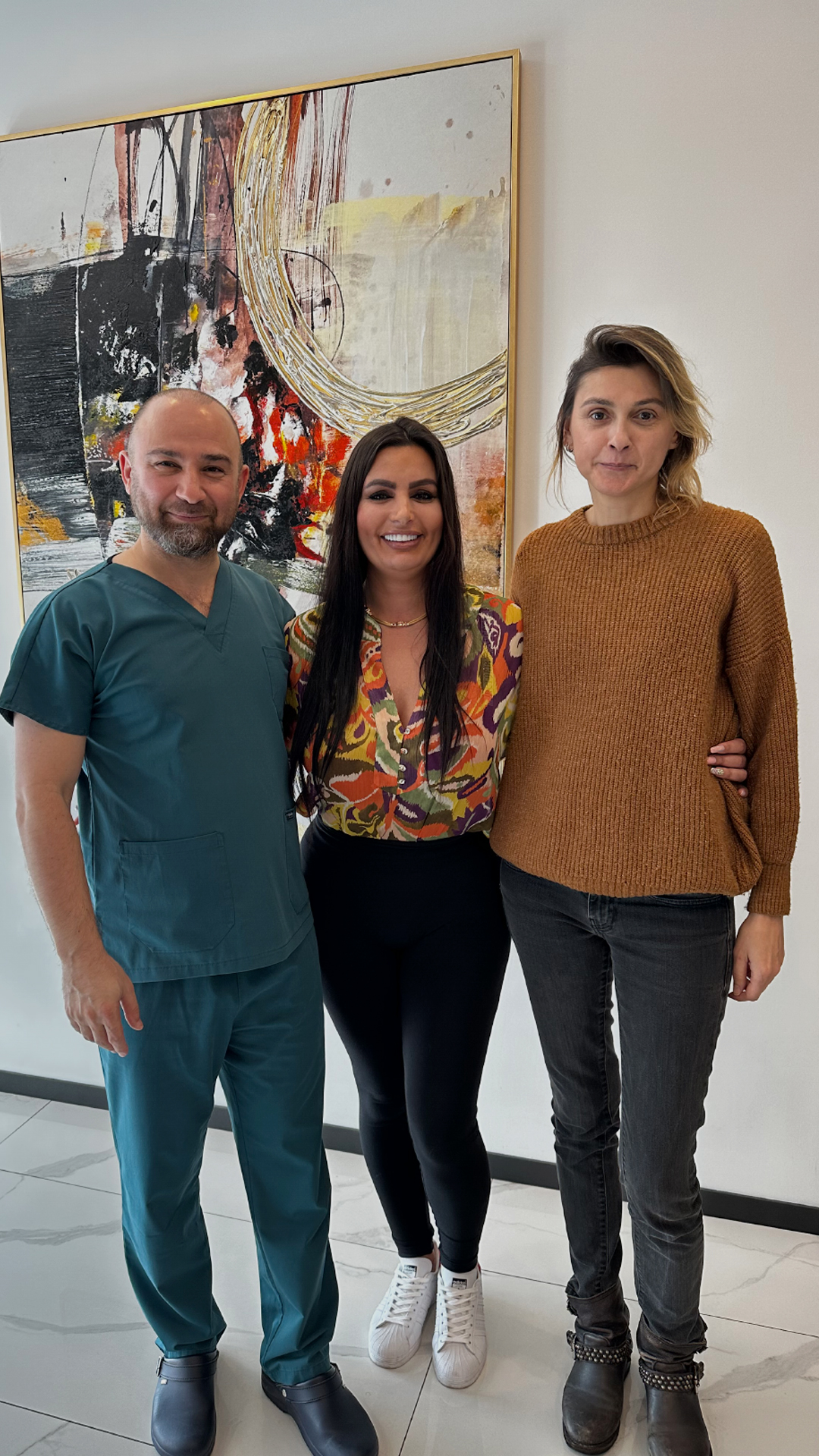 Karina's


Your Vaser liposuction in Turkey, up to 70% savings
Our English-speaking coordinators will send you a personalised quote within 24 hours, with no obligation.
Our Vaser liposuction techniques
-
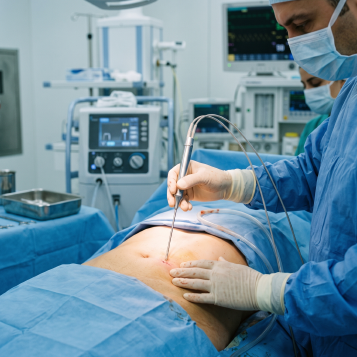 STANDARD VASER LIPOSUCTION
The Vaser probe emits 36 kHz ultrasound that selectively liquefies fat cells before they’re drawn out. This approach spares more of the surrounding tissue and encourages better skin retraction for natural contours.
-
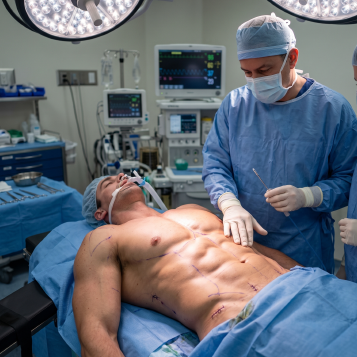 HIGH-DEFINITION BODY SCULPTING
Vaser HD liposuction redraws the muscle contours with surgical precision. The abs, pecs and deltoids are brought out by removing the surface fat that covers them.
-
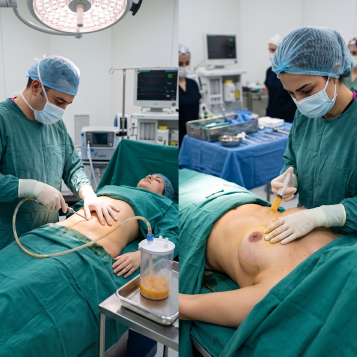 VASER WITH FAT TRANSFER
The fat removed with Vaser keeps good cell viability. It can be reinjected into other areas, such as the buttocks, the breasts or the face, for a balanced, whole-body reshape.


Common questions about Vaser liposuction
What is Vaser liposuction, and how does it differ from standard liposuction?
Vaser liposuction (Vibration Amplification of Sound Energy at Resonance) uses ultrasound to liquefy fat cells before they’re suctioned out. Unlike standard liposuction, Vaser liposuction in Turkey targets fat selectively while largely sparing the nerves, blood vessels and surrounding tissue. It also gives better skin retraction, often with less bleeding.
Which areas of the body can Vaser liposuction treat?
How long do the operation and recovery take?
The operation takes 1 to 4 hours depending on how many areas are treated. Early recovery needs 7 to 10 days of rest. A compression garment is recommended for 4 to 6 weeks. The final results show between 3 and 6 months after surgery.
Is Vaser liposuction painful?
Post-op pain is usually mild to moderate and well managed with ordinary painkillers. Compared with traditional liposuction, Vaser often causes less bruising, which can make recovery more comfortable. Most patients are back at work after 1 to 2 weeks.
Am I a good candidate for Vaser liposuction?
The ideal candidates are close to their ideal weight, with stubborn fat that won’t shift with exercise or diets. Good skin elasticity is a plus. Vaser liposuction isn’t a weight-loss method: it’s about sculpting and reshaping the body. Our team assesses whether it’s right for you when you request a free quote.
Can Vaser liposuction be combined with other procedures?
Yes, Vaser liposuction often goes hand in hand with fat transfer to the buttocks (a BBL), a tummy tuck or breast fat transfer. The fat removed with Vaser keeps good cell viability, which makes it suitable for reinjecting. Combining procedures also makes better use of the cost of your stay.
Why choose Body Expert for Vaser liposuction in Turkey?
Body Expert works with a partner clinic in central Istanbul, fitted with current Vaser machines. You get English-speaking care throughout, an organised stay (5-star hotel, VIP transfers) and 12 months of post-op follow-up.
Discussing your project
Your patient journey for a Vaser liposuction
Free quote online
You send your photos and medical questionnaire. Our English-speaking coordinators send you a detailed quote within 24 hours.
Pre-op assessment in Istanbul
When you arrive, the partner clinic runs full blood tests and a clinical exam. Your surgeon marks up the areas to treat and sets the suction plan to suit your build.
Surgery at the clinic
The Vaser liposuction takes place under local or general anaesthetic, depending on how much is being treated. It lasts between 1 and 4 hours, according to the volume involved.
Post-op follow-up and heading home
You are followed throughout your stay in Istanbul. Once you’re back home, our team stays reachable for 12 months to support your recovery.

Understanding Vaser liposuction in Turkey
You eat well, you train regularly, and yet some areas just won’t budge. Love handles, a little belly, saddlebags, arms that thicken no matter what: these pockets of stubborn fat wear you down over time. Vaser liposuction goes after exactly what exercise alone can’t shift. And when it’s done in Istanbul, in a clinic kitted out with the latest Vaser equipment, the value for money becomes hard to ignore.
Every year, many European patients choose Turkey for their liposuction. Among the techniques on offer, Vaser has won over the people who want a precise result, a gentler recovery and a sculpted shape rather than one that’s simply slimmer.

So what exactly is Vaser?
VASER stands for Vibration Amplification of Sound Energy at Resonance. Behind that rather technical name sits the third generation of ultrasound-assisted liposuction, developed in the early 2000s and cleared by the US FDA back in 2002. The idea is straightforward: a thin probe (2.2 to 4.5 mm across) sends out ultrasound waves at 36 kHz that selectively break up fat cells, through a physical effect called cavitation. The fat turns into a liquid emulsion, which is far easier to draw out through fine cannulas.
What sets it apart from standard liposuction is that selectivity. The ultrasound targets fat cells (adipocytes) without harming the blood vessels, nerves or surrounding tissue. The upshot is a noticeably gentler recovery: less bruising, less pain, a quicker return to normal. A comparative study by Garcia and Nathan (2008) measured much lower blood loss with Vaser than with traditional liposuction.
Today, Vaser is the benchmark for high-definition liposculpture. Long established in South America and the United States, it has taken hold in Turkey too, where surgeons have trained under the best international specialists.

Vaser versus standard liposuction: what really changes
It’s a fair question, and one we hear a lot: what separates traditional liposuction from Vaser? The results aren’t quite the same, and here’s why.
Standard liposuction removes fat mechanically. The surgeon inserts a cannula and works it back and forth. It’s effective, but fairly hard on the tissue. With Vaser, the fat is first liquefied by ultrasound before it’s drawn out. That extra step softens the whole procedure: the suction is gentler, the cannulas are finer, and the surgeon shapes the body with something close to a craftsman’s precision.
The direct upshot is better skin retraction. The connective tissue framework is better preserved, which helps the skin drape back over the muscle. Where standard lipo can sometimes leave things looking a little slack, Vaser gives tauter, more defined contours. That’s what makes the well-known ‘high definition’ possible: bringing out the abs, the pecs or the deltoids by removing the thin layer of fat that hides them, a liposculpture approach first described in 2007 by Hoyos and Millard. A randomised trial by Nagy and Vanek (2012), run side by side on both halves of the same patients’ bodies, confirmed this better skin retraction and lower bleeding on the Vaser-treated side.
The technology also earns its keep on fibrous areas, or when revising an earlier liposuction that disappointed. After a first operation, scar-tissue fibrosis makes fat harder to remove; the ultrasound breaks that fibrosis down and makes suction possible again. On safety, a 2023 consensus from five plastic surgeons in Plastic and Reconstructive Surgery Global Open set out eighteen recommendations backing how well Vaser works and how well it’s tolerated, with significant bleeding judged very rare (Ruff et al., 2023).

Which areas can be treated?
Almost any area that stores stubborn fat can benefit. The most common requests are for the tummy, hips, thighs, arms, back and chin. The technique adapts just as well to the calves, the knees, and even the neck, to redefine the line of the jaw.
In men, Vaser is often used for the fatty part of gynaecomastia, the extra fat that builds up on the chest. If glandular tissue is also present, the surgeon can remove it through a small incision. Its knack for targeting fat while encouraging the skin to retract explains why it suits this tricky area so well.
To take the reshaping further, Vaser pairs happily with other procedures. The fat that’s removed keeps excellent cell viability, which makes it suitable for reinjecting: into the buttocks with a Brazilian Butt Lift, into the chest with breast fat transfer, or into the face. Combining it with a tummy tuck is common too, to get a flat, defined stomach in a single operation.

What the operation involves at Body Expert
The operation follows a four-stage routine, honed over years of practice. The surgeon starts by infiltrating a tumescent solution into the area to be treated. This fluid, a mix of saline, a local anaesthetic and a vasoconstrictor, swells the tissue and keeps bleeding down.
Next comes the Vaser probe, slipped in through 3 to 5 mm micro-incisions. The ultrasound emulsifies the fat by controlled cavitation, while largely sparing the neighbouring structures. The third stage is the suction itself, done with fine 3 to 4 mm cannulas that allow precise shaping of the contours. Finally, the micro-incisions close without visible stitches, and compression dressings go on.
The whole thing takes 1 to 4 hours depending on the number of areas and the volume to remove. It’s carried out under local or general anaesthetic, based on what the pre-anaesthetic consultation decides. At Body Expert, that call is always made for the patient’s comfort and safety, never for convenience.
Want to compare the different approaches? Our complete guide to liposuction runs through the options and when each one is used.

Recovery: what to really expect
Let’s be honest: the first few days are no picnic. Swelling, bruising and a feeling of deep muscle ache all come with the territory. But next to standard liposuction, recovery from Vaser stays noticeably lighter, and that’s one of its real strengths.
You’ll wear a compression garment (the lipopanty) for 4 to 6 weeks. It’s a bit of a nuisance, but it supports the skin as it retracts and keeps swelling down. Lymphatic drainage sessions help a great deal too: the 2023 consensus suggests daily to weekly sessions, around 6 to 15 in all, until the swelling settles (Ruff et al., 2023).
Most people are back at work after 1 to 2 weeks, depending on the job. You steer clear of hard exercise for a month, and baths and swimming for three weeks. The contours start to show as soon as the swelling recedes, but the final result is best judged at around 3 to 6 months, once the skin has fully settled over the new shape.
As for the risks, it’s better to know them without blowing them out of proportion. The most common are haematomas and bruising, which clear up on their own. A seroma, a pocket of fluid under the skin, can form but is easily drained with a needle. Infections stay rare, thanks to the strict hygiene protocols at our clinic.

What a Vaser liposuction in Turkey costs
This is often the question that tips the decision. The reality is that, for comparable equipment and expertise, the same operation costs far less in Istanbul than in the UK: you can save up to 70%. The figures, package by package, are waiting for you in the pricing table higher up this page.
That gap has nothing to do with cutting corners on quality. It comes down to the lower cost of living in Turkey, the sheer number of procedures that spreads the cost of equipment, and the lack of any middleman: with Body Expert, you’re looked after directly by our clinic and our surgeons, with no agency and no commission.
Our packages bring together the surgery, the hospital fees, the full pre-op work-up, the accommodation, the transfers between airport, clinic and hotel, and English-speaking support from beginning to end. And if you’re weighing up several areas or several procedures, combining them into a single trip makes the most of the whole stay.

In summary
Vaser liposuction isn’t a weight-loss method, it’s a sculpting tool. Using 36 kHz ultrasound that liquefies fat before drawing it out, it goes after stubborn pockets while sparing the tissue around them: less bruising, better skin retraction and cleaner contours, right up to the high definition that reveals muscle relief. Tummy, hips, thighs, arms, back, chin, gynaecomastia in men: most areas lend themselves to it, and the fat that’s collected can even be reinjected for a full reshape.
The right candidate is close to their ideal weight, with skin that keeps good elasticity and realistic expectations. The operation lasts between one and four hours, recovery calls for a compression garment for a few weeks, and the final result reveals itself between the 3rd and 6th month. It lasts, because the fat cells that come out don’t grow back, as long as you keep up a healthy lifestyle.
That leaves the question of budget and peace of mind. By choosing Istanbul, you get surgeons who specialise in Vaser liposculpture, our partner clinic in Istanbul, selected for its facilities and its surgeons’ experience, and a stay organised around a 5-star hotel, VIP transfers and 12-month follow-up, for up to 70% savings compared with the UK. The best way to find out what’s realistic in your case? Talk it through. Send your photos to our English-speaking coordinators and get your free quote within 24 hours, with no obligation.
Sources and references
- Garcia, O., & Nathan, N. (2008). Comparative analysis of blood loss in suction-assisted lipoplasty and third-generation internal ultrasound-assisted lipoplasty. Aesthetic Surgery Journal, 28(4), 430-435. https://pubmed.ncbi.nlm.nih.gov/19083558/
- Hoyos, A. E., & Millard, J. A. (2007). VASER-assisted high-definition liposculpture. Aesthetic Surgery Journal, 27(6), 594-604. https://pubmed.ncbi.nlm.nih.gov/19341688/
- Nagy, M. W., & Vanek, P. F. (2012). A multicenter, prospective, randomized, single-blind, controlled clinical trial comparing VASER-assisted lipoplasty and suction-assisted lipoplasty. Plastic and Reconstructive Surgery, 129(4), 681e-689e. https://pubmed.ncbi.nlm.nih.gov/22456382/
- Ruff, P. G., Garcia, O., Nykiel, M. J., & Galanis, C. J. (2023). Consensus-based recommendations for VASER ultrasound-assisted liposuction. Plastic and Reconstructive Surgery Global Open, 11(6). https://pmc.ncbi.nlm.nih.gov/articles/PMC10335824/