Breasts
Comfort
Figure
Wellbeing
Relief
Breast reduction
Breast reduction, or reduction mammaplasty, lowers the volume of the breasts to ease back and shoulder pain and bring your figure back into balance. More than 90% of patients say they are satisfied after the operation (Lonie et al., 2019).
Breast reduction at a glance
Hospital stay
3 days
Wait before showering
2 days
Procedure duration
2 to 4 hours

Medical validation

Understanding breast reduction
Overly large breasts are not just about how you look. Day to day, breast hypertrophy takes its toll: back and shoulder pain, grooves dug in by bra straps, irritation under the breasts, and exercise that turns into a real ordeal. Breast reduction tackles the cause by removing excess glandular tissue, fat and skin, for a lighter chest that sits in proportion with your body.
Body Expert stays with you from the first conversation through to your follow-up after the operation. If you are thinking about a breast reduction in Turkey, the surgeons at our partner clinics guide you at every stage.

The stages of your breast reduction
Pre-operative consultation
This is where it starts. The surgeon takes the time to assess your body, your expectations and your general health. They measure, talk through the volume you would like and go over the techniques that suit your case. Breast imaging is arranged when your age or medical history calls for it.
Getting ready for surgery
A full set of blood tests and an appointment with the anaesthetist are booked. The surgeon gives you the key pre-op instructions: stop smoking at least 6 to 8 weeks before and after the operation, and pause anti-inflammatories and blood thinners. The final surgical plan is confirmed.
The day of the operation
Surgery is done under general anaesthetic and takes between 2 and 4 hours. The surgeon removes the excess glandular tissue and fat, repositions the areola and reshapes the breast for a natural look. The incisions are closed with dissolvable stitches.
The first hours after
A support bra goes on as soon as the operation is over. The good news: pain usually stays moderate and is managed with simple painkillers. You can shower after 48 hours, and the clinic stay lasts 1 to 3 days depending on your case.
Post-operative follow-up
Check-up appointments make sure everything is healing as it should. The support bra needs to be worn day and night for 4 to 6 weeks. Scar massage is recommended from the 3rd or 4th week. You can go back to light activities after around 3 weeks, and to sport after 6 weeks.
Final results
The shape and volume of the breasts settle little by little. The scars fade over the months and become barely visible after 12 months. The results last, and the breasts keep a natural look.
How much does a breast reduction cost?
In the UK, the bill adds up fast
In the UK, a breast reduction is a sizeable outlay once you go private, where consultant and anaesthetist fees stack up on top of the clinic charge. The NHS does fund the operation in some cases, when the overly large breasts are causing documented physical symptoms and enough tissue is removed, but the criteria are strict and waiting lists are long. Many women who want it done on their own timeline end up paying privately.
In Turkey with Body Expert
With Body Expert, you save up to 70% compared with UK prices. That has nothing to do with cutting corners: the difference comes down to the lower cost of living in Turkey and our direct, no-middleman approach.

Everything is organised for you: the surgery at our partner clinic, a 5-star hotel, VIP transfers, a dedicated English-speaking assistant and 12 months of follow-up. A clear quote, with no nasty surprises. You will find the full breakdown, line by line, in the price table below.
| UK | Body Expert (Turkey) | |
| Overall budget | High, with a large amount to pay yourself | Up to 70% savings |
| Consultant fee top-ups | Common in private care | Included in the package |
| Accommodation | Not included | Hotel included |
| Support | None | Dedicated English-speaking assistant |
| Post-operative follow-up | Paid appointments | Included in the package |

Get your personalised quote
Our medical advisers will call you back within 24 hours, with no obligation, to talk through your situation and put together a programme that fits.
Our prices and packages
Breast Reduction
Feel free to scroll through the different prices from right to left!
Breast reduction techniques
-
 Inverted-T technique
Anchor-shaped scars suit larger reductions, beyond 500g per breast. The result holds up well over time.
-
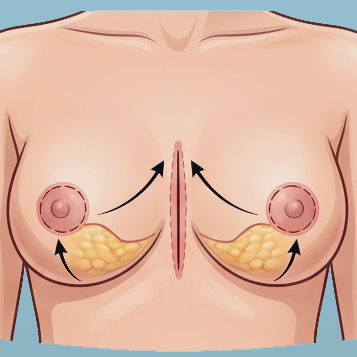 Vertical technique
The scar runs around the areola then down vertically, for moderate reductions. The traces stay more discreet.
-
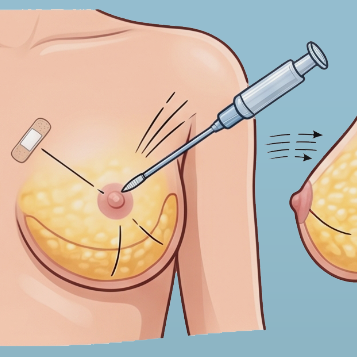 Liposuction alone
It suits light reductions, with almost no visible scars. It is reserved for cases where the excess is mainly fatty.
-
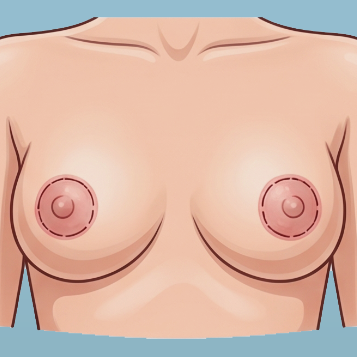 Periareolar technique
The scar stays only around the areola, which suits small reductions with mild sagging.


A closer look at breast reduction
So, what is breast hypertrophy?
Breast hypertrophy (overly large breasts) means the breasts have developed far more volume than the rest of the body would suggest. It can be hormonal, genetic or tied to weight changes. It often shows up at puberty, but it can also appear or get worse after a pregnancy, significant weight gain, or with hormonal treatments such as the contraceptive pill.

There are several degrees. Moderate hypertrophy is an excess of volume that is a functional nuisance without major knock-on effects. Severe hypertrophy brings chronic pain, postural problems and a real hit to quality of life. Gigantomastia is the most extreme form, with breast volume that is hugely out of proportion and needs surgery tailored to it.
The physical consequences are well documented: back, neck and shoulder pain, painful grooves where bra straps dig into the skin, irritation and chafing in the fold under the breast (especially in summer), breathing difficulties in some extreme cases, and a real limit on sport and exercise. Emotionally, large breasts often come with self-consciousness, a poor body image, trouble finding clothes that fit, and a tendency to withdraw socially.
Who is breast reduction for?
Breast reduction is for women whose breast size causes real physical or emotional distress. It can be done once breast growth has finished, often around 17 or 18. Even so, it is better to wait until your bust size has been stable for at least a year.

Surgeons also suggest putting the operation off if you are planning a pregnancy in the near future, since pregnancy and breastfeeding can change the volume and shape of the breasts quite a bit and might mean more surgery later. There is no upper age limit, as long as your general health allows it.
Marked breast asymmetry can also be a reason for surgery. After pregnancy, a breast reduction can be combined with other procedures such as a breast lift (mastopexy) or a tummy tuck to restore the whole figure.
There is more than one surgical technique
Three main techniques are used in breast reduction. The choice depends on the volume to remove, the degree of sagging (ptosis), the quality of your skin and what you want to achieve aesthetically.

- The inverted-T technique (Wise pattern) is the most common and the most versatile. It uses three incisions: around the areola, vertically from the areola to the fold under the breast, and horizontally along the crease. It suits larger reductions (beyond 500g per breast) and lets the surgeon take away a lot of tissue while reshaping the breast well. The final scar, shaped like a ship’s anchor, stays discreet because it sits where a bra naturally covers it.
- The vertical technique (Lejour) is the go-to for moderate reductions. It drops the horizontal incision in the fold, so the scarring comes down to two lines: around the areola and vertically below the breast. It gives good breast projection and a natural look, and the result improves over time as the tissues settle. It is not suited to very large reductions or heavily sagging breasts, though.
- The periareolar technique is kept for small reductions. The incision stays around the edge of the areola, which keeps visible scarring to a minimum. It is a good option for younger patients who want as little scarring as possible. A little liposuction can be added to refine the result, especially when there is a significant fatty component in the breast.
In some cases the surgeon may go for breast liposuction on its own, a minimally invasive technique that suits large but not very saggy breasts where the excess is mainly fatty. It leaves almost no scar, but it cannot correct real sagging or move the areola.
A thorough pre-operative assessment
The pre-operative assessment is a make-or-break stage for a good outcome. At the first consultation, the surgeon carries out a full clinical examination of the breasts: measuring the volume, checking symmetry, judging skin quality, the degree of sagging and where the areola sits. Standardised photographs are taken to record the starting point and act as a reference.

The surgeon talks through your expectations for the volume you want and the final shape in detail.
They may run computer simulations to help you picture the possible results. It is also the moment to talk about any future pregnancy plans, any family history of breast cancer and anything that might make the surgery unsuitable for you.
A breast imaging work-up (usually a mammogram, sometimes with ultrasound) is recommended from 40 onwards, or earlier if you have a family history. It rules out any pre-existing problem and serves as a baseline for later follow-up.
A pre-operative blood test and an anaesthetic consultation round off the preparation.
And what about healing?
In the first few weeks they look pink, slightly swollen, and can be itchy, a sign that healing is underway.

Between the 3rd and 6th month, the scars go through a normal inflammatory phase where they can look redder or thicker. That is temporary and nothing to worry about.
After 6 months, the scars start to fade and turn pale.
The final scar result usually shows between 12 and 18 months after the operation.
Daily scar massage (starting around the 3rd or 4th week after surgery, once the scar has closed), silicone-based creams and strict sun protection for the first year all help the scars look their best.
You will see the change in volume and shape the moment you leave theatre. The final aesthetic result, though, comes after 12 months, once the swelling has gone down and the tissues have settled into their new position. In a prospective study published in the Journal of Plastic, Reconstructive & Aesthetic Surgery, satisfaction scores stayed high even after a median follow-up of 6 years, which points to lasting benefits, both physical and emotional (Crittenden et al., 2023).
The results are considered permanent. The surgeon has removed excess glandular tissue, fat and skin, and that tissue does not grow back. That said, a future pregnancy, significant weight gain or hormonal shifts can change the breast volume a little. To hold onto the results long term, it is worth keeping a healthy lifestyle with a balanced diet and regular exercise.
What about nipple sensation and breastfeeding?
Sensation in the nipples and areolae often changes in the weeks after surgery. It is usually temporary, and feeling comes back gradually, most often over 6 to 18 months. The inferior pedicle technique tends to preserve nipple sensation best, because it keeps the main nerve connections intact.
As for breastfeeding, it remains possible, but it is not guaranteed. It depends on the technique used and the amount of tissue removed: many patients produce less milk than before the operation. If you are planning a pregnancy, mention it to your surgeon so they can choose a technique that protects the milk ducts as much as possible. It is best to wait at least 6 months after surgery before conceiving, so the tissues can settle.
Are there possible complications? And how do you prevent them?
Breast reduction is a well-established operation, and serious complications stay rare when the pre- and post-op instructions are followed.

Worth knowing: the overall complication rate reported in the literature is around 19.9%, counting minor ones too (Liao et al., 2023).
The most common issues are a temporary change in nipple sensation (usually reversible), delayed healing (especially in smokers), haematomas and seromas (fluid building up under the skin). Some leakage of lymph fluid from the scars can happen in the first few weeks and is generally harmless.
Rarer but more serious complications include skin or areolar necrosis (a higher risk in smokers), infection needing antibiotics, and, very rarely, a blood clot or a pulmonary embolism. Hypertrophic or keloid scars can develop in patients who are prone to them.
Prevention comes down to a few key things. Stopping smoking completely (vaping and cannabis included) at least 6 to 8 weeks before and after surgery is needed to cut the risk of skin necrosis and delayed healing. Pausing blood thinners and anti-inflammatories has to be planned with the surgeon and anaesthetist. Wearing the support bra, following the hygiene advice and keeping to your post-op appointments complete the picture.
Breast reduction: is it covered by the NHS or insurance?
In the UK, a breast reduction can be funded by the NHS when the overly large breasts are causing documented physical symptoms. To qualify, enough tissue usually has to be removed (national NHS guidance typically asks for 500g per breast, or about four cup sizes), and you will normally need a record of symptoms such as back, neck and shoulder pain that have not settled with other measures.

When it is funded, the health service covers the operation and the hospital stay.
The criteria are strict, though, and waiting lists are long, so many women choose to go private, where consultant and anaesthetist fees sit on top of the clinic charge. Private medical insurance may cover part of it, depending on your policy.
If the request is purely for cosmetic reasons (a smaller size with little tissue removed), it is treated as a cosmetic operation and the cost is entirely yours. If you want to apply for NHS funding, start with your GP and the criteria set by your local integrated care board.
Breast reduction and quality of life: what the studies say
The benefits of breast reduction are well backed by research. A systematic review of 1816 patients showed significant gains across every area measured by the BREAST-Q questionnaire (Liao et al., 2023):
- Satisfaction with the breasts rose by 52.1 points
- Psychosocial wellbeing by 43 points
- Sexual wellbeing by 38.2 points
- Physical wellbeing by 27.9 points

A larger systematic review of 95 studies (9716 patients) reported, in the 58 studies that measured satisfaction (5867 patients), an average rate of 90.26%, with measurable gains in both physical and mental health (Lonie et al., 2019).
Patients consistently report relief from back pain, better posture, an easier time finding clothes and getting back into sport, and a real lift in self-esteem.
A prospective study with long-term follow-up (a median of 6 years, out to 12 years) confirmed that these gains last and do not fade over time. Quality-of-life and satisfaction scores stayed stable and well above the pre-op figures, reaching levels on a par with or above the general population (Crittenden et al., 2023). In a 10-year retrospective series, more than 95% of patients surveyed said they would have the operation again (Gonzalez et al., 2012).
All of this confirms that breast reduction is not a simple cosmetic procedure but genuine reconstructive surgery that changes patients’ quality of life for good. Our guide to breast augmentation and our page on the breast lift walk you through the breast surgery options available at Body Expert.
In summary
Breast reduction, or reduction mammaplasty, brings relief to women weighed down by a heavy chest: back and shoulder pain, irritation, discomfort when exercising, and the self-consciousness that comes with it day to day. By removing excess glandular tissue, fat and skin, the surgeon gives the breasts a volume that is in proportion and that lasts.
The choice of technique (inverted-T, vertical or periareolar) depends on how much needs to come off and the quality of your skin. Your surgeon makes that call after a full examination and imaging. On recovery, expect a few days in hospital, a support bra for 4 to 6 weeks and a return to sport around the 6th week. The scars fade noticeably over the first year.
The picture is clear: more than 9 in 10 patients are satisfied, with pain relief and renewed confidence that hold up over time. This really is reconstructive surgery, not just a cosmetic touch-up.
With Body Expert, everything happens in Istanbul, guided from start to finish by an English-speaking assistant, in partner clinics we select against our own quality criteria, with up to 70% savings compared with the UK. Want a clear view of your own case? Ask for your free, personalised quote and we will get back to you within 24 hours.
Sources and references
- Liao, C. D., Xia, J., Wang, K., Zhao, K., Glickman, L. T., & Agrawal, N. A. (2023). A Systematic Review of the Impact of Patient Factors on BREAST-Q Outcomes After Reduction Mammoplasty. Annals of Plastic Surgery, 90(6S Suppl 5), S667-S673. https://doi.org/10.1097/SAP.0000000000003471
- Crittenden, T. A., Watson, D. I., Ratcliffe, J., & Dean, N. R. (2023). Long-term outcomes of breast reduction surgery: A prospective cohort study. Journal of Plastic, Reconstructive & Aesthetic Surgery, 79, 58-67. https://doi.org/10.1016/j.bjps.2023.01.035
- Lonie, S., Sachs, R., Shen, A., Hunter-Smith, D. J., Rozen, W. M., & Seifman, M. (2019). A systematic review of patient reported outcome measures for women with macromastia who have undergone breast reduction surgery. Gland Surgery, 8(4), 431-440. https://doi.org/10.21037/gs.2019.03.08
- Gonzalez, M. A., Glickman, L. T., Aladegbami, B., & Simpson, R. L. (2012). Quality of life after breast reduction surgery: a 10-year retrospective analysis using the BREAST-Q questionnaire: does breast size matter? Annals of Plastic Surgery, 69(4), 361-363. https://pubmed.ncbi.nlm.nih.gov/22964671/
Your plan deserves tailored support
Get in touch with our experts for a free, no-obligation quote and we will build your breast reduction programme at your own pace.
Our patients talk about us
-
 Rym's
Rym's -
 Oceanie's
 -
 Jessy's
 -
 Lylia's


Common questions about breast reduction
Who is eligible for a breast reduction?
Women with overly large breasts who have back pain, functional discomfort or a real emotional impact are the main candidates. It can be considered once breast growth has finished, often around 17 or 18. A consultation with a surgeon is the way to check whether it is right for you.
How does the operation work?
It is done under general anaesthetic and takes 2 to 4 hours. The surgeon removes excess glandular tissue and fat, repositions the areola and reshapes the breast. The stitches are dissolvable and the scars fade gradually over the months.
Which technique will be used in my case?
It depends on how much needs to be removed and the shape of your breasts. The inverted-T technique is the most common for larger reductions, the vertical technique suits moderate reductions, and the periareolar technique is for lighter cases. Your surgeon will recommend the best fit for you.
How long is the recovery?
Plan on resting for 10 to 15 days. You can get back to light activities after around 3 weeks, and to sport after 6 weeks. The support bra needs to be worn day and night for 4 to 6 weeks.
Are the results permanent?
The results of a breast reduction are considered lasting. The breasts keep their new volume and shape over time. That said, a pregnancy, significant weight gain or hormonal changes can alter the breast volume a little.
Can I breastfeed after a breast reduction?
Breastfeeding remains possible, but it is not guaranteed, and milk production is often reduced. If you are planning a pregnancy, let your surgeon know so they can adapt the technique, and wait at least 6 months after the operation before conceiving.
Is breast reduction funded?
In the UK, the NHS may fund the operation when the overly large breasts are causing documented symptoms and enough tissue is removed (often around 500g per breast, or about four cup sizes). The criteria are strict and waiting lists long, so many women go private, where insurance may cover part of the cost depending on the policy.
What are the risks of the operation?
Serious complications are rare. The more common risks are a temporary change in nipple sensation, delayed healing and haematomas. Following the pre-op advice, especially stopping smoking, cuts these risks significantly.
What are the alternatives to surgical breast reduction?
When the excess is mainly fatty and there is little sagging, breast liposuction can be a less invasive alternative. A breast lift (mastopexy) may be an option if the main issue is sagging rather than excess volume.
Why choose Body Expert for your breast reduction?
Body Expert offers direct care at our partner clinic in Istanbul, with experienced plastic surgeons and up-to-date equipment. The package covers the surgery at our partner clinic, a 5-star hotel, VIP transfers, a dedicated English-speaking assistant and 12 months of follow-up, for up to 70% savings compared with the UK.
Let’s discuss your project
OUR ARTICLES ON Breast surgery
-
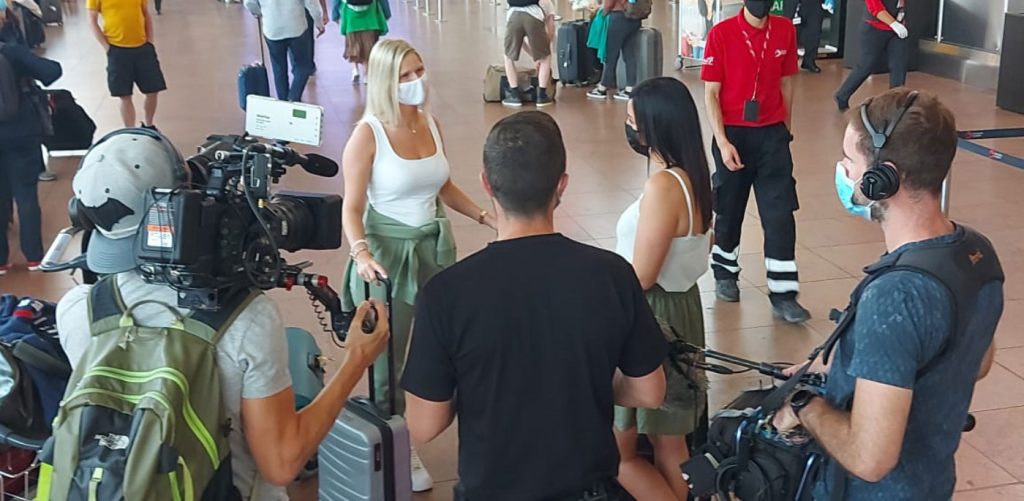 Breast enhancement and dental crowns in Istanbul: Marie and Océanie tell their story on RTL TVI
 -