Breasts
Volume
Figure
Femininity
Breast augmentation
Breast augmentation is one of the most requested cosmetic procedures. Perhaps your breasts feel too small, or one sits differently from the other, or pregnancy and weight loss have left them flatter than before. The reasons vary from woman to woman, and so do the options. Implants or fat transfer, we’ll walk you through both so you can approach your decision with a clear head.
Breast augmentation at a glance
Hospital stay
1 day
Wait before showering
4 days
Procedure duration
2-3 hours

Medical validation
Understanding breast augmentation
Breast augmentation is one of the most common cosmetic procedures in the world, sitting at the top of the ISAPS global figures year after year. Behind that ranking are women with very different lives, each with her own story and her own reasons.

Those reasons vary a great deal: breasts felt to be too small (breast hypoplasia), a loss of volume after pregnancy or breastfeeding, a noticeable difference between the two breasts, or the wish to rebalance the figure after major weight loss. Which technique fits, breast implants or fat transfer to the breast, comes down to your build, what you’re hoping for and your surgeon’s opinion.
At Body Expert, the plastic surgeons at our partner clinic take the time to look at each case on its own terms. The aim never changes: a natural result, in keeping with your figure, that holds up over the years. To see our packages in Istanbul, have a look at our page on breast augmentation in Turkey.
The stages of your journey
Consultation and pre-operative assessment
It all starts with a proper conversation. Your surgeon gets to know what’s driving you and examines your breasts: skin quality, how much they’ve dropped, chest measurements. Blood tests, and breast imaging when your age or history calls for it, round things off. You leave with a treatment plan made for you and a detailed quote.
Getting ready for surgery
A few simple but important instructions: stop smoking at least a month beforehand, and pause certain medicines such as aspirin or anti-inflammatories. An anaesthetic consultation confirms you’re fit for surgery, while your Body Expert assistant arranges every part of your stay.
The day of surgery
Under general anaesthetic, the operation takes 1 to 3 hours depending on the technique. The surgeon makes the incision (under the breast, around the areola or in the armpit), places the implants in the chosen plane (in front of or behind the pectoral muscle), then closes with hidden sutures. A dressing and a support bra go on straight away.
Post-operative follow-up and recovery
You stay in the clinic under observation for 24 to 48 hours. Any pain is usually mild and settles well with painkillers. The support bra is worn day and night for 4 to 6 weeks. Your follow-up dates are set from the outset: day 7, then months 1, 3, 6 and 12.
Final result
The implants settle into place gradually over the weeks. The final result shows between the 3rd and 6th month, once healing is complete. Your breasts take on a natural shape, true to what you settled on together at the consultation.

Turn your plan into reality with Body Expert
From your first consultation to the final result, your surgeon and your English-speaking coordinator are with you, with a detailed quote within 24 hours.
OUR PRICES AND PACKAGES
Breast Augmentation
Offre et tarif : Breast Augmentation
Feel free to scroll through the different prices from right to left!
The different types of breast augmentation
-
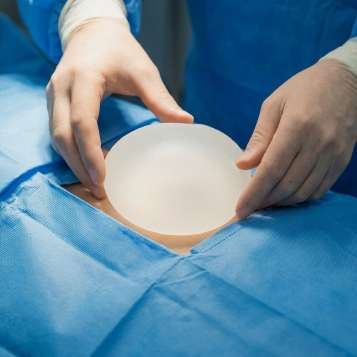 Breast implants
Silicone or saline, a range of volumes, round or anatomical shapes depending on the look you’re after.
-
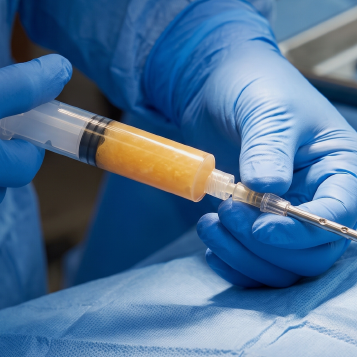 Fat transfer to the breast
A completely natural boost using your own fat. A soft result, with no foreign material.
-
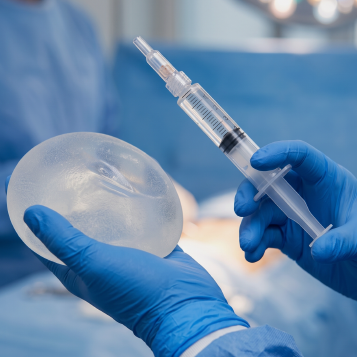 Composite augmentation
The best of both: implants for volume, fat transfer to refine the contours.
-
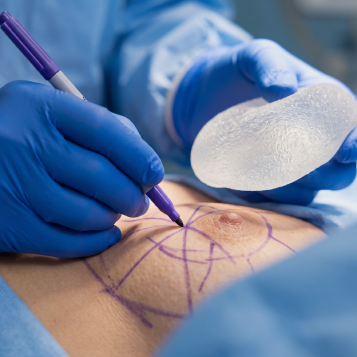 Breast lift with implants
A lift and an augmentation in one go, to correct sagging and bring back shape.


The cost of breast augmentation
Why Turkey changes the picture
In the UK, breast augmentation with implants is a sizeable outlay, and rarely covered when the reason is cosmetic. That price tag is often what stalls, or postpones, a plan a woman has thought long and hard about.

By going through Body Expert in Istanbul, you save up to 70% on UK prices. Everything is organised for you: a 5-star hotel, VIP transfers, English-speaking support and 12 months of follow-up. You’ll find the breakdown in the pricing section of this page.

Funding and cover
Breast augmentation counts as an elective procedure, so in the vast majority of cases the NHS won’t cover it. Partial cover may still be possible in a few specific medical situations:
- Severe breast hypoplasia (an A cup or smaller).
- Marked asymmetry (more than one cup size between the two sides).
- Reconstruction after a mastectomy.
Your best move is to check with your health insurer about any top-up cover.
Before & After
Discover our patients’ results
Breast Augmentation with Implants

Avant-après

Avant-après

Avant-après

Avant-après

Avant-après

Avant-après

Avant-après

Avant-après

Avant-après

Avant-après

Avant-après

Avant-après
Avant-après
Your ideal figure starts here
Natural results, English-speaking follow-up and up to 70% savings on UK prices, with a free quote and no obligation.
Our patients talk about us
-
 Rym's
Rym's -
 Oceanie's
 -
 Jessy's
 -
 Lylia's


Common questions about breast augmentation
Am I a good candidate for breast augmentation?
Breast augmentation is for healthy adult women who are bothered by the size or shape of their breasts. Whether the reason is cosmetic (small breasts, asymmetry) or tied to a pregnancy, weight loss or a mastectomy, the surgeons at our partner clinic check whether it’s right for you at a personalised consultation. It’s also your chance to ask everything on your mind, with no pressure.
What’s the difference between implants and fat transfer?
Breast implants give an immediate result and a real jump in volume. Fat transfer reinjects your own fat for a very natural feel, though the increase stays modest (typically about one cup size per session). Depending on your build and what you want, your surgeon will point you towards one, the other, or the two combined.
How long is the recovery?
For a desk job, allow 7 to 10 days before going back. Light walking starts in the first days. Gentle cardio (a stationary bike, brisk walking) usually picks up around 3 to 4 weeks, and harder chest exercise after 6 to 8 weeks. The support bra is worn day and night for 4 to 6 weeks: a bit of a nuisance, but it’s what protects your result.
Can I breastfeed after breast augmentation?
Yes, in the vast majority of cases. Most women can still breastfeed after implants, though exclusive breastfeeding is a little less common than without surgery. Feeding a baby after a breast augmentation is often still possible once healing is complete.
How long do breast implants last?
Implants filled with cohesive silicone gel aren’t lifetime devices: they are not swapped on a fixed ten-year timetable. The rupture rate for gel implants sits between 8 and 15% at 10 years in FDA Core follow-up studies. Regular ultrasound or MRI screening keeps an eye on them, and an implant is only replaced if something’s wrong or if you want a change.
Is the operation painful?
Pain afterwards is usually mild, with a peak in the first 48 hours. Ordinary painkillers are normally enough to keep it in check. That tight feeling across the chest eases over the first week.
hat are the risks of breast augmentation?
In experienced hands, serious complications stay rare. The main one is capsular contracture (a hardening of the shell around the implant), which affects around 10 to 20% of women at ten years in manufacturer studies. After that come haematoma, infection or a passing drop in nipple sensation. Your surgeon talks you through all of it, without playing anything down, at the pre-operative consultation.
Why choose Body Expert for my breast augmentation?
Body Expert looks after you at our partner clinic in Istanbul, with no middleman. Experienced plastic surgeons, premium-brand implants, full English-speaking support and up to 70% savings on UK prices: everything is set up to make the journey simpler. Ask for your free quote, and you’ll get a personalised proposal within 24 hours.
We discuss your project
Everything about breast augmentation
Breast implants: types and choices
The implant you pick weighs heavily on the final result. These days, the vast majority of implants are filled with cohesive silicone gel: this gel feels very close to natural breast tissue and, if the shell tears, it stays put rather than spreading.
Implants also differ in shape. Round ones give a fuller upper breast, with a slight push-up effect. Anatomical, teardrop-shaped implants follow the natural curve of the breast and suit women after a discreet look. The implant’s profile (low, moderate, high or extra-high) sets the projection, matched to the shape of your chest.
Then there’s the surface of the shell, smooth or textured. Textured implants were long used to limit contracture, but macrotextured models have been pulled from the market over a link to a rare lymphoma (more on that below). Most procedures now use smooth-surface implants.

Incisions and placement
To slide the implant in, the surgeon has a choice of approaches, meaning a choice of incision routes:
- The inframammary incision, in the natural fold under the breast: the most common, with direct access and a well-hidden scar.
- The areolar incision runs around the areola and uses the change in skin colour to disguise the mark.
- The armpit (axillary) incision keeps the scar away from the breast but calls for a particular technique.
Where the implant sits matters just as much:
- Behind the muscle (submuscular), the implant is better camouflaged, which helps slimmer women.
- In front of the muscle (subglandular), recovery is often quicker and there’s less discomfort.
- The dual plane blends the two: the top of the implant under the muscle, the bottom under the gland.
Fat transfer to the breast: a natural alternative
Fat transfer to the breast is the fully natural option for a modest increase, typically about one cup size per session. The idea: take fat by liposuction where there’s too much of it (tummy, thighs, hips), purify it, then reinject it into the breasts.

Its big draw is the complete absence of any foreign material, for a very natural feel. In return, you need a bit of fat to harvest, and some of the graft is reabsorbed in the first few months (often around a third), so a second session is sometimes needed to reach the volume you’re after. On the cancer front, recent data is reassuring: fat transfer does not raise the risk of breast cancer.
Results, scars and how things change
Straight after surgery, the breasts look swollen and ride high on the chest while the swelling goes down. Over the weeks, the implants drop and find their place. The final result is usually there to see between the 3rd and 6th month, once the tissues have softened.

The scars follow the same path: pink and slightly raised at first, they fade to become almost invisible after 12 to 18 months. Massage with a healing cream and strict sun protection in the first year make a real difference to how they end up.
On longevity, an implant isn’t a lifetime device: there is no automatic replacement at ten years. The rupture rate for gel implants sits between 8 and 15% at 10 years in FDA Core follow-up studies, then climbs with time. Regular ultrasound or MRI checks keep an eye on implant integrity, and today’s cohesive-gel implants come with a manufacturer’s warranty.
Possible risks and complications
Like any surgery, breast augmentation carries risks, even if serious complications stay rare with an experienced surgeon. The most common is capsular contracture, the hardening of the tissue shell that forms around the implant: it affects around one woman in ten at ten years and, in its marked forms (Baker grades III and IV), can call for a revision.
After that come haematoma, infection (treated with antibiotics), movement or rotation of the implant, and a temporary drop in nipple sensation. Breast implant-associated anaplastic large cell lymphoma (BIA-ALCL) is, for its part, an extremely rare complication: regulators have established a link with certain textured implants and withdrawn macrotextured models from the market, under closer monitoring. Good news on the motherhood side: breast augmentation is compatible with breastfeeding, since today’s techniques protect the gland and the milk ducts.
Contraindications and precautions
A few situations mean putting off or ruling out surgery: a current pregnancy or breastfeeding, an active infection, clotting disorders or blood-thinning treatment that can’t be paused, and certain autoimmune conditions. Smoking, for its part, weakens healing: it has to stop a month before and a month after the operation, no exceptions.
A full breast check (mammogram and ultrasound) is done beforehand as a matter of course, to rule out anything unusual and to serve as a baseline for follow-up.

Why choose Body Expert for your breast augmentation
Our clinic, in central Istanbul, runs on modern equipment and operating theatres built to international standards. Our plastic surgeons carry out several hundred breast augmentations a year, with results our patients regularly praise.
With Body Expert, everything is organised for you: a 5-star hotel, VIP transfers, English-speaking support and 12 months of post-operative follow-up. Your dedicated assistant stays by your side from your first message to full healing. To compare the packages on offer, take a look at our page on breast augmentation in Turkey.
In summary
Breast augmentation brings volume and balance back to the bust, with two main routes depending on your build and your wishes: silicone implants, for a predictable gain in volume, or fat transfer, which reinjects your own fat for a softer finish. A breast lift can be added if the skin has loosened. Either way, the goal stays a natural result, in keeping with your figure, one you can fully appreciate between the 3rd and 6th month.
Done well by an experienced plastic surgeon, the operation is reliable and its aftermath is usually straightforward: a few days’ rest, a support bra for a month or so, then a gradual return to normal life. Risks exist, as with any surgery, but they stay well managed and are explained to you openly before you decide.
That’s exactly where Body Expert makes the difference: surgeons who specialise in breast surgery, partner clinics in Istanbul selected for their facilities and their teams’ experience, English-speaking support from the first exchange through to healing, and up to 70% savings on UK prices. Choosing where and by whom to have breast surgery is a big decision, and you deserve to see it clearly. Fancy an honest opinion on your plans? Ask for your free quote within 24 hours: you’ll get a personalised treatment plan, with no obligation.
Sources and references
- International Society of Aesthetic Plastic Surgery. (2024). ISAPS global survey on aesthetic/cosmetic procedures. https://www.isaps.org/discover/about-isaps/global-statistics/
- 2. Hua, S., & Xu, H. (2024). Volume retention rate after breast autogenous fat grafting and related influencing factors: A systematic review and meta-analysis. Journal of Plastic, Reconstructive & Aesthetic Surgery, 89, 105-116. https://doi.org/10.1016/j.bjps.2023.12.003
- Agence nationale de sécurité du médicament et des produits de santé (ANSM). (2024). Les implants mammaires : informations générales. https://ansm.sante.fr/dossiers-thematiques/dispositifs-de-surveillance-des-implants-mammaires/les-implants-mammaires-informations-generales
- Valente, D. S., Bins-Ely, P., Kieling, L., Konzen, A. T., Steffen, L. P., Lazzaretti, G. S., & Zanella, R. K. (2024). Breast fat grafting and cancer: a systematic review of the science behind enhancements and concerns. Translational Breast Cancer Research, 5, 14. https://tbcr.amegroups.org/article/view/85711/html