

Our accreditations

Blepharoplasty in Istanbul: heavy eyelids and under-eye bags
Operated on at our partner clinic
Up to 70% savings
5-star hotel and VIP transfers
12 months of English-speaking follow-up

They're talking about us


From your photos to the 12-month check
Photos and a first opinion from a distance
You send photos of your eyelids, then a video call pins down the excess skin, the bags, or both. The surgeon settles on an upper, lower or combined blepharoplasty, and your free quote follows within 24 hours.
Arrival, hotel and pre-operative work-up
A VIP transfer takes you from the airport to the 5-star hotel, then to our partner clinic for the pre-operative work-up. The surgeon goes back over the plan with you in English, in the light of what that examination showed.
The day of the operation
The anaesthetic, general or local sedation, is confirmed with the anaesthetist. The surgeon opens in the crease, under the lashes or inside the eyelid, removes or repositions the fat, then closes. Allow one to three hours.
A check on site, then home
A last appointment in Istanbul clears you to fly and closes the on-site part. Your follow-up then carries on for 12 months from the UK, built around the photos you send your coordinator.

Take stock of your eyelids
Your photos are enough to get a first opinion from the surgeon and a free quote within 24 hours.
Body Expert Istanbul: your reference clinic
A partner clinic, not an intermediary | Body Expert directs you to its partner clinic in Istanbul, selected for its technical facilities and the experience of its surgeons. You pay the clinic rate, with no agency surcharge.

Personalized consultations
Our surgeons assess your situation in detail and define a treatment plan tailored to your goals. A conversation in French, in complete confidentiality.

Personalized consultations
Our surgeons assess your situation in detail and define a treatment plan tailored to your goals. A conversation in French, in complete confidentiality.

On-site procedure
Your procedure takes place directly at our partner clinic in Istanbul. You benefit from our surgeons' expertise and comprehensive medical supervision.
Why trust Body Expert?


Find out how many nights to plan for
Tell us what bothers you, heavy eyelids or bags, and the team prices up your stay within 24 hours, with no obligation.
FAQ
How many nights should I plan for in Istanbul?
The number of nights depends on the extent chosen, upper lid, lower lid or both, and it appears on your quote. The timing hangs on one fixed point, the stitches coming out between five and seven days, then on the surgeon’s go-ahead to fly. The 5-star hotel and the VIP transfers take care of those nights, and you book the flight yourself.
Can blepharoplasty improve the field of vision?
Yes, when excess skin on the upper lid, dermatochalasis, falls onto the lashes far enough to eat into the visual field. Taking it away clears peripheral vision, and the cosmetic benefit comes with it, since that skin also weighs on the eye contour. True ptosis, which comes from a failing levator muscle, is picked up at the examination and needs a different operation.
What are the real risks of a blepharoplasty in Istanbul?
Expect bruising above all, along with dry eye and slight asymmetry while the swelling comes down; difficulty closing the lid stays temporary, and infection or a scar that shows too much belong to the rare cases. On the lower lid, the 36 articles pooled by Gimenez record no major vision damage. The 12 months of follow-up are there precisely to flag anything out of the ordinary early.
What does the Body Expert package cover in Istanbul?
The package takes in nights at a 5-star hotel with breakfast, VIP transfers between the airport, the hotel and the clinic, a dedicated English-speaking coordinator and 12 months of post-operative follow-up. You pay for the plane ticket, which you book yourself, and for anything added later with the surgeon, such as a hyaluronic acid injection. The quote is free and reaches you within 24 hours.
How do I prepare before eyelid surgery in Istanbul?
The work-up takes in a blood test, an eye examination and, in some cases, a cardiovascular assessment. On the preparation side, expect to stop smoking for at least two weeks, to pause anticoagulants and anti-inflammatories, and to fast for six hours if the anaesthetic calls for it. Bringing someone you trust along makes the first hours after the operation easier.
Which anaesthetic, and how long on the day?
The anaesthetist settles one of the two options with you, general anaesthetic or local sedation, according to the extent planned and your medical file. In theatre, the surgeon opens in the crease for the upper lid, under the lashes or through the inner surface for the lower one, adjusts the fat and closes with fine sutures. Allow one to three hours.
When can I go back to work and to sport, and when do the eyes settle?
Allow five to seven days of immediate recovery on site. Swelling and bruising take one to two weeks to clear, so the return to normal habits lands after seven to ten days and going back to work from the tenth day. Physical effort waits fifteen days, moderate sport three to four weeks, and the eyes settle at around two to three months.
Who is not a candidate for blepharoplasty?
The eye sets the first limit: severe dry eye, or glaucoma, rule the operation out. Then come the conditions that upset healing or clotting, poorly controlled diabetes and severe high blood pressure, which push the date back. Pregnancy and breastfeeding also mean waiting, and unrealistic expectations count among the contraindications just as much as carrying on smoking.
The situations the operation corrects
-
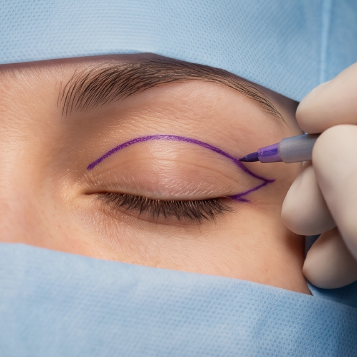 An upper lid that has grown too heavy
When the skin above falls and hides the crease, the surgeon takes out the surplus then reduces or repositions the fat if the volume calls for it. The opening follows the fold already drawn there, so the mark blends in once the redness has gone. This picture usually sets in after the age of 40.
-
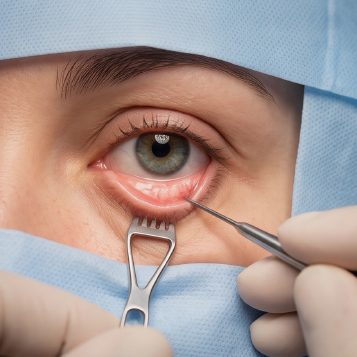 Bags on the lower lid
Under the eyes, it is the fatty bags that bring people to surgery. Two routes exist, one through the inner surface of the lid, the other along a very fine line under the lashes, and the examination points to the one that suits your skin. The aim stays the same either way, clearing the bag while leaving as little trace as possible.
-
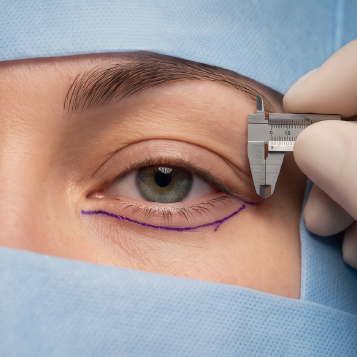 Top and bottom in the same session
When excess skin above comes with bags below, the two corrections are done during a single operation. One stay in Istanbul is enough, for a time in theatre that does not go past three hours. Recovery, for its part, happens only once.
-
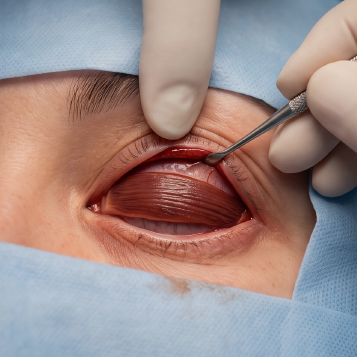 Excess skin and the field of vision
Beyond the look of the eyes, slack skin above them, dermatochalasis, sometimes ends up eating into part of the field of vision. Taking that surplus away clears peripheral vision, as well as lightening the eye contour. True ptosis, on the other hand, obeys another mechanism, a failing levator muscle, and is corrected by a separate operation.


How the surgeon works
-
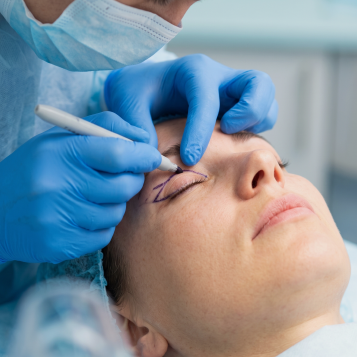 An incision in the natural crease
On the upper lid, the opening sits in the fold that the anatomy has already drawn. The surgeon keeps it short and closes it with fine sutures, which leaves a line following the crease as healing progresses.
-
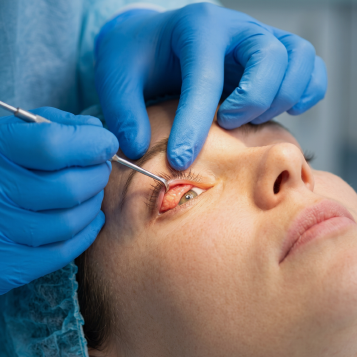 Accès par la face interne
For the lower lid, the surgeon can work from inside the eyelid, leaving the skin untouched. This route is chosen when the work is mainly about fatty bags to remove or reposition.
-
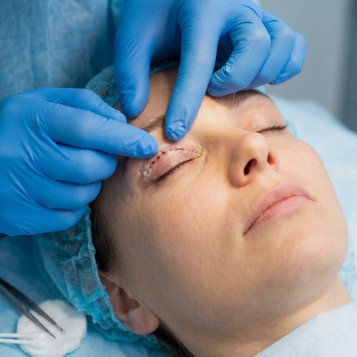 A very fine line under the lashes
The other lower route goes through an incision placed just under the lashes. The surgeon picks it at the examination, when the state of the skin or the amount of fat to treat makes this way more suitable than the previous one.
-
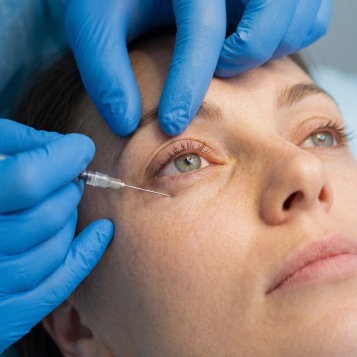 Removing or repositioning the fat
Once the route is open, the surgeon takes out the excess skin and fat, and can reposition some bags rather than remove everything. That balance is what decides how natural the result looks: taking too much would hollow the eyes, taking too little would leave the bag visible.


Discussing your project

Blepharoplasty in Istanbul: eyelid surgery that has become common
In 2024, eyelid surgery moved to the top of the world’s surgical cosmetic procedures, with more than 2.1 million operations and a rise of 13.4% that puts it ahead of liposuction. In Istanbul it sits inside a stay organised from end to end, from the airport transfer through to the 12 months of follow-up after you get home.
Blepharoplasty corrects the look of the eyelids. The aim is cosmetic first of all, since it freshens the eyes, clears the bags underneath and lightens upper lids weighed down by skin. When that excess skin, called dermatochalasis, cuts into the field of vision, the same operation takes on a functional value. In one person the two reasons often meet: the surplus skin presses on the lashes, the eyes look tired from first thing in the morning, and peripheral vision narrows. The surgeon checks along the way that this is not a true ptosis, where the lid drops because the muscle that lifts it no longer does its job, and where the treatment is a different operation.
The first modern blepharoplasties go back to the 19th century, and the technique has been refined without a break since. Incisions have grown more discreet, anaesthesia and instrument sterilisation have moved on, and the surgeon now has three formats, upper, lower or both together, to cover most situations. Each one chases the same discretion: a scar that follows a line already present on the eyelid, or one that stays out of sight on the inner surface. The blepharoplasty guide goes back over the vocabulary and the indications, for anyone who wants to understand the operation first.

Who the operation is for
The operation is aimed first at people of 40 and over whose eye contour is showing its age. It also applies to bags under the eyes, slack eyelid skin, or excess skin on the upper lid heavy enough to limit the field of vision.
Good general health counts for a lot in the selection. Smokers are asked to stop at least for a while, because tobacco slows the healing of tissue as thin as the eyelid. Your file is built in three stages, your photos, the video call, then the examination on site in Istanbul. Anatomy and realistic expectations are what decide, far more than age.

Contraindications
Blepharoplasty is not right for everyone. Serious eye disease rules it out, glaucoma for instance, or severe dry eye.
Other conditions push the date back: an autoimmune disease that can affect healing, clotting disorders, uncontrolled diabetes or severe high blood pressure. Women who are pregnant or breastfeeding will have to wait. Unrealistic expectations are a contraindication in their own right, because the operation acts on the skin and the fat of the eyelids, and on those alone.
Preparation before you leave and once you arrive
Several tests come before the operation: full blood work and an eye examination in most cases, a cardiovascular assessment when your history calls for it. In Istanbul these checks are done at our partner clinic, once the VIP transfer from the airport is over and you have settled into the 5-star hotel.
The rest of the preparation is down to you, and every instruction is there to make the day of the operation safe. If you smoke, you are asked to stop at least two weeks before the date chosen. Anticoagulants and anti-inflammatories are paused for a while, on medical advice. Arrange for someone you trust to be around for the hours after theatre as well. The anaesthetist finally imposes a strict six-hour fast when the type of anaesthetic calls for it.

The three formats of the operation
Three configurations cover most requests: the upper lid on its own, the lower lid on its own, or both during a single session. The surgeon settles on one of them from your photos, the video call and the examination on site, according to what your eyelids actually show. All three are done at our partner clinic, with the same organised stay and the same 12 months of follow-up behind them.
Upper blepharoplasty
This format targets the top of the eye, when the skin there gets heavy enough to wipe out the crease. The surgeon opens in that crease, takes out the excess skin, then reduces or repositions the fat if the volume of the bags calls for it. The incision stays short and sits in the natural fold, which makes it hard to spot once healing is complete.
Todorov and colleagues pooled 12 randomised trials and 450 patients: after upper blepharoplasty, dry eye symptoms drop clearly, with an odds ratio of 0.22. The same trials show that sparing the orbicularis muscle, the one that closes the eyelid, lowers the risk of lagophthalmos while keeping satisfaction high. So the surgeon judges it as they go, enough skin out to lighten the crease, enough muscle left in place for the eye to close fully.
Lower blepharoplasty
Down below, it is almost always the bags that bring people to surgery. The surgeon reaches the fat through the inner surface of the lid, leaving no mark on the skin, or through a very fine incision drawn under the lashes. The choice follows what the examination brings out: the quality of the skin, the volume of the bags, the chance of repositioning some of it instead of taking it all away.
Gimenez and colleagues, in a review of 36 articles, describe a low complication profile for this lower correction, and find no major eye or vision damage in it. When a functional or cosmetic difficulty does show up, it usually settles with conservative treatment, sometimes with a touch-up operation.
Upper and lower blepharoplasty
When the top and the bottom both need correcting, the surgeon treats them during the same operation. Time in theatre runs longer, but you make one trip and you go through recovery once. The total stays in the range of one to three hours, depending on the extent settled after the examination.

Step by step in Istanbul
Whichever format is chosen, the day follows the same sequence: the talk with the anaesthetist, going into theatre, then back to the hotel once you are off monitoring. Your English-speaking coordinator is there at each of those moments, theatre itself aside, and translates what the surgeon and the team explain to you.
Anaesthetic
Two protocols are possible, general anaesthetic or local sedation, and the preparatory appointment is where you choose between the two with the anaesthetist. The extent of the correction planned, your medical file and the surgeon’s view all weigh on that decision, which your coordinator goes back over with you in English.
Incisions, fat and sutures
The surgeon places the openings where the anatomy hides them, in the natural crease of the upper lids, just under the lashes or on the inner surface of the lower lids. Excess skin and fat then come out, and some fat pads are repositioned when the result gains from it. Closure with fine sutures finishes off this discreet work.
How long the operation takes
Allow between one and three hours for an operation of this kind. The gap comes down to the extent of the correction: an upper lid on its own does not keep the surgeon as long as correcting the top and the bottom together. On the way out of theatre, a VIP transfer takes you back to the 5-star hotel, and the first aftercare starts there.

After-effects and recovery
Immediate recovery takes five to seven days on average. Discomfort is handled with the painkillers prescribed and regular cold compresses, while care comes down to cleaning the eyes often and gently. Sunglasses are a must the moment you step outside, and any physical effort is off the table for fifteen days.
Those first days are still spent in Istanbul, at the 5-star hotel, with a VIP transfer between the hotel and the clinic as soon as a question comes up. It is also when your English-speaking coordinator goes back over the surgeon’s instructions point by point, from the cold compresses to wearing sunglasses, before you take them away in writing.
The stitches come out five to seven days after the operation, still during the stay in Istanbul. Swelling and bruising then fade over one to two weeks, most patients get back to their usual activities after seven to ten days, and going back to work becomes possible from the tenth day. Moderate physical activity waits three to four weeks, and the final result becomes clear at two to three months, once the swelling has gone down.
Follow-up carries on after you get back to the UK. Body Expert keeps it going for 12 months, on the basis of clear photos and exchanges in English with the team that looked after you in Istanbul.

Risks and possible complications
Like any surgery, blepharoplasty carries risks, even if they stay uncommon. The ones that come up most often are slight asymmetry, temporary dry eye, a passing difficulty in closing the eyes fully, bleeding or a haematoma; more rarely, a scar stays visible or an infection sets in. That level of risk comes down to the surgeon’s experience, the care taken over selecting candidates and the protocols respected before and after the operation.
The published data cover two separate sides. On the upper lid, Todorov’s meta-analysis mainly points to a drop in dry eye symptoms when the orbicularis muscle is respected. On the lower lid, Gimenez’s review describes a low complication profile, with no major vision damage recorded in those 36 articles. Flagging an unusual sign early, during the 12 months of follow-up, is what allows a decision on whether to watch, treat or operate again.
Correcting a hollow after the operation
The eyes sometimes look slightly hollow once the swelling has gone, or show a discreet asymmetry that the oedema was hiding. An injection of hyaluronic acid then fills that hollow and rebalances the two sides, on the surgeon’s decision and only once the surgical result has settled. Safia and colleagues, working from 5 studies whose series run from 5 to 109 patients, note volume held beyond 12 months in most cases, with no severe complication reported. This add-on is decided case by case and sits outside the stay package.

The setting for your stay in Istanbul
In Istanbul you are operated on at our partner clinic, put up in a 5-star hotel with breakfast, driven around in VIP transfers, looked after by a dedicated English-speaking coordinator, then followed for 12 months after you get home. The price gap with the UK can reach 70% savings, and the quote, free of charge, reaches you within 24 hours, with no obligation. You book and pay for the flight yourself. The same operation, presented at country level, sits on the blepharoplasty in Turkey page.
Sources
- Todorov, D., Mitchell, S., Al-Hashimi, M., Dajani, Z., Sunn Hoah Yap, K., Imtiaz, H., Daneshi, K., & Khajuria, A. (2025). Functional and Aesthetic Outcomes After Upper Blepharoplasty: A Systematic Review and Meta-analysis of Randomized Control Trials. Aesthetic Surgery Journal, 45(6), 554-562.
- Gimenez, A. R., Rohrich, R., Borab, Z., Fisher, S., Fagien, S., & Rohrich, R. J. (2025). Safety and Complications in Lower Eyelid Blepharoplasty: A Systematic Review. Plastic and Reconstructive Surgery Global Open, 13(9), e7102.
- Safia, A., Abd Elhadi, U., Merchavy, S., Batheesh, R., & Bathish, N. (2025). Role of Hyaluronic Acid in Post-Blepharoplasty Volume Restoration and Complication Management: A Systematic Review. Journal of Clinical Medicine, 14(13), 4572.
- ISAPS. (2025). ISAPS International Survey on Aesthetic/Cosmetic Procedures Performed in 2024. International Society of Aesthetic Plastic Surgery.