Labiaplasty and labia minora reduction: reasons and results
This guide follows a labia minora reduction or reshaping from the examination through to scar maturation, which runs over twelve months. It sets out the three resection techniques, the instructions for the four weeks before theatre, how long the operation lasts, and when work, sport and sex become possible again. It also describes how a stay in Istanbul with Body Expert is organised, with the 5-star hotel, the VIP transfers, an English-speaking patient coordinator and 12 months of follow-up. You book your own flight.
Labiaplasty and labia minora reduction at a glance


Understanding labiaplasty and labia minora reduction
Two words for the same operation
Labiaplasty is the usual name for surgical reduction of the lips of the vulva. Labia minora reduction, which continental Europe often calls nymphoplasty, applies more specifically to the inner lips. In practice the two words cover the same plan: reducing or reshaping the labia minora, for a cosmetic reason, a functional one, or both at once.

The operation involves the skin and mucosal folds of the labia minora, and nothing else. Their length varies a great deal from one woman to the next, from two to ten centimetres. Hypertrophy is recorded when the protrusion goes beyond four or five centimetres. The indication therefore brings together the measured protrusion, the discomfort it causes and what the patient asks for at the examination.
The surgeon is working on an anatomy that is different at every consultation. Each side is measured and compared, any asymmetry is noted, and those findings are then set against what the patient describes, whether that is rubbing, irritation, difficulty with hygiene, pain on exertion or during sex, or discomfort about appearance. The size and shape you want belong to the same conversation, so that the resection line answers something you have put into words yourself.
Why women come to a consultation
The reasons overlap more often than not. Physical discomfort from rubbing comes up regularly, with fitted clothes, with sport, even with a long walk. That friction sometimes keeps irritation going and makes washing more awkward. Pain during exercise or during sex is another reason to operate.

Alongside this mechanical discomfort, self-consciousness about the appearance of the external genitals, or about an asymmetry, weighs on the decision. A protrusion that is moderate but visible, and uneven from one side to the other, is already enough to occupy the day-to-day of a woman who can point to exactly where it sits. The consultation is there to separate out the part played by friction, the part played by pain and the part played by appearance, so that the surgical plan addresses the real reason.
These two families of reasons, functional and cosmetic, frequently meet. A woman bothered by rubbing usually wants a more regular shape as well; a woman whose request is cosmetic first sometimes turns out, on examination, to have a protrusion beyond four or five centimetres. The surgeon holds the measurement and the account of the discomfort together, then sets out the three possible resections: direct, Z-plasty or de-epithelialisation.
A systematic review of female genital cosmetic surgery describes demand rising worldwide, driven mainly by labiaplasty, and procedures increasingly carried out as day cases under local anaesthetic. That places the operation in routine practice, organised around a quick return home when local anaesthetic with sedation is the choice.
What the examination establishes
The first consultation sets the terms of the plan. The surgeon carries out a clinical examination, measures the labia minora and assesses any asymmetry. That examination produces figures, a possible length of two to ten centimetres and a hypertrophy threshold beyond four or five centimetres of protrusion, then places those figures alongside the discomfort described. A length at the top of the range with only slight protrusion leads to different reasoning from a clear protrusion that comes with daily rubbing.

A stretch of the appointment is given over to what you want in terms of size and shape. It has a concrete purpose, which is to calibrate how much tissue is removed against the actual request. The surgeon then presents the possible techniques, all of which pursue the same goal, reducing or reshaping, with a line adapted to what the examination has shown.
Pre-operative tests round off this stage, according to what your medical file calls for. Their content is decided case by case, and they come before the surgical marking and the anaesthetic. Personal preparation starts earlier: stopping smoking four weeks before surgery; with your GP’s agreement, stopping any anticoagulant or anti-inflammatory treatment ten days beforehand; and, the day before, particular attention to intimate hygiene.
Each of these instructions answers a specific risk. Four weeks without tobacco puts healing in better conditions at the point when the sutures, made of dissolvable thread, have to hold. Stopping anticoagulants and anti-inflammatories for ten days, when your GP allows it, removes one bleeding factor in an area where haematomas are among the more common incidents. The hygiene work of the day before prepares a region that also carries an identified infection risk.

Who can have surgery, and when to wait
Labiaplasty is for patients over eighteen in whom labia minora hypertrophy is confirmed and causes functional or cosmetic discomfort. That age threshold protects an irreversible decision, taken on an anatomy that is still finishing its development. Whether the hypertrophy is confirmed is settled at the examination, on the measurement of the protrusion and on the discomfort it produces.
Pregnancy, active genital infection and uncontrolled clotting disorders are contraindications. Pregnancy moves the plan to another timetable, that of the birth and the months that follow, before reshaping is discussed again. An active genital infection is treated first, because operating on an infected area raises the local risk. An uncontrolled clotting disorder bears directly on the risk of bleeding and haematoma, already put at five to ten per cent of cases in this surgery.
Each of these situations means waiting, or treating something else beforehand. Once the pregnancy is over, the infection cleared or the clotting controlled, the surgical discussion resumes on the same basis, the measurement, the asymmetry, your expectations and the technique. General health counts in patient selection too, as does following the pre-operative instructions to the letter: that selection is the first of the preventive measures, well before the marking.

Organising surgery in Istanbul with Body Expert
When the plan is set in Istanbul, Body Expert organises the trip around the operation, while the examination and the choice of technique stay with the surgeon. The package covers the 5-star hotel with nights and breakfast, VIP transfers between the airport, the hotel and the clinic, a dedicated English-speaking patient coordinator, and post-operative follow-up over 12 months. The quote is free within 24 hours, with no obligation. You book your own flight.
Our partner clinic hosts the marking, the anaesthetic and the resection. The English-speaking coordinator sits in on exchanges with the team, passes on the hygiene instructions and keeps the review calendar: a first visit seven days after surgery, a second twenty-one days later, and an assessment of results at three months. Body Expert follow-up runs on for 12 months, the period during which the scar finishes settling.
Budget enters the decision legitimately, once the indication is established. Body Expert quotes savings of up to 70% against the prices usually charged in the UK, a gap that only becomes meaningful once the hypertrophy and the discomfort are established, the contraindications ruled out and the technique chosen. The detail of a cosmetic surgery in Turkey pathway sets out how a stay fits together, from the first photograph to remote follow-up.

What the available studies measure
Beyond the mechanical comfort gained on rubbing, two recent pieces of work measure the effect of these procedures on self-image and on sexual function. A systematic review concludes that female genital cosmetic and reconstructive procedures improve body and genital self-image, assessed with validated questionnaires. That result concerns mean scores observed in groups of patients, and it is at that level that it carries weight.
A meta-analysis of 11 studies reports a moderate improvement in sexual function after female genital cosmetic surgery, put at a standardised mean difference of 0.52, with matching gains in genital self-image. The authors point out that these results come from small uncontrolled studies and should be read with caution. The available literature sketches a real benefit, moderate in scale, whose exact size remains to be confirmed in larger series.
Both publications deal with sexual function and self-image, two dimensions that questionnaires measure at group level. Clinical follow-up records something else, specific to each patient, which is what happens to local sensitivity over the months after surgery. The two readings complement each other, the first giving the order of magnitude of a benefit observed after this kind of procedure, the second giving the concrete timetable of one woman who has had the operation.
Sources
- Zulfikaroglu, E., & Kurban, D. (2026). Sexual function after female genital cosmetic surgery: A systematic review and meta-analysis. European Journal of Obstetrics & Gynecology and Reproductive Biology, 318, 114894.
- Alavi-Arjas, F., Goodman, M. P., Simbar, M., et al. (2023). The Effect of Female Genital Cosmetic and Reconstructive Procedures on Body and Genital Self-Image: A Systematic Review and Meta-Analysis. Aesthetic Surgery Journal, 43(9).
- Padovesi Mota, I. L., Neves, S., de Oliveira, A. L. M. L., et al. (2026). Outpatient Female Genital Cosmetic Surgery: A Systematic Review and Meta-Analysis. Aesthetic Surgery Journal, sjag150.
From consultation to recovery
The surgeon examines the labia minora, measures their length and notes any asymmetry. A conversation pins down the size and shape you want. The possible resection techniques are then set out, along with the line each one implies.
The first exchanges happen remotely, from your photographs and your medical history, and the quote reaches you within 24 hours. An English-speaking coordinator then fixes the dates, the 5-star hotel and the VIP transfers.
Surgical marking comes before the anaesthetic, local with sedation or general depending on the case. The surgeon carries out the resection agreed at the consultation, then closes with dissolvable thread. The operation lasts one to two hours on average.
Ice and a painkiller settle the first few days. A review takes place at seven days, a second twenty-one days later, a third at the third month. With Body Expert, remote follow-up lasts 12 months.
The financial side: what makes the budget vary
What a quote pays for, in the UK and in Turkey
In the UK, a labiaplasty quote brings together the surgery itself, hospital charges, the consultations before and after the operation, the pre-operative tests and the follow-up. Each line matches an identifiable slice of time, theatre and the room on one side, the consultations that prepare the resection line and those that check healing on the other. The total varies from one hospital to another, which makes a named quote more informative than an average.

A comparable operation in Turkey is usually discussed as a package. At Body Expert, that package takes in the organisation of the trip, with the 5-star hotel (nights and breakfast), VIP transfers, a dedicated English-speaking patient coordinator and post-operative follow-up over 12 months. The surgery, the consultations tied to it and the tests requested before theatre all sit inside that pathway. Savings of up to 70% separate this package from the prices usually charged in the UK, a gap the personalised quote works out file by file.
The comparison only holds at equal indication. A straightforward resection on symmetrical hypertrophy and a more complex operation, combining several lines or correcting a marked asymmetry, belong to two different prices, in the UK as in Istanbul. The quote prices the operation actually planned for one particular patient.
How complex the surgery is, and how long you stay
Price follows the complexity of the operation first. Combining several techniques, or correcting a marked asymmetry, adds to the resection and suture work and calls for more precision on each side, inside an operating time that stays at one to two hours on average. Two labia minora of very different lengths call for two distinct lines, explained at the consultation and carried into the quote as they are.

How long you stay weighs too. Remaining on site until the first review at seven days stretches the timetable compared with going home earlier, something discussed case by case with the surgeon. Optional extras, such as a private room or a concierge service, can push the price up; they then appear on the quote as identified supplements, line by line.
The indication governs the whole of this timetable. As long as a pregnancy, a genital infection or an uncontrolled clotting disorder remains, the calendar belongs to medicine and the budget waits its turn. The examination establishes eligibility, the surgeon settles on the technique, and the quote then prices that precise plan.
What the Body Expert package contains
The Body Expert package always brings together the same services. Hotel nights and breakfast, transfers between the airport, the hotel and the clinic, an English-speaking contact present throughout the stay and remote follow-up for 12 months make up its base. That follow-up covers exactly the period in which the scar takes its shape, up to twelve months, and during which a revision, should one prove necessary, is discussed between six and twelve months after surgery.

You book your own flight, choosing the airline and the times that suit you, while Body Expert takes charge of everything between arrival in Istanbul and the journey home. The quote, sent free within 24 hours and with no obligation, lists the services chosen for your plan, options included where there are any.

A quote for your labiaplasty
A costed quote for your labiaplasty in Istanbul, 12 months of follow-up included, is sent to you free within 24 hours and with no obligation.
Resection techniques
-
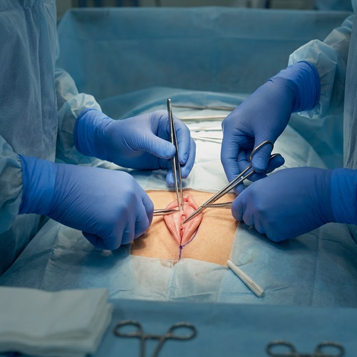 Direct resection
The line follows a single curve, drawn at the marking once both sides have been measured. This route suits a protrusion that can be corrected along the length of the fold, with a regular shape as the goal.
-
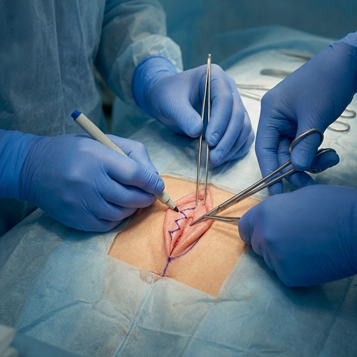 Z-plasty resection
The line is broken rather than straight. The surgeon chooses it when the reshaping calls for it, particularly with a marked asymmetry between the two sides, picked up on measurement.
-
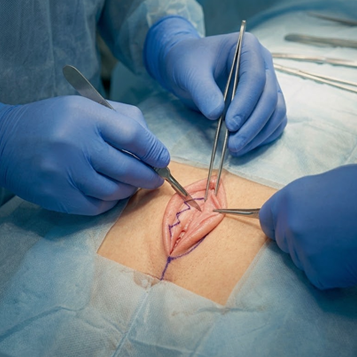 De-epithelialisation
This technique works on the epithelium of the fold, its most superficial layer. It is one of the three options set out at the consultation, and the surgeon chooses it according to the measured protrusion and the shape you are after.
-
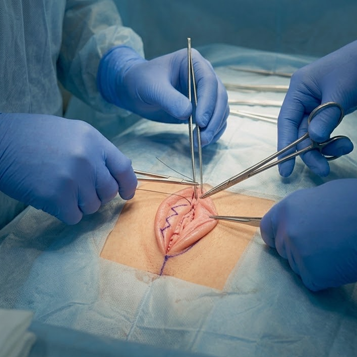 Combined techniques
A marked asymmetry sometimes leads to combining several lines during the same operation. That configuration is decided at the consultation, along with the size and shape you want, and calls for more precision at the suturing stage.


Results, healing and the medical detail
The three phases of healing
Healing runs through three phases, and they are what set the rhythm of the review calendar. The inflammatory phase covers the first five days, with possible swelling and redness. Ice on the operated area, a suitable painkiller and the hygiene instructions make up most of the care at that point. The swelling of this period still hides the shape obtained, which shows itself later.
From the fifth to the twenty-first day comes the proliferative phase, during which new tissue forms and the dissolvable sutures still support the closure. The first review, at seven days, sits at the start of this phase; the second, twenty-one days later, finds it finished. Showers are allowed from the second day, while baths stay off limits for three weeks, so that a recent suture line is not left to soak. A healing cream rounds off this care, and loose clothing worn for two weeks spares a still swollen area from rubbing.
The remodelling phase, in other words scar maturation, can last twelve months. That delay dictates two things: the length of Body Expert follow-up, set at 12 months, and the moment when a revision is discussed, between six and twelve months. A scar that is still immature changes too much to show the final result.

When the appearance settles
The first results become visible after three to four weeks, once initial healing is under way, when most of the inflammation has gone down and the shape starts to come out. You then see a gradual improvement over three to six months, during which the tissue softens, residual swelling recedes and the slight asymmetry caused by the swelling fades.
Six to twelve months is enough to reach the stable final result, at the end of scar remodelling, and it is in that same period that revision surgery is discussed when a residual irregularity or asymmetry justifies it. The results check at three months confirms that initial healing has taken the right path and prepares that final assessment.
Sensitivity, comfort and sex
Sensitivity drops temporarily for one to three months, the time it takes for the scar tissue to reorganise. A return to normal is seen in 90% to 95% of cases after six months. For the minority of patients whose recovery takes longer, the year of Body Expert follow-up provides someone to talk to throughout that period.
Further out, comfort can improve, sex included, particularly when painful rubbing disappears. Sex waits four to six weeks, the time it takes for the sutures and the mucosa to tolerate friction again. That delay protects the suture line directly, since wound breakdown affects three to five per cent of cases and happens all the more easily when things restart early.
Mechanical comfort and self-image progress on two separate levels. The first comes from the reduction in protrusion, and so in friction, noticeable as soon as the swelling recedes. The second matches what the validated questionnaires used in the literature measure, a body and genital self-image that improves after this kind of procedure, sometimes later than physical comfort. Both follow the healing timetable.

Labia minora anatomy and the hypertrophy threshold
The labia minora are folds of skin and mucosa. That double nature, skin on one side, mucosa on the other, explains how sensitive the area is and how it heals, in the open air and against clothing, and it gives the shower, bath and loose clothing instructions their reason for being. Size varies a great deal between women, from two to ten centimetres in length, and the whole of that range is normal anatomy.
Hypertrophy is confirmed when the protrusion goes beyond four or five centimetres. Protrusion means the part of the fold that projects outwards, the part that makes contact and rubs, and that is what the examination measures. A long fold with little projection and a shorter, clearly projecting fold are therefore two different clinical situations, which explains the attention paid to the measurement and to the asymmetry between the two sides.
This anatomy also governs the surgery itself. The resection removes the excess skin and mucosal tissue on the side where the protrusion sits, to the extent agreed before theatre, and the closure is made with dissolvable thread. The scar, placed on soft, mobile tissue, takes all the longer to settle, which is why remodelling runs to twelve months.
Anaesthetic and pain
The surgeon most often chooses local anaesthetic with sedation, which favours a quick recovery and matches the trend the literature describes, a growing use of day surgery in this field. General anaesthetic is used according to the patient’s wishes, or when the operation combines several lines.
In theatre, infiltration with long-acting local anaesthetics covers the pain during surgery. If needed, painkillers are given intravenously straight after the operation. At home, oral painkillers, paracetamol or anti-inflammatories, are prescribed for three to five days. Anti-inflammatories stopped ten days before surgery, where they were being taken long term, therefore come back afterwards as a short course, as prescribed.
Ice completes this protocol from the first hours, working on the swelling of the first five days while the painkiller works on the pain. The hygiene advice given by the nursing team or the surgeon targets the infection risk, put at one to two per cent: an area kept clean, showers from the second day and baths postponed for three weeks.
Complications, prevention and revision
The frequency of the main incidents is documented. Bleeding and haematomas occur in five to ten per cent of cases, infections in one to two per cent of files, wound breakdown in three to five per cent of cases and residual asymmetry in five to ten per cent of situations. Sensitivity can change, most often temporarily, on the one to three month timetable already mentioned.
Prevention starts before theatre, with patient selection according to general health, strict observance of the pre- and post-operative instructions and a technique matched to the anatomy. It carries on during healing, through close follow-up that allows early action, whether that means draining a haematoma or treating an infection with antibiotics. The seven day appointment and the one that follows twenty-one days later exist precisely to pick up these incidents while they are still simple to treat.
Six to twelve months after labiaplasty, revision surgery remains possible where it proves necessary. That delay gives scar remodelling time to advance far enough to tell a stable imperfection from swelling still present at three or four weeks. The 12 months of follow-up at Body Expert cover the year in which the shape sets and in which a revision, if one is needed, is decided with the surgeon.
Getting back to normal activity follows the same delays. Depending on the job, work resumes three to seven days after surgery; light sport can be considered at three weeks and full training at six weeks. Each step matches a level of strain the suture line can take, and it is the risk of wound breakdown and haematoma that sets how long each one lasts.
Planning a labiaplasty in Istanbul
Describe your discomfort and your medical history: an English-speaking adviser calls you back to frame the trip and the 12 months of follow-up.
FAQ
Who is eligible, and what are the contraindications?
The operation is for women over eighteen in whom examination confirms labia minora hypertrophy that causes discomfort. An ongoing pregnancy, an active genital infection or a poorly controlled clotting disorder push the date back, until the situation is resolved.
When can I go back to work, to sport and to sex?
Expect three to seven days off depending on the job, three weeks before light sport and six weeks before full training. Sex waits four to six weeks. Each step matches the strain the suture line can take at that point in healing.
What risks should I know about, and how are they managed?
Haematoma, infection, wound breakdown and residual asymmetry are the recorded incidents, each with its own frequency. Close review picks them up early, by drainage or antibiotics. Further surgery remains possible six to twelve months after the operation.
How is a labiaplasty in Istanbul organised with Body Expert?
Body Expert books the 5-star hotel with breakfast, the VIP transfers and a dedicated English-speaking patient coordinator, then provides post-operative follow-up for 12 months. The quote arrives free within 24 hours, with no obligation. You book your own flight.
Does labiaplasty change self-image and sexual function?
The literature relies on standardised questionnaires, which record an improved perception of the body and of intimacy after this kind of procedure. A meta-analysis of 11 studies puts the gain in sexual function at a moderate 0.52 standardised mean difference, on small uncontrolled series.
Which anaesthetic is used for a labia minora reduction?
In most cases local anaesthetic with sedation is the choice, because it lets you leave quickly. General anaesthetic is discussed if you prefer it, or if several lines are combined. Long-acting anaesthetics cover the pain during the operation.
How do you choose between direct resection, Z-plasty and de-epithelialisation?
The choice is made at the examination. The measurement of each side, how marked the asymmetry is and the shape you want guide the line, which the surgeon draws at the marking. All three techniques pursue the same aim, reducing or reshaping the labia minora.
How long before the result is stable?
Three to four weeks is enough to see the first changes, then the appearance keeps refining for three to six months. The final result is judged between six and twelve months, once scar maturation is complete.