Flat stomach
Abdominal fat
Silouhette
Body contouring
Liposuction
Stomach liposuction
Get back a flatter tummy and a balanced figure with abdominal liposuction. Our expert surgeons help you clear away the stubborn fat that won’t budge with diet or exercise, for good.
Stomach liposuction at a glance
Hospital stay
1 day
Procedure duration
4 days
Results visible after
1 to 3 hours

Medical validation

Stomach liposuction: get back a shape that feels like you
You exercise. You watch what you eat. And still, that little roundness around your middle refuses to shift. If that sounds familiar, you’re far from alone. The belly is one of the first places the body stores fat and one of the last to let it go, especially after pregnancy, with age, or simply because of your genes. It isn’t a lack of willpower or a personal failing. It’s biology.

Liposuction is one of the most commonly performed surgical cosmetic procedures in the world, with around 2.1
Abdominal liposuction offers a real, lasting answer to that frustration. The idea is simple and well proven: draw off the excess fat cells through tiny incisions, with near-invisible scars, to reshape the figure. It isn’t a way to lose weight. It’s genuine body sculpting, meant for people already close to their ideal weight who just want a flat stomach at last.
At Body Expert, our plastic surgeons carry out this procedure in our partner clinic in Istanbul, selected for its facilities and its surgeons’ experience, with English-speaking support from start to finish. Choosing liposuction in Turkey saves you up to 70% compared with prices in the UK and Western Europe.
Your patient journey step by step
Pre-op consultation
Your surgeon assesses the quality of your abdominal skin, how much fat needs removing, and works out the right treatment plan with you. Our team answers all your questions in English and gives you a detailed, personalised quote.
Getting ready for surgery
Before the day itself, you have a pre-op work-up: blood tests and an anaesthetic consultation, with a cardiology review if your profile calls for it. Your dedicated assistant looks after the practical side of your stay in Istanbul.
The day of your procedure
The operation takes between 1 and 3 hours depending on the volume to treat. The surgeon makes small incisions in the natural skin folds, then inserts fine cannulas to draw off the excess fat cells with real precision.
Straight after: the compression garment
Liposuction is usually a day case. A compression garment goes on as soon as the operation ends, to be worn for 3 to 4 weeks. You’ll be prescribed painkillers. Lymphatic drainage sessions are often recommended to help you recover well.
Recovery and results
You can get back to social and working life after 7 to 10 days. Sport can start again gradually after 3 to 4 weeks, with more intense workouts from 6 weeks. The final results appear between 3 and 6 months after surgery, once the swelling has fully settled.
The price of stomach liposuction
Let’s talk plainly. In the UK and across much of Western Europe, abdominal liposuction adds up to a serious budget: surgeon’s and anaesthetist’s fees, theatre and clinic costs all mount quickly. And because it’s a cosmetic procedure, the NHS won’t cover it.
Save up to 70% on your stomach liposuction by coming to Body Expert in Istanbul.

Choosing stomach liposuction in Turkey with Body Expert makes the maths easy. Our packages bring together the operation performed by our expert surgeons, your 5-star hotel, VIP transfers between the airport, hotel and clinic, an English-speaking coordinator and 12 months of aftercare. All that’s left is to book your flight. A free, personalised quote is sent to you within 24 hours.
That value comes from lower running costs in Turkey, not from cutting corners on care. Our partner clinic in Istanbul is selected for its facilities and its surgeons’ experience, and every patient gets individual attention. We still advise you never to choose your surgeon on price alone. The surgeon’s experience, the quality of the facilities and proper follow-up are the real guarantees of a good result.

Your body deserves the best
Our expert surgeons help you get back a flat, balanced tummy, with a free personalised quote within 24 hours.
Our prices and packages
Liposuction
Offre et tarif : Liposuction
Feel free to scroll through the different prices from right to left!
The techniques of stomach liposuction
-
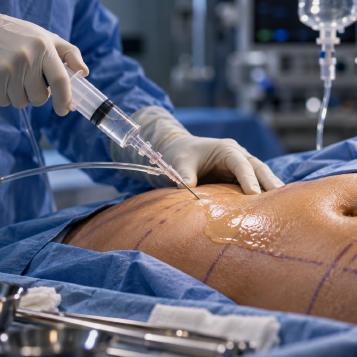 Classic (tumescent) liposuction
The reference technique for over 40 years. A numbing fluid is infiltrated into the abdominal area to swell the fat cells, which makes drawing them off through fine cannulas gentler and more even. It works well for moderate to large volumes of fat under the skin.
-
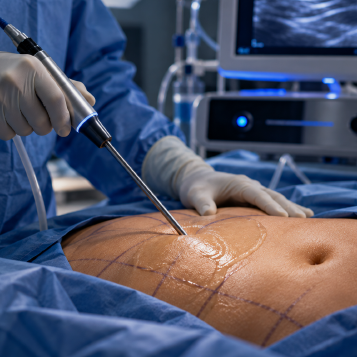 VASER liposuction (ultrasound)
An advanced technology that uses high-frequency ultrasound to liquefy fat before removal. Gentler on the surrounding tissue, VASER allows more precise work and better skin retraction, useful for fine-tuning the stomach.
-
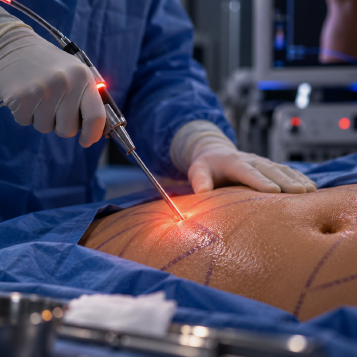 Laser liposuction (SmartLipo)
Laser energy heats and liquefies the fat cells while prompting the skin to make collagen. That double action removes fat and encourages the skin to tighten, a real plus for the abdomen.
-
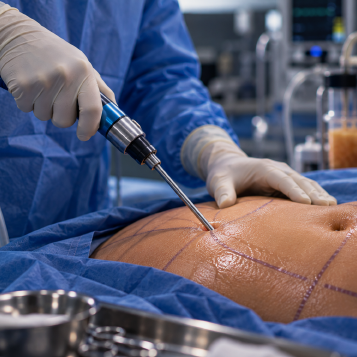 Power-assisted liposuction (PAL)
Power-assisted liposuction uses motorised cannulas that make tiny oscillating movements. This eases the surgeon’s effort and allows more even, consistent removal, which limits the risk of surface irregularities.


Abdominal liposuction: techniques, results and straight answers
Stomach liposuction isn’t just fat suction. It’s body sculpting in its own right, drawing on the surgeon’s skill as much as on advanced technology to give you a natural, balanced shape.

How does stomach liposuction work?
The idea rests on drawing off adipocytes (the cells that store fat) through tiny incisions made in the natural skin folds. The surgeon inserts a fine cannula, 2 to 4 mm across, connected to a suction device. With steady, controlled movements, they break up and then draw off the fatty tissue in a targeted, even way.
One thing is worth pausing on. Your belly holds two very different kinds of fat. Subcutaneous fat, which sits between the skin and the muscles, is the kind you can pinch, and it’s the fat that liposuction can reach. Visceral fat, on the other hand, sits deep inside the abdominal cavity, around the organs. That deep fat only comes down with a change of lifestyle or, in severe cases, with bariatric surgery. That’s why some patients, men with a round, firm belly in particular, aren’t always good candidates for liposuction on its own.

Techniques that keep getting more precise and less invasive
Liposuction has come a long way since it began, back in the 1970s. Several technologies now let surgeons refine the work while making recovery noticeably easier.
VASER liposuction is one of the most striking advances of recent years. Using high-frequency ultrasound, it selectively breaks down the fat cells while sparing more of the nearby blood vessels, nerves and connective tissue. The result is greater precision, often with better skin retraction. In their high-definition liposculpture series published in the Aesthetic Surgery Journal, Hoyos and Millard reported results judged satisfactory in about 84% of patients (Hoyos & Millard, 2007).
Laser-assisted liposuction (SmartLipo) adds a benefit that’s especially handy for the abdomen: as it heats the fat cells, the laser energy also prompts the deeper layers of skin to make collagen. That fresh collagen helps the skin tighten better after surgery, a genuine plus when the skin on your stomach has started to lose its elasticity.
At Body Expert, our surgeons are at home with all of these techniques and will steer you towards the one that best suits your body and your goals. That ability to adapt is what separates an acceptable result from a genuinely good one.

The tumescent technique: safety first
Whatever the technology, almost every stomach liposuction today relies on the tumescent technique. Developed by Dr Jeffrey Klein in the 1980s, it transformed how safe the operation is. The idea: infiltrate the area with a large volume of saline solution containing a local anaesthetic (lidocaine) and a vasoconstrictor (adrenaline).
That infiltration sharply cuts bleeding during surgery and eases the pain afterwards. Depending on the volume to treat, the operation is done under general anaesthetic or local anaesthetic with sedation.

What results to expect
The results of abdominal liposuction are considered permanent: the fat cells that are removed don’t grow back, and your body doesn’t “replace” them. That said, the fat cells left behind can still swell if you put on a lot of weight, which is why a healthy lifestyle afterwards matters so much.
The first changes show within days, though post-op oedema (swelling) hides part of the final result. Over the first month, the bruising fades and your shape starts to emerge. By around the third month, most of the result shows through: the skin gradually tightens and settles to the new volume. The final result steadies between the third and sixth month, once the swelling has fully gone and the tissues have softened. What most patients remember, though, is the lift in confidence: clothes that sit well again, a body they learn to like.

Liposuction or tummy tuck: the most common mix-up
It’s probably the question our surgeons hear most often in consultation. The answer is short: liposuction deals only with excess fat, while a tummy tuck (abdominoplasty) deals with excess fat, loose skin and slack muscle all at once.
In practice, if your skin is firm and elastic and the only issue is localised pockets of fat, liposuction will be perfect. The scars stay almost invisible, since the incisions are only a few millimetres long. If, on the other hand, your abdomen has an apron of loose skin, marked stretch marks or a diastasis (the separation of the vertical abdominal muscles, very common after several pregnancies), a tummy tuck will suit you better. It leaves a horizontal scar low on the abdomen, but gives a striking result when it’s the right call. The two are sometimes combined, in fact, for a complete result.

Stomach liposuction for men
Men make up a growing share of cosmetic surgery patients. According to ISAPS, 14.5% of cosmetic procedures worldwide are carried out on men, and liposuction is among the operations they ask for most (ISAPS, 2023).
Men tend to store abdominal fat below the navel and on the flanks. In men, liposuction often aims for a more “athletic” look, sometimes with a bit of liposculpture to gently bring out the definition of the abs. VASER technology lends itself well to this, thanks to how finely it can work around muscle, while sparing more of the surrounding tissue.

What risks should you know about?
Like any operation, stomach liposuction carries risks. The common side effects are bruising, swelling, numbness and extra tenderness in the treated area. These are temporary and clear up on their own within a few weeks.
More serious complications stay rare when the surgery is in the hands of an experienced surgeon, in a proper medical setting. Depending on your risk profile, our surgeons may prescribe blood-thinning medication and compression stockings to guard against clots. Lymphatic drainage after surgery also helps speed recovery and limit surface irregularities.
Our full liposuction guide sets out all the techniques and what makes each one different, to help you make a properly informed choice.
In summary
Stomach liposuction, or abdominal lipoaspiration, is still the go-to solution for clearing localised pockets of fat that hold out against exercise and diets. It isn’t a way to slim down: it’s a sculpting procedure that reshapes the figure, best kept for people already close to their ideal weight. Thanks to the tumescent technique and technologies like VASER or laser, the operation is now safer, more precise and followed by an easier recovery than it used to be.
In practical terms, expect an operation of one to three hours, usually as a day case, then a compression garment for three to four weeks. Social life picks up again in seven to ten days, moderate sport after three to four weeks and more intense workouts from six weeks, and the final result settles between the third and sixth month. The scars, a few millimetres long, soon become hard to spot. And because the fat cells that are removed don’t grow back, the benefit lasts, as long as you keep up a healthy lifestyle.
Then there’s the question of skin and muscle: if your stomach has an apron of loose skin or a diastasis, a tummy tuck is probably the better fit. That’s exactly what the consultation is for, to get a clear picture of your particular case. At Body Expert, you’re looked after in English from start to finish, in our partner clinic in Istanbul, selected for its facilities and its surgeons’ experience, with up to 70% savings compared with Western Europe. Want an opinion on your situation? Ask for your free, personalised quote within 24 hours.
Sources and references
- International Society of Aesthetic Plastic Surgery (ISAPS). (2025). ISAPS Global Survey on Aesthetic/Cosmetic Procedures Performed in 2024. ISAPS. https://www.isaps.org/discover/about-isaps/global-statistics/global-survey-2024-full-report-and-press-releases/
- Triana, L., Palacios Huatuco, R. M., Campiglio, G., & Liscano, E. (2024). Trends in surgical and nonsurgical aesthetic procedures: A 14-year analysis of the International Society of Aesthetic Plastic Surgery (ISAPS). Aesthetic Plastic Surgery, 48(20), 4217-4227. https://doi.org/10.1007/s00266-024-04260-2
- Hoyos, A. E., & Millard, J. A. (2007). VASER-assisted high-definition liposculpture. Aesthetic Surgery Journal, 27(6), 594-604. https://doi.org/10.1016/j.asj.2007.08.007
- Klein, J. A. (1990). Tumescent technique for regional anesthesia permits lidocaine doses of 35 mg/kg for liposuction. Journal of Dermatologic Surgery and Oncology, 16(3), 248-263. https://doi.org/10.1111/j.1524-4725.1990.tb03961.x
Before & After
Discover our patients’ results
Liposuction

Avant-après

Avant-après

Avant-après
Avant-après

Avant-après

Avant-après

Avant-après
Avant-après

Avant-après

Avant-après

Avant-après
Avant-après

Avant-après

Avant-après

Avant-après

Avant-après

Avant-après

Avant-après

Avant-après

Avant-après
Avant-après
Avant-après
Avant-après
Avant-après
Avant-après
Avant-après
Avant-après
Avant-après
Avant-après
Avant-après
Avant-après
Avant-après
Avant-après
Avant-après
Avant-après
Avant-après
Avant-après
Avant-après
Avant-après
Avant-après
Avant-après
Avant-après
Avant-après
Avant-après
Avant-après
Avant-après
Avant-après
Avant-après
Our patients talk about us
-
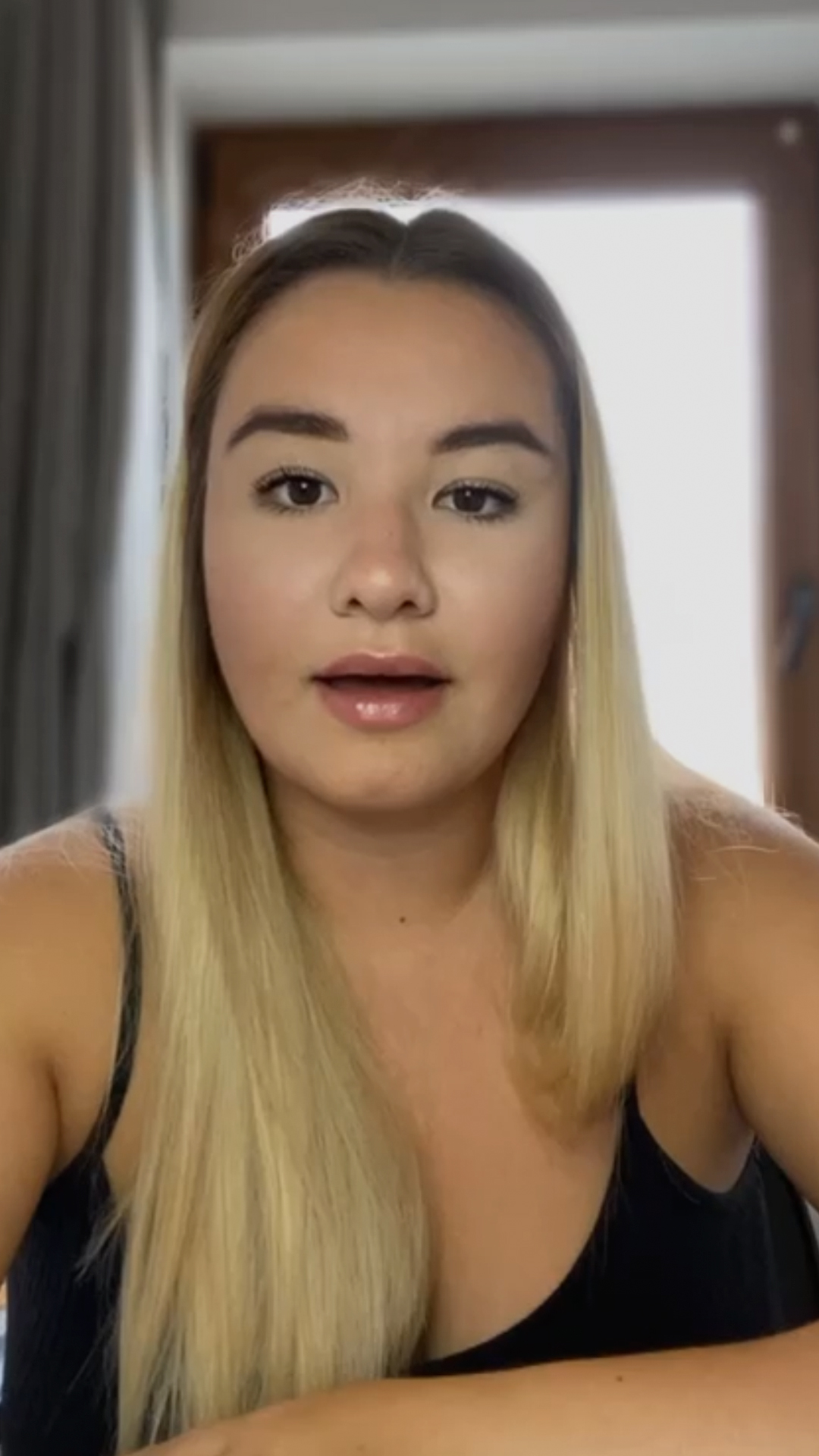 Dalhia's
 -
 Lila's
 -
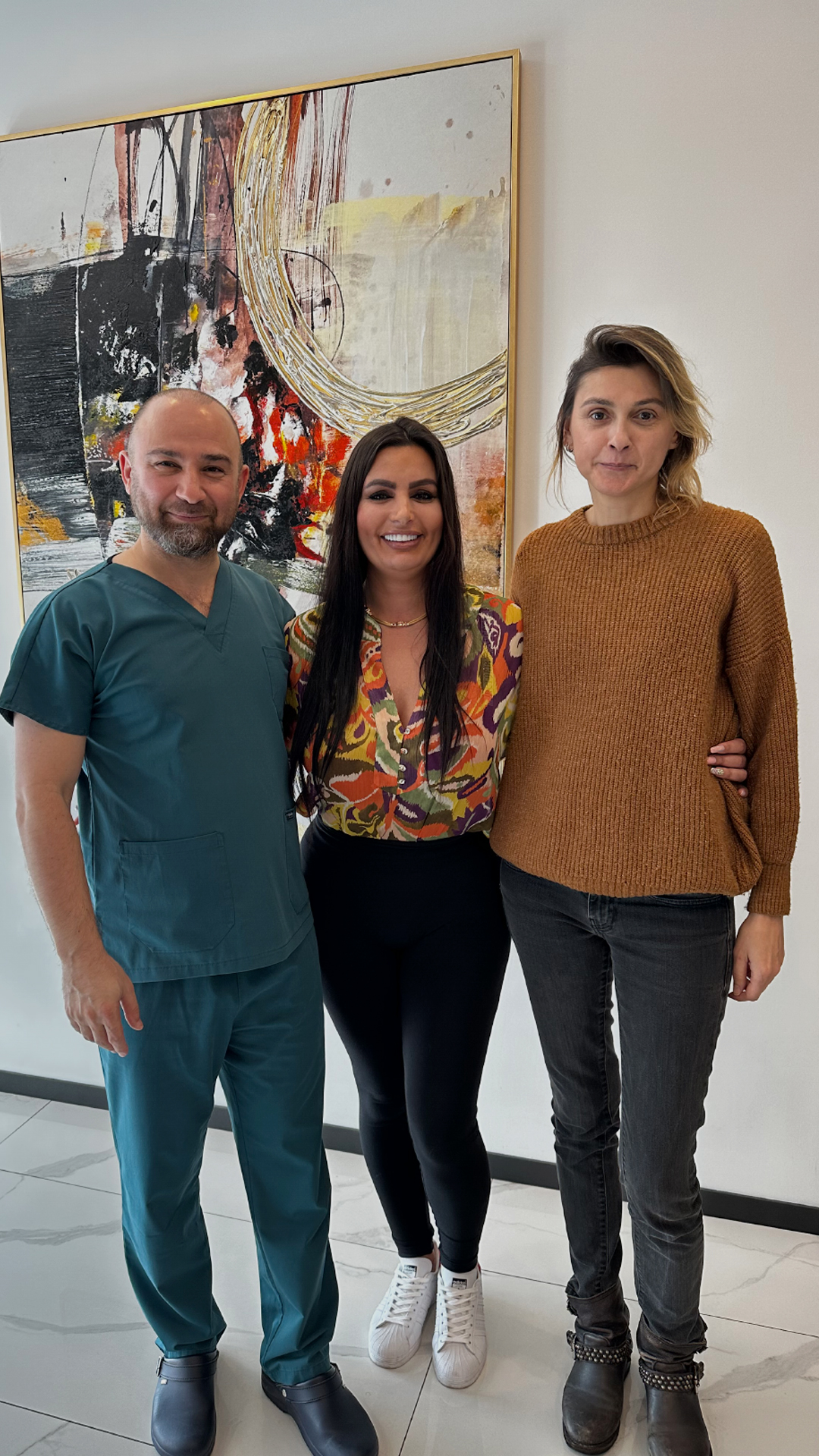 Karina's


Common questions about stomach liposuction
Is stomach liposuction painful?
The operation is done under general anaesthetic, or local anaesthetic with sedation, so pain during the procedure is well controlled. Afterwards, it feels a lot like bad muscle ache and is easily managed with ordinary painkillers. The compression garment helps keep the discomfort down too.
How much fat can be removed in an abdominal liposuction?
As a rule, the amount removed is between 1 and 5 litres of aspirate (fat and fluid), depending on the patient. Beyond 5 litres, it’s classed as large-volume liposuction, which calls for extra precautions. Our surgeons always match the volume to your build and your safety.
Are the results of stomach liposuction permanent?
Yes, the fat cells that are removed don’t grow back. The fat cells left behind can still swell, though, if you gain a lot of weight. To keep your results over the long term, a balanced diet and regular exercise make all the difference.
What’s the difference between liposuction and a tummy tuck?
Liposuction deals only with excess fat, and leaves almost invisible scars. A tummy tuck deals with fat, loose skin and slack muscle together. If your skin is firm, liposuction is enough. If you have an apron of loose skin or a diastasis, a tummy tuck is the better choice.
When can I exercise again after stomach liposuction?
Gentle walking is encouraged from the day after surgery. Moderate exercise can start again after 3 to 4 weeks, and intense workouts (ab work, running) after 6 weeks on average.
Can stomach liposuction be combined with other areas?
Absolutely, abdominal liposuction is often paired with treating the love handles, hips or thighs for an all-round balanced shape. Our surgeons weigh up whether these combinations are feasible during the consultation.
Does stomach liposuction leave scars?
The incisions are only 3 to 5 millimetres long and are made in the natural skin folds (the navel crease, the groin crease). After a few months they become practically invisible and need no special care.
Is stomach liposuction suitable for men?
Absolutely, abdominal liposuction for men is a growing part of what we do. The VASER technique even allows sculpting work to bring out muscle definition. Men’s fat often gathers below the navel and on the flanks, areas that respond particularly well to liposuction.
Let’s discuss your project