Facial hair
Sapphire FUE
Natural beard
Men's aesthetics
Permanent results
Beard transplant: the complete guide
A beard transplant gives men back a full, even beard where nature left gaps. The idea is simple: we take your own grafts (hair follicles) from the back of your scalp and replant them one by one across the sparse areas. Our surgeons do this in Istanbul with the Sapphire FUE technique, one of the techniques suited to the fine skin of the face, for a natural, permanent result.
Beard transplant at a glance
Hospital stay
Outpatient care
Procedure duration
3 à 5 hours
Results visible after
10 à 14 month

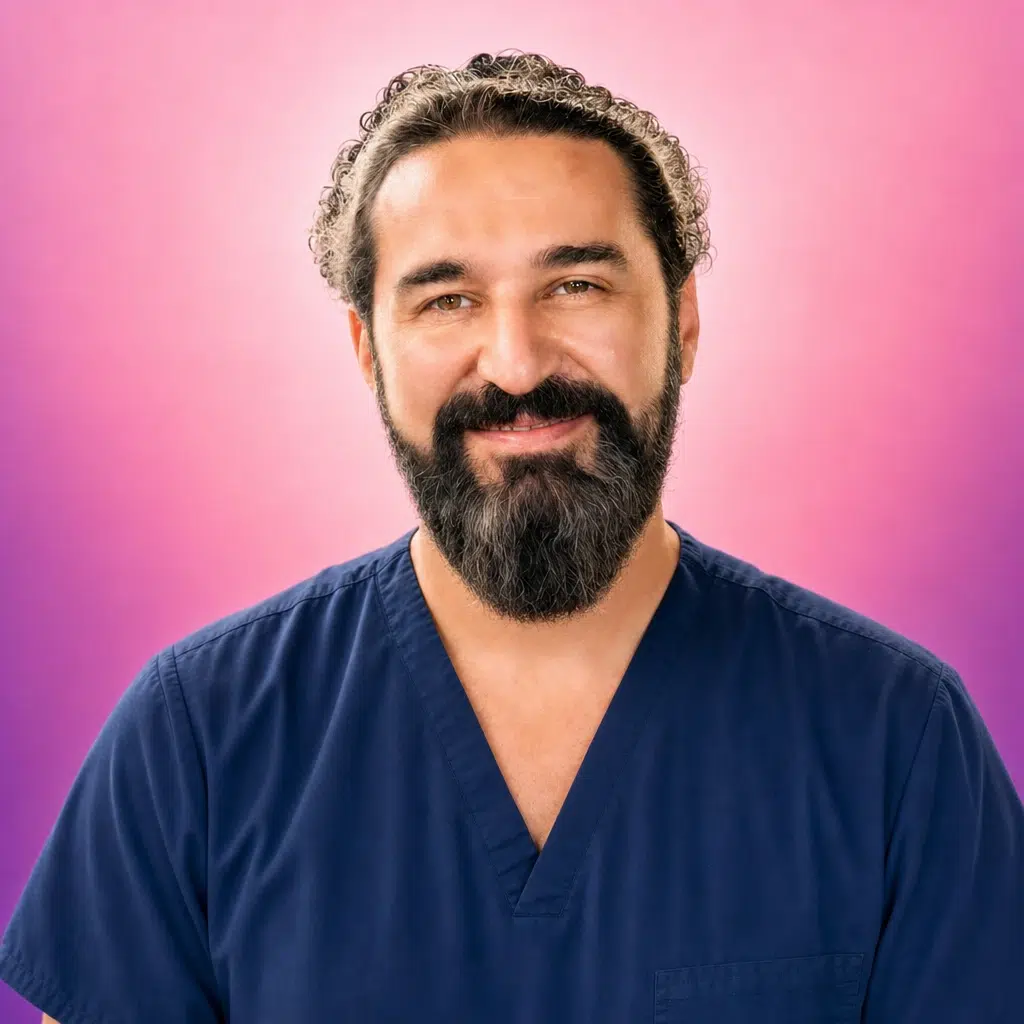
Validation médicale
Understanding beard transplants
A beard carries a lot of weight in how a man comes across. A sign of maturity, a marker of style, it has become a genuine aesthetic asset. The trouble is that not everyone starts from the same place: plenty of men live with patchy, uneven facial hair, sometimes missing altogether in certain spots. Genetics, scarring, burns, patchy loss once beard alopecia has settled, gender transition after hormones have had time to work: the reasons for taking the plunge vary.

Demand, meanwhile, has shot up. According to ISHRS figures, facial procedures (beard and moustache) jumped by 196% worldwide between 2012 and 2014. Beard and moustache work is now one of the busiest corners of hair transplants in Turkey.
Why consider a beard transplant?
Several situations lead people here. Some men are born without a beard, their genetics never allowing enough facial hair to come through, even years after puberty. Once it has settled, alopecia areata of the beard can leave bald patches right in the middle of the face. And scars, whether from an injury or severe acne, can be covered well by implanting grafts.

Then there is the purely aesthetic side. Thickening a beard that is already there, evening out a lopsided one, shaping a goatee or a clean line: the requests are as varied as the faces. As the surgeon Jeffrey Epstein notes in Facial Plastic Surgery Clinics of North America, beard reconstruction has become a major part of hair restoration surgery, driven by the quality of results now within reach (Epstein, 2024).
Who is it for?
Two basic conditions: you need to be an adult whose facial hair pattern has largely settled, and to have a big enough donor area. The back of the scalp, the occipital region, supplies most of the grafts. During the consultation, your surgeon checks the density of that area, the texture of your hair and the quality of your skin to confirm the procedure suits you.

Some cases call for caution. Active alopecia areata, a skin infection or a clotting disorder need to be settled first. That is exactly what the medical work-up beforehand is for: it makes your care safe before there is any talk of dates.
How a beard transplant works at Body Expert
Consultation and a bespoke design
It all starts with a conversation. Your surgeon looks at your facial hair, listens to what you want and measures the density of your donor area. Together you settle on the shape of the beard: full, goatee, moustache or simply denser. The result is a precise surgical plan, with the number of grafts to allow for.
Getting ready on the day
The donor area at the back of your scalp is trimmed, then the outline of your new beard is drawn straight onto your face. A local anaesthetic numbs both areas: you stay awake; the injections sting briefly, then both areas stay numb.
Extracting the follicles (FUE)
The grafts (follicular units) are taken out one by one with a 0.7 to 0.8 mm micro-punch. Your surgeon favours follicles with one or two hairs, the closest match to the fineness of a beard. Each graft goes straight into a saline solution while it waits to be replanted.
Creating the implant channels
Now for the micro-incisions, made with a sapphire blade. Angle, direction, depth: each channel is matched to the part of the face it sits in, because a beard grows differently on the cheeks, the chin and the sideburns. The target density is around 20 to 30 grafts per cm2 on the cheeks, and 30 to 45 on the chin and moustache, for a natural look.
Placing the grafts
One by one, the follicles are set into the channels. This is the most painstaking stage: how well the grafts take, and how balanced the result looks, both come down to it. Allow 3 to 8 hours in total, depending on the area to cover.
Aftercare and follow-up
You leave with a detailed aftercare plan: how to clean the grafted area, what to avoid, which painkillers to take if you need them. And you are not left to fend for yourself: our English-speaking team stays in touch over the months that follow.

Want a full, natural beard?
Your surgeon and your English-speaking coordinator are with you at every step, with a personalised plan and a free quote within 24 hours.
The price of a beard transplant: why Turkey is a different story
The cost of a beard transplant depends on several things: how much area needs filling, how many grafts are needed and the technique used. In the UK the bill adds up fast, weighed down by clinic overheads and a long time in theatre. This is exactly where Turkey makes the difference.

In Istanbul the same procedure becomes far more affordable, with up to 70% savings. At Body Expert, your beard transplant in Turkey comes as a package covering the operation, transfers, accommodation and aftercare. The figures, package by package, are set out in the price list on this page.
What moves the quote up or down

The area to treat is the first factor: a full beard uses between 1500 and 3000 grafts, while a localised touch-up or a moustache on its own needs far fewer. The complexity of the design counts too, especially when the tricky part is blending grafted zones invisibly into existing hair.
Results and the stages of recovery
Recovery follows a fairly predictable timetable. Knowing what to expect, stage by stage, makes it much easier to take in your stride.
First week: healing gets going

Some redness and small scabs form over the treated areas. Nothing out of the ordinary: they fade on their own within a few days. Desk work is often possible after a few days, once the swelling is easier to live with. You get clear cleaning instructions to see you through this phase.
Weeks 2 to 3: the temporary shedding
Between the second and third week, the grafted hairs fall out. This temporary shedding often catches people off guard, but it is part of the normal process: the follicles themselves stay put under the skin, ready to start a fresh cycle.
Months 3 to 4: regrowth begins
New hairs come through bit by bit. Growth looks uneven, with some follicles starting before others, and that is perfectly normal at this stage.
Months 4 to 6: the density builds
The beard visibly takes shape. You can start trimming and styling it however you like. Month after month, the density keeps gaining ground.
Months 10 to 14: the final result
The grafts are fully mature and the transplanted hairs sit among your original beard once trimmed to the same length. Taken from an area that resists shedding, the moved follicles keep growing, though they retain the texture of the scalp they came from.
Beard or scalp: the differences that count

A beard transplant is not just a standard hair transplant applied to the face. Beard hairs are thicker, stiffer and more oval in shape than the hair on your scalp. Implanting them takes a different touch.
Facial skin, thinner and richer in blood vessels, means rethinking how deep the incisions go. Grafts with one or two hairs are preferred too, because a beard does not grow in little clusters the way scalp hair does. And the angle of implantation becomes an art in itself: angled downwards on the cheeks, forwards on the chin, downwards at the sideburns. It is these sharp angles, cut with very fine blades, that separate a convincing beard from an artificial one.
Fancy going deeper into beard culture and Turkish style? We have written a full article on it.
Tips to get the best from your results
A few habits give you the best shot at success. Before the procedure, stop any minoxidil on the recipient area and tell your surgeon about anything you are taking. Put aspirin and anti-inflammatories aside for the 10 days beforehand too.

After the transplant, keep the area out of direct sun for at least three weeks and sleep propped up for the first few nights to limit swelling. Do not shave anything for two weeks, and wait for your surgeon’s go-ahead before getting back to sport.
Upkeep after that is refreshingly simple: your grafted hairs behave like natural ones. You shave, trim and style them as you please once the healing is done.
In short
The beard transplant has become a reliable way to bring back full, natural facial hair, whether the cause is genetic, a scar or simply a matter of looks. Carried out in Istanbul at Body Expert’s partner clinics with the Sapphire FUE technique, it takes your own grafts from the back of your scalp and replants them where the beard is missing, following the angle and direction of each hair to the letter.
The path is well marked: consultation and bespoke design, follicle extraction, channel creation with a sapphire blade, then careful placement over 3 to 8 hours. On the recovery side, expect a few days of redness, a temporary shed around the third week, then regrowth that thickens from month four to month fourteen, up to a result that lasts, once the hairs are trimmed to beard length.
All of it for a budget far kinder than the UK, with up to 70% savings thanks to an all-inclusive package (operation, accommodation, transfers) and support in your own language from your very first message to full regrowth. The detailed rates are in the price list on this page.
Still on the fence, or wondering how many grafts you would need? Our coordinators will answer every question and put together a free, personalised quote within 24 hours. There is no obligation, and it is often the best way to see things clearly.
Sources and references
- Epstein, J. S. (2024). Facial Hair in Hair Restoration Surgery: Beard Transplantation and Beard-To-Scalp Hair Restoration. Facial Plastic Surgery Clinics of North America, 32(3), 409-416.
- Zhu, D.-C., He, Y., Fan, Z.-X., Wang, J., Qu, Q., Hu, Z.-Q., & Miao, Y. (2020). Large-Scale Beard Extraction Enhances the Cosmetic Results of Scalp Hair Restoration in Advanced Androgenetic Alopecia in East Asian Men: A Retrospective Study. Dermatology and Therapy, 10(1), 151-161.
- Umar, S., Khanna, R., Maldonado, J. C., Chouhan, K., & Gonzales, A. (2024). Beard and Body Hair Transplantation by Follicular Unit Excision Using a Skin-Responsive Device: A Multicenter Study. Dermatologic Surgery, 50(3), 306-308.
- ISHRS. (2016). Scruff not enough? Facial hair transplants helping men achieve fuller beards, moustaches. International Society of Hair Restoration Surgery.
Ready to take the plunge?
A question about your eligibility or the number of grafts you need? Our English-speaking team gets back to you within 24 hours.
OUR PRICES AND PACKAGES
FUE
Offre et tarif : FUE
Feel free to scroll through the different prices from right to left!
The Sapphire FUE technique: the benchmark for beard transplants
A beard transplant works on the same principle as a Sapphire FUE hair transplant: you take hair follicles from a donor area and replant them, here on the face. But facial hair plays by its own rules, and it calls for expertise and tools built for the job.
Why Sapphire FUE is used on the face

Facial skin is thinner and more sensitive than the scalp, and beard hairs grow every which way depending on the area: cheeks, chin, neck, moustache. Sapphire FUE answers that challenge with sapphire micro-blades that open channels finer than ordinary steel can manage.
That precision is no small thing. On the cheeks the hairs dip downwards; on the chin they point forwards; on the neck the angle shifts again. Harder and finer, the sapphire blade lets the surgeon copy these directions faithfully, which is what makes a beard that looks natural at conversational distance.
What Sapphire FUE adds

Next to standard FUE, the sapphire version ticks several boxes that matter for a beard. Finer incisions can mean less visible trauma on an area as exposed as the face. How well the grafts take still depends on the surgeon’s plan and on how the follicles are handled, not on the stone itself. Beard transplants by FUE can look natural when the surgeon follows the native angles of the face (Epstein, 2024; Dua et al., 2021). Sapphire blades are one way to open those channels; DHI with a Choi pen is another, equally used on the face.
To compare the main hair transplant methods, have a look at our DHI versus FUE breakdown.
Choosing the donor area

The occipital region, at the back of the scalp, is still the go-to donor area. Its hair offers the calibre and texture closest to a beard, and its follicular density is among the highest on the scalp, enough to harvest plenty of grafts without thinning the area.
Sometimes the scalp is not enough, or the texture is not quite right. The surgeon can then harvest below the jawline: the match there is excellent, though the volume available stays limited. To dig into the subject, head to our article on the donor area in hair transplants.
Before & After
Discover our patients’ results
DHI

Avant-après

Avant-après

Avant-après

Avant-après

Avant-après

Avant-après

Avant-après

Avant-après

Avant-après

Avant-après

Avant-après

Avant-après

Avant-après
Our patients talk about us
-
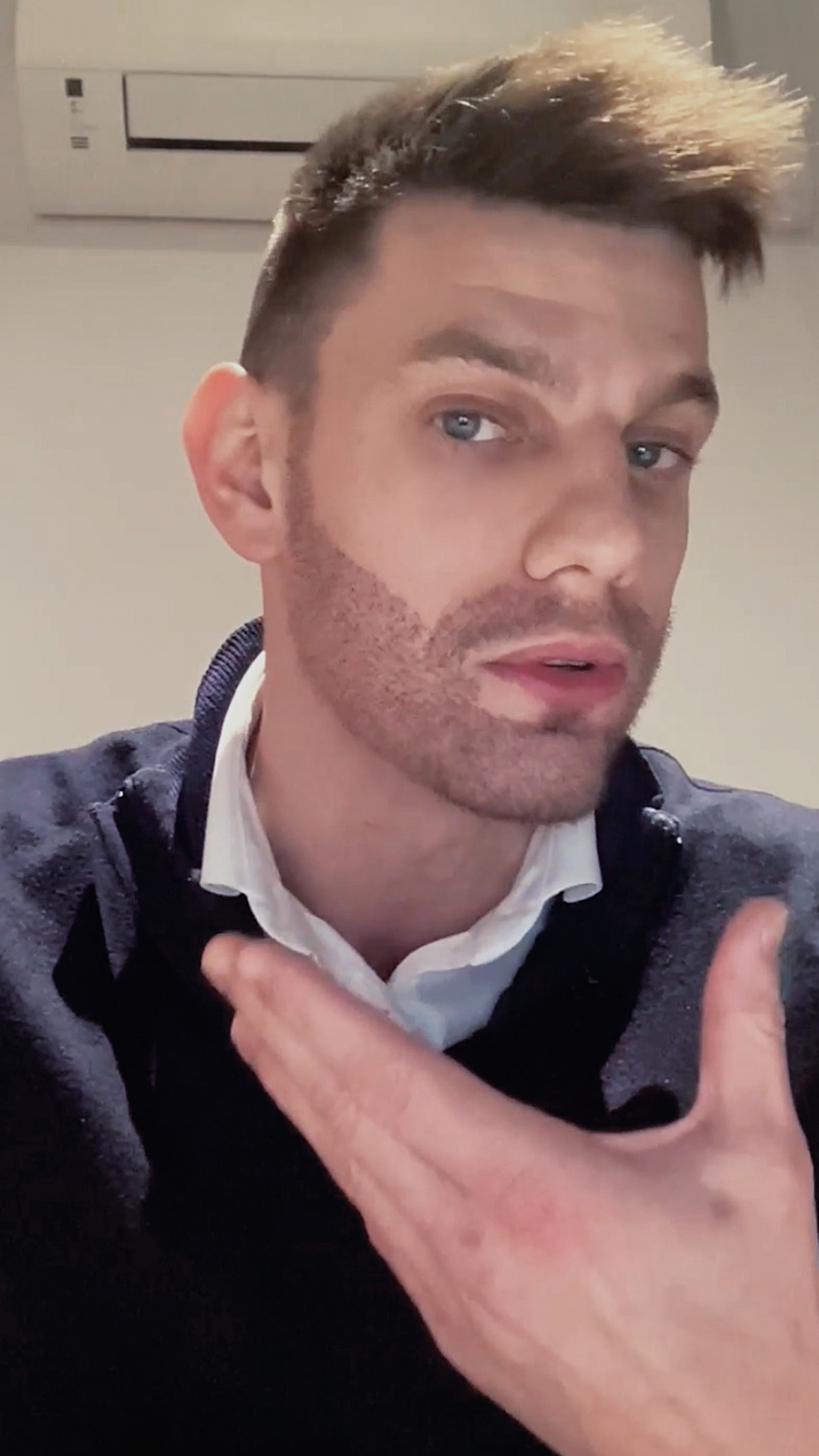 Cyril's
 -
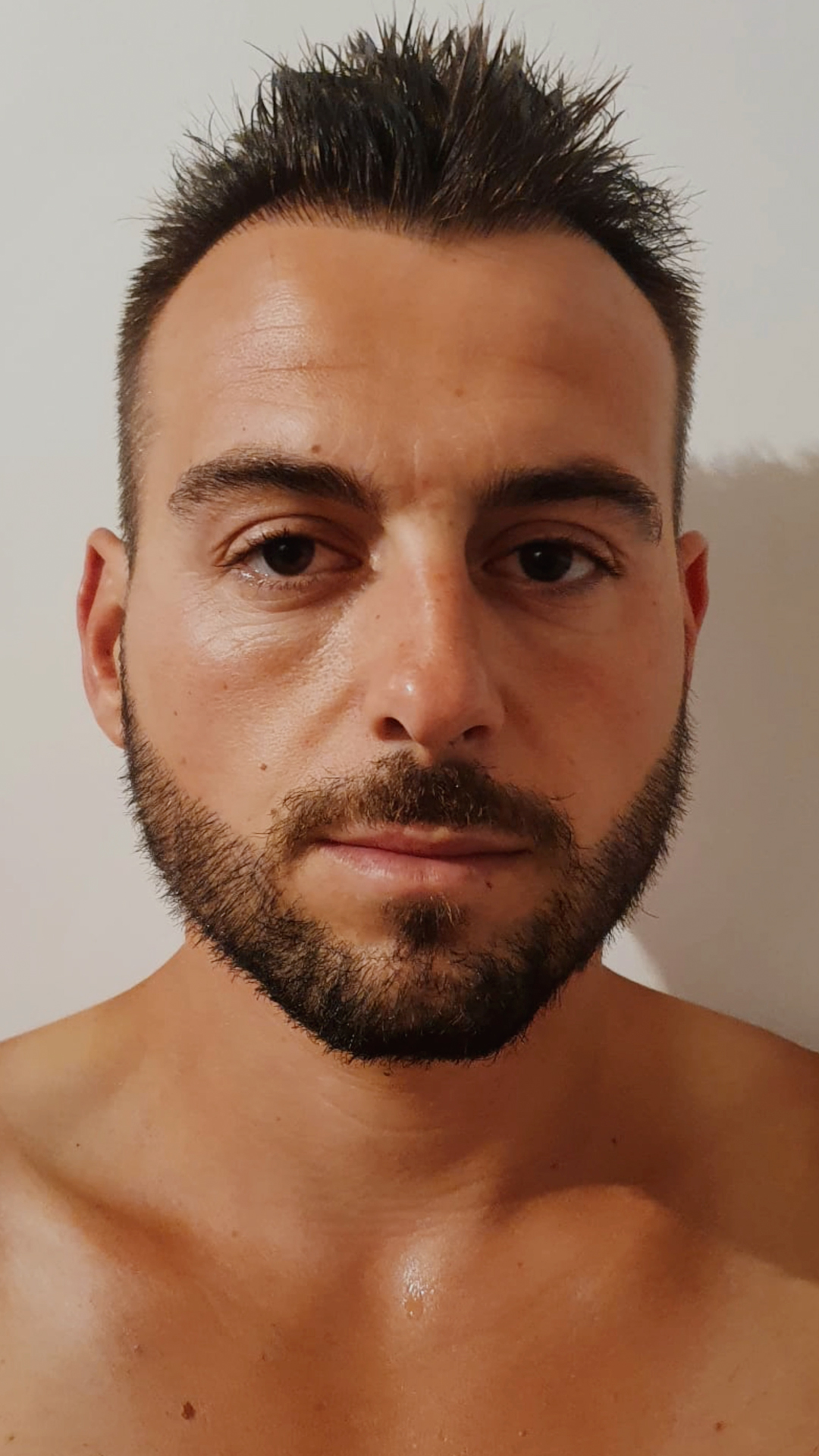 Ewen's
 -
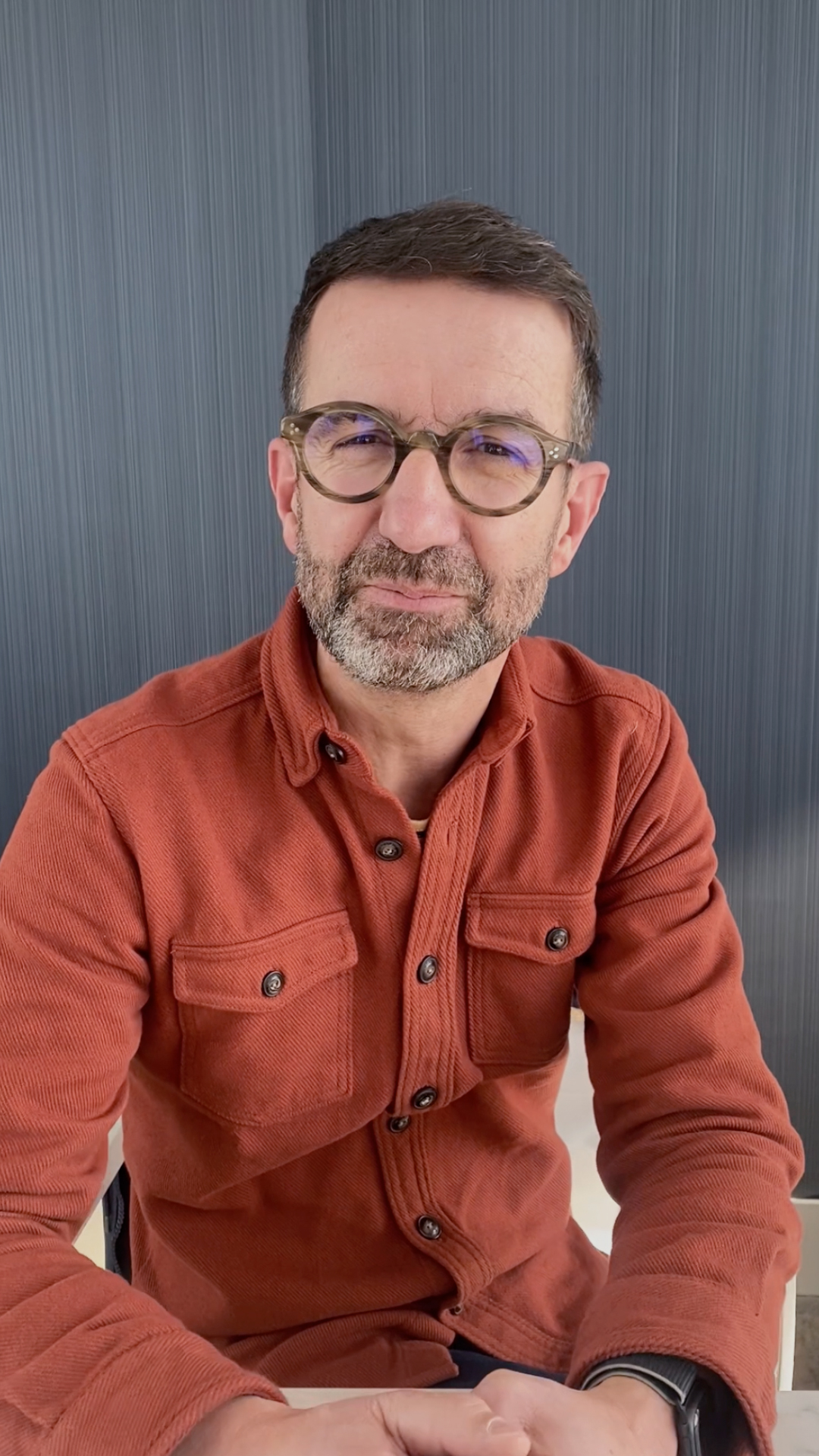 Ronan's
 -
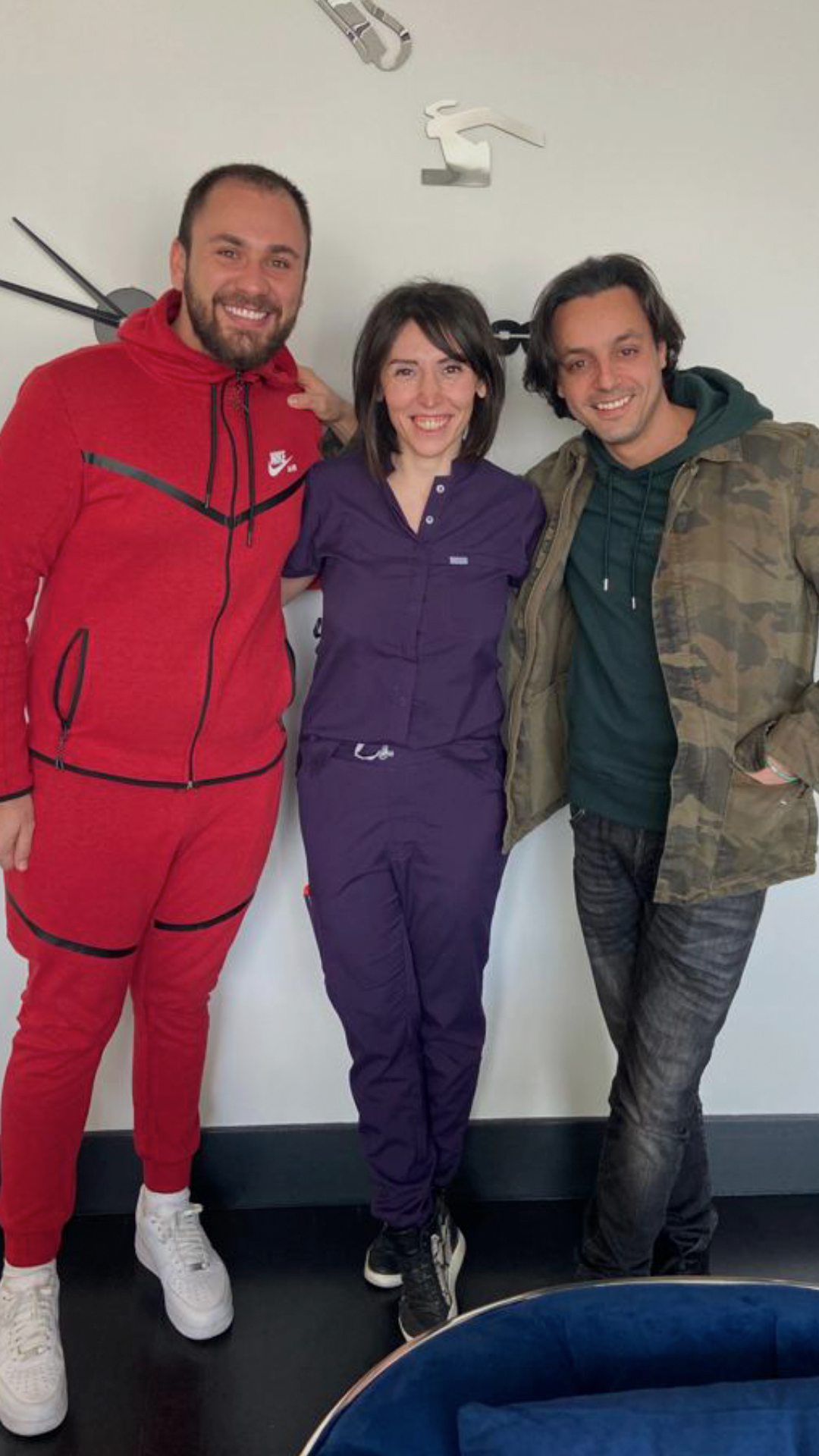 Dorian's
 -
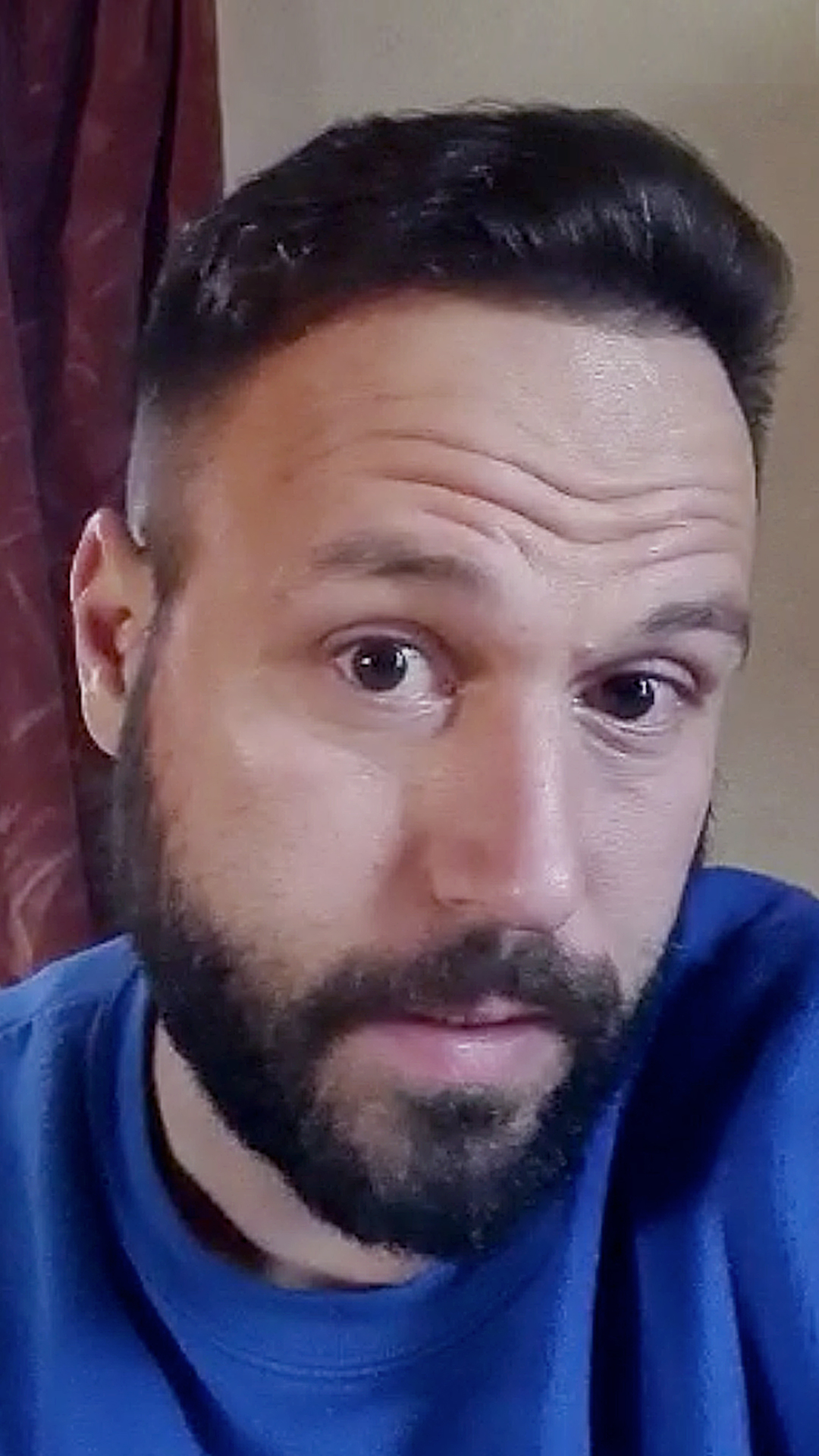 Mickael's
 -
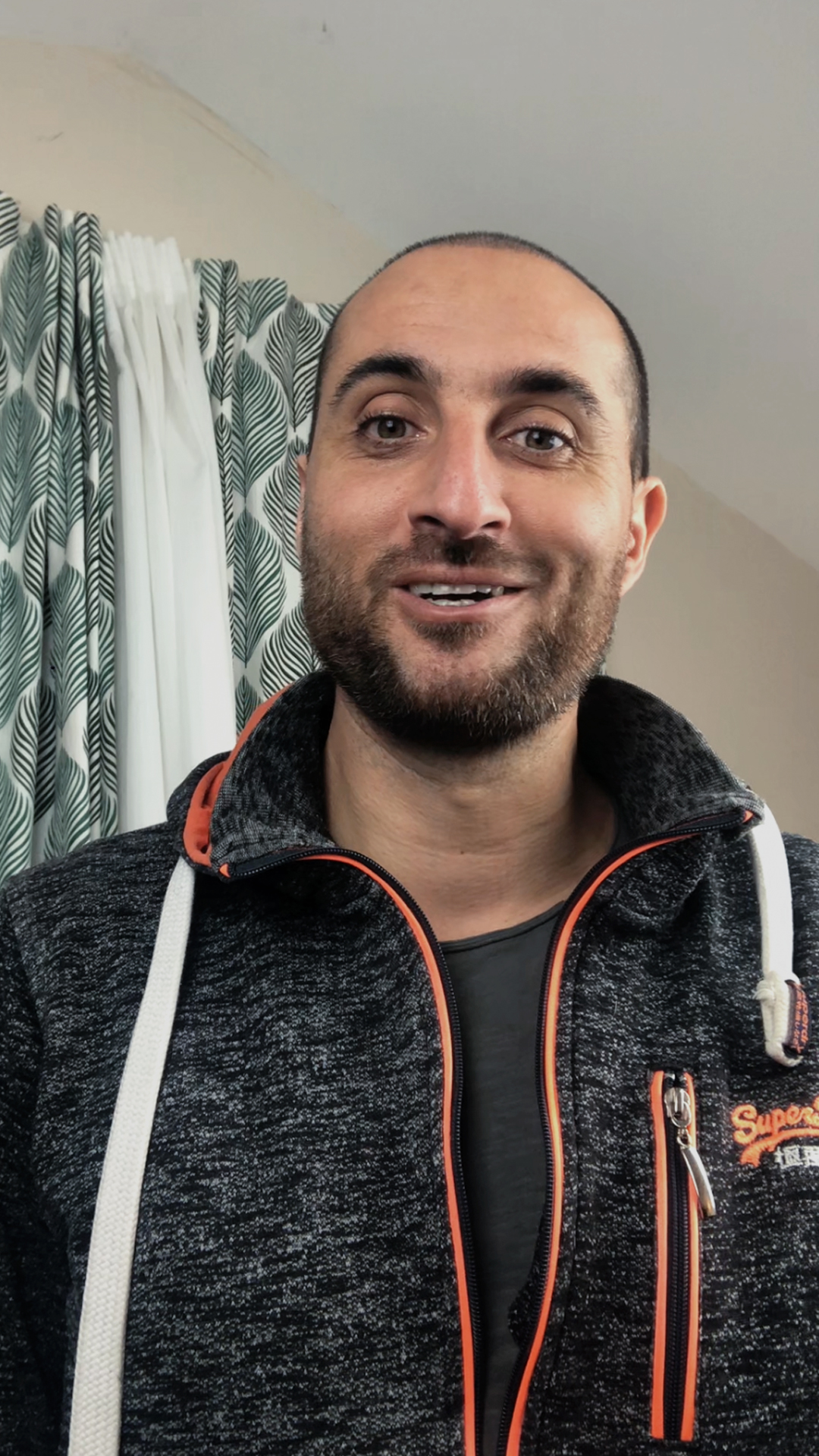 Olivier's
 -
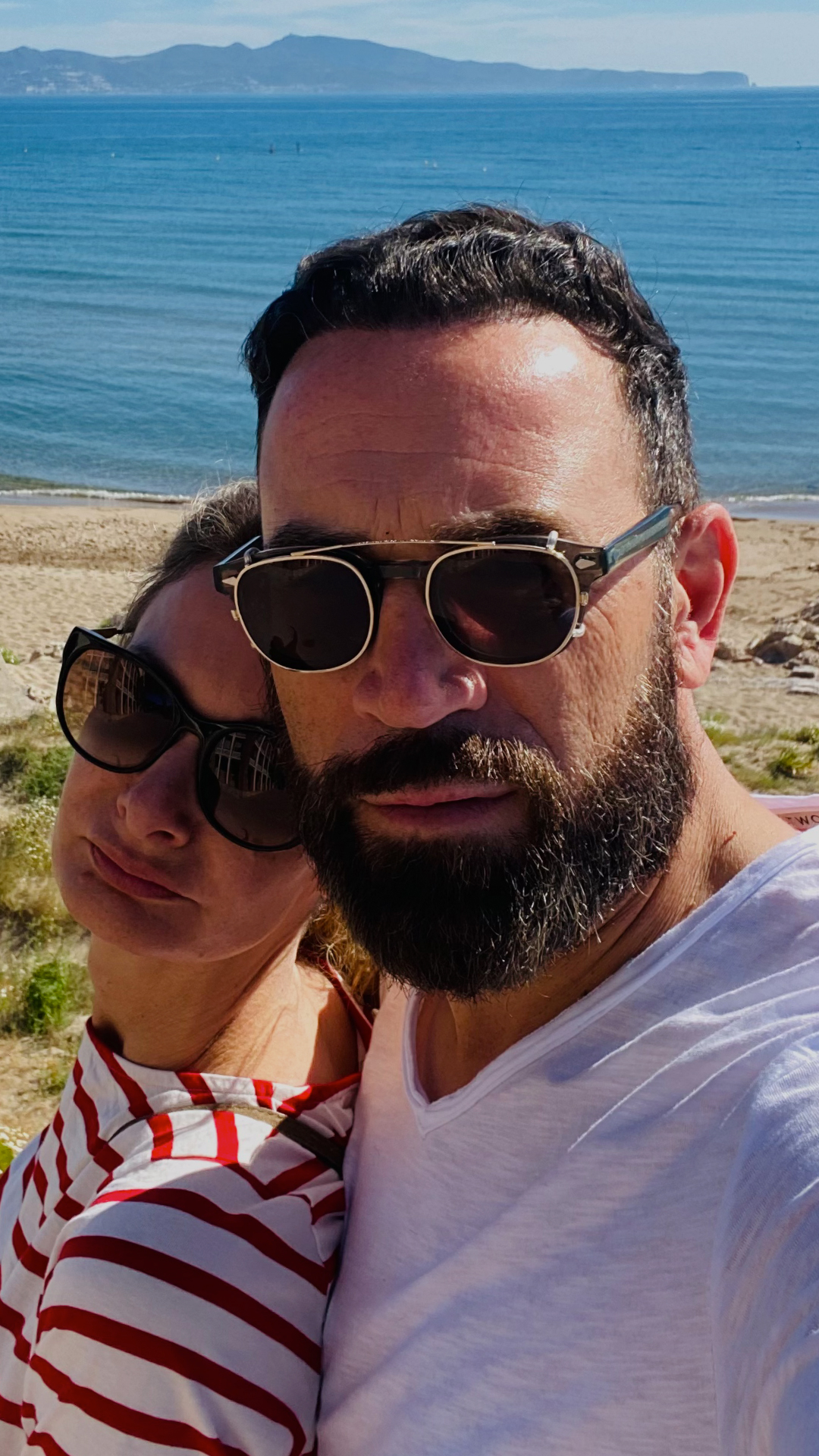 Jérôme's
 -
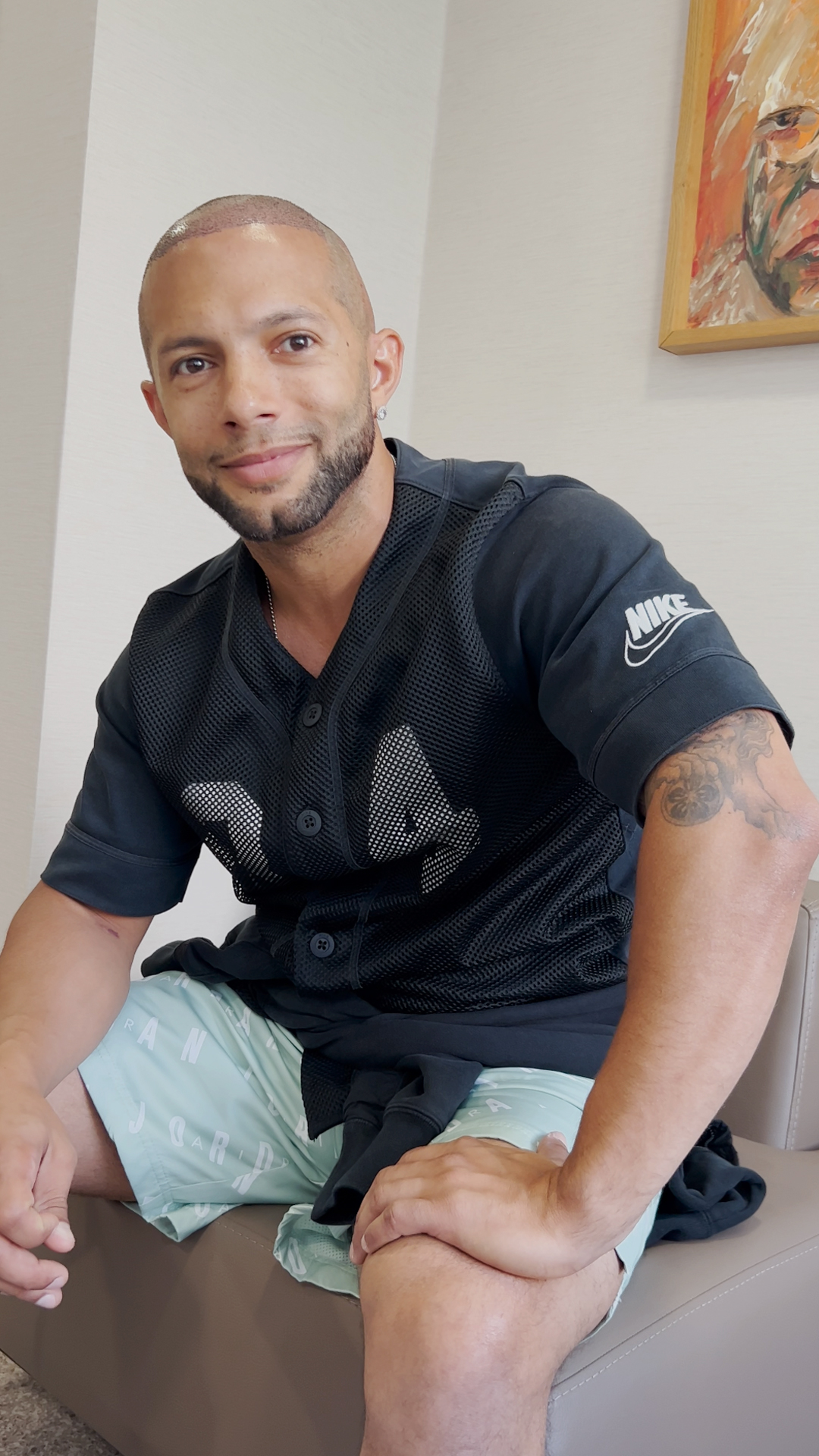 Joachim's
 -
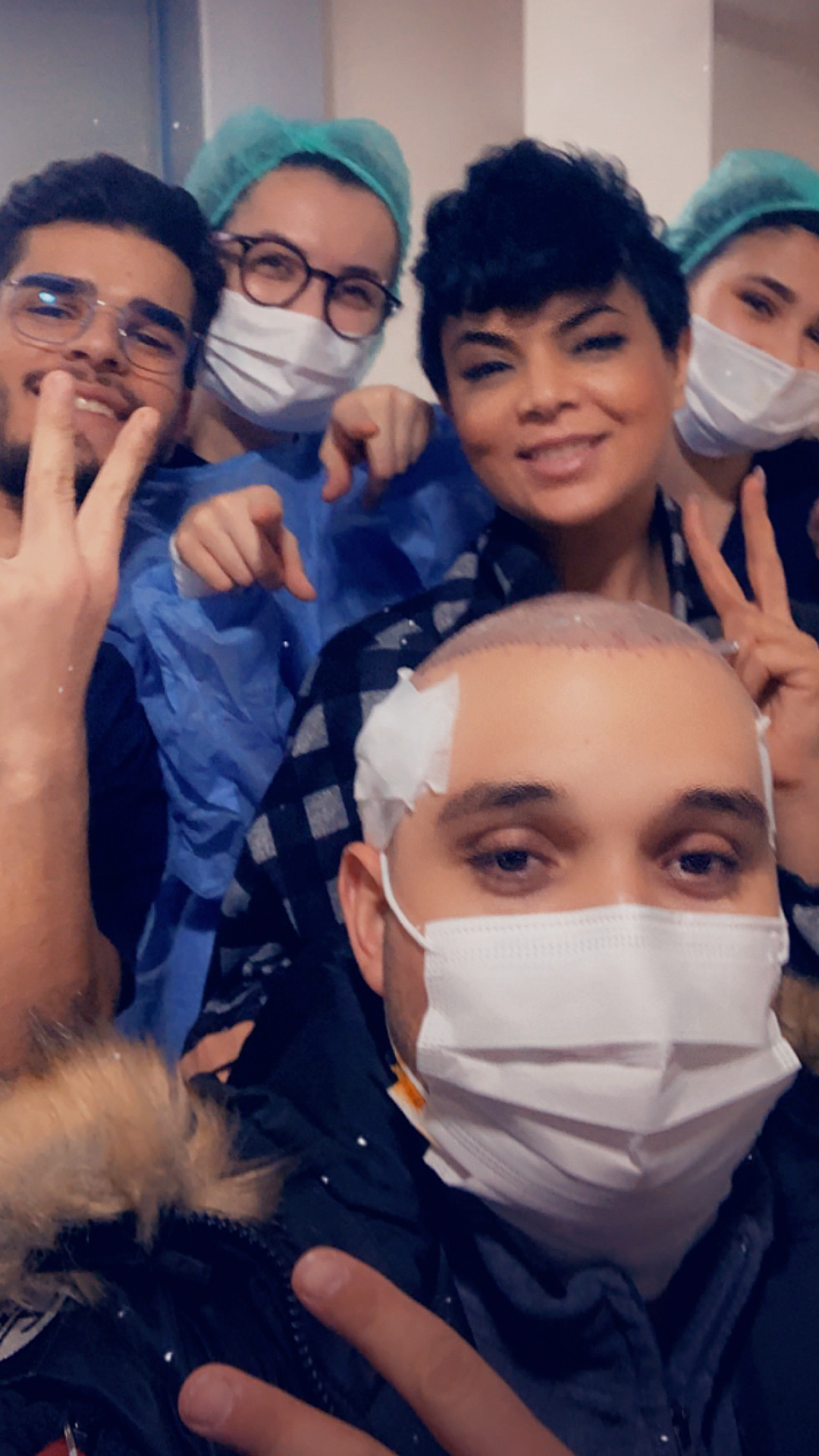 Cédric's
 -
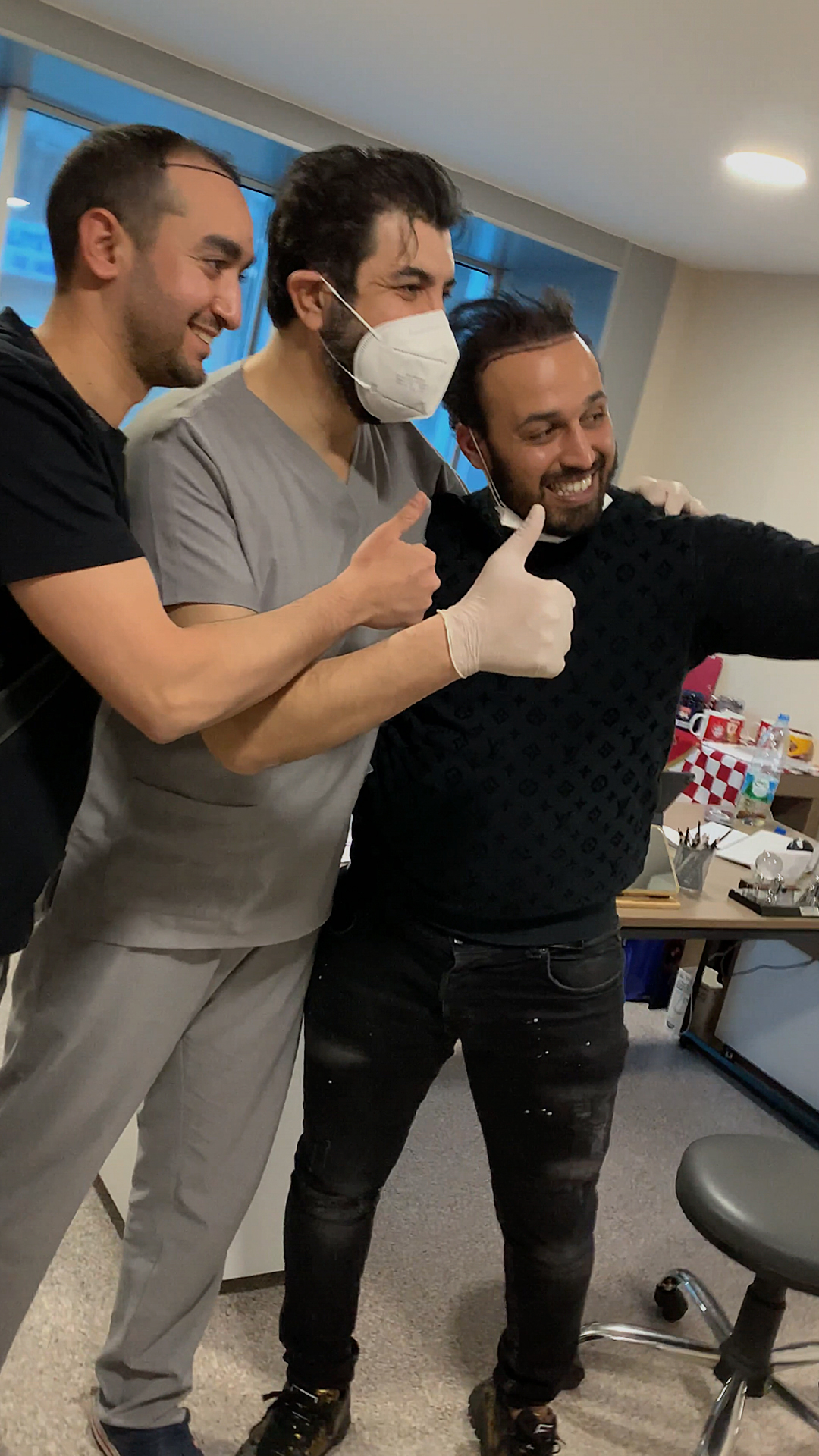 Karim's


Common questions about beard transplants
Is a beard transplant painful?
The injections sting briefly. Once the local anaesthetic has taken effect, the area itself stays numb for the rest of the procedure. In the days after, you might feel some tightness or mild discomfort, soon eased by the ordinary painkillers your surgeon prescribes.
How many grafts does a full beard need?
It depends on the look you are after. A full beard usually calls for between 1500 and 3000 grafts, while a targeted touch-up (goatee, moustache, sideburns) often needs just 500 to 1200. The exact figure is settled with your surgeon at the consultation.
When can I shave after the procedure?
You can shave about two weeks after the transplant, once the initial healing is done. After that, the grafted hairs behave like natural ones and are looked after completely normally.
Is the result permanent?
The transplanted follicles come from an area that resists shedding and keep growing after they are moved. The final look settles between 10 and 14 months. Trimmed to beard length they sit among your own hairs, though they keep the texture of the scalp they came from.
How many sessions does a dense beard take?
One session is often enough to get a wearable beard. If you are after extra density or a very large area, a second session can be arranged after 12 months, once the grafts from the first have reached full maturity.
What is the difference between a beard transplant and a hair transplant?
The principle is the same, but a beard brings its own quirks. Its hairs are thicker and grow at more awkward angles, on skin that is thinner and more sensitive. That is why we use the Sapphire FUE technique, which gives the precision and the healing the face needs. For the full picture, see our complete hair transplant guide.
Are there any risks or contraindications?
Redness and mild swelling are the usual side effects, and they settle within 7 to 10 days. Poor hair angle or small bumps under the skin can also occur, especially on the chin and moustache. The main contraindications are active skin infections on the face, clotting disorders and alopecia areata in an active phase.
Why choose Body Expert for my beard transplant?
Body Expert works with partner clinics in Istanbul, selected for their facilities and their surgeons’ experience. Our surgeons use Sapphire FUE, a technique well suited to facial hair, and you move through every step with a package covering the operation, accommodation and transfers, plus English-speaking support from start to finish.
Discussing your project