Turkey
Covid-19 in Turkey, November 2020
As the second wave of COVID-19 reaches its peak in Western Europe and in many other countries around the world, we would like to tell you how things stand in Turkey. No country has been spared by this health crisis, but the rules on lockdown and on the way patients are cared for vary a great deal from one country to another. According to the statistics available (https://coronavirus.jhu.edu/map.html), the situation appears to be under control in Turkey. By way of comparison, if we look at the cumulative figures since March 2020, France had passed the two million case mark by a wide margin on 24 November 2020 (with 50,237 deaths), while 460,916 cases had been recorded on the same date in Turkey (with 12,672 deaths). The two sets of figures cannot be compared like for like, however: until 25 November 2020, the Turkish statistics counted only patients who had symptoms and set aside positive tests without symptoms, something the health minister Fahrettin Koca had acknowledged on 30 September 2020. On the day the ministry returned to a full count, it reported 28,351 cases for 25 November alone.

Between February and July 2021, Body Expert published a series of announcements to keep its patients informed about the conditions for leaving and returning between France, Belgium, Switzerland and Turkey. This page brings them together.
Nothing that follows is in force today. All the Turkish health restrictions linked to Covid-19 have been lifted, and passengers arriving in Turkey no longer have to show proof of vaccination or a negative PCR test. The tests, the certificates of compelling reason, the quarantines on return and the entry form described below belong to the spring of 2021. They are reproduced here as they applied at the time, with their dates, for the record. Before travelling, only the official pages of the ministries concerned are authoritative.
The texts below follow the order in which they were published, from the most recent to the oldest. A few figures have been corrected against the primary sources available today; these corrections are flagged as they arise.

The double earthquake that shook south-eastern Turkey and northern Syria on Monday morning, February 6, 2023, is an unspeakable catastrophe that has overwhelmed us with emotion.

For citizens from the UK, the USA or Canada, medical tourism presents an appealing solution for patients pursuing essential healthcare provisions. When appropriately managed and completed successfully, this form of care provides both physical and psychological relief for individuals long plagued by medical conditions. This relief can be found across various medical fields, including dental care, hair transplants, post-weight loss surgery, eye surgery, and post-surgical or post-pregnancy cosmetic surgery, among others.
Often dissuaded by high medical costs, inadequate insurance coverage, and extended waiting times in their home countries, patients seek out the most beneficial destinations for their medical journey. The goal is to save up to 70% on domestic treatment costs. Patients aim for the best value for money by scheduling appointments with top-tier practitioners and surgeons, ensuring services from airport pickup to translation assistance. An ideal destination for this venture would be a safe, welcoming and modern country, with a touch of exotism if possible.

Turkey does regulate the treatment provided to international patients, and has done so since 2017. Hospitals, clinics and the agencies that bring patients to them need an authorisation from the Ministry of Health, consent has to be taken and documented, and a foreign patient must be told how to complain before treatment starts. What that framework does not settle is which court would hear a dispute, which law would govern your contract, how long you would have to bring a claim, or what that claim might be worth. Those answers depend on where you live, what you signed and who you signed it with, and they are far easier to establish before you travel than afterwards.
This article sets out what exists, where the gaps are and what to keep in writing. It is general information about how the system works, not advice about your own case. For that you need a solicitor in your own country and a lawyer qualified in Turkish law.
Turkey has spent two decades building the capacity that made its health tourism sector possible: teaching hospitals, research institutes and sustained public investment, tested by events such as the 1999 Kocaeli earthquake and the February 2023 earthquakes in the south east of the country. That capacity is real. So is the commercial layer that has grown on top of it: the Foreign, Commonwealth & Development Office records that seven British nationals died in Turkey in 2025 following medical procedures, and that others returned home needing further treatment or surgery. Neither fact cancels the other, which is exactly why the paperwork deserves attention.
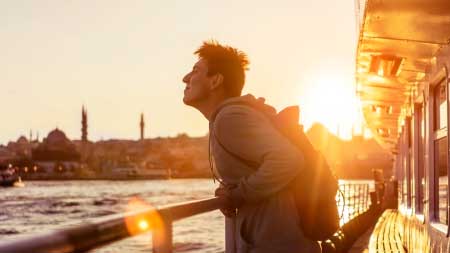
Many of you have asked us to share our good tips for enjoying the best of Istanbul when you come for your hair, dental, plastic surgery or beauty treatments with Body Expert. Here we have compiled a mini-guide of our favorite addresses: cafes, restaurants, shopping, tourist attractions or escapades around Istanbul. A valuable list to take with you on your next medical trip!
On discute de votre projet