Covid-19 and the reopening of Turkey’s borders: our 2021 announcements

Between February and July 2021, Body Expert published a series of announcements to keep its patients informed about the conditions for leaving and returning between France, Belgium, Switzerland and Turkey. This page brings them together.
Nothing that follows is in force today. All the Turkish health restrictions linked to Covid-19 have been lifted, and passengers arriving in Turkey no longer have to show proof of vaccination or a negative PCR test. The tests, the certificates of compelling reason, the quarantines on return and the entry form described below belong to the spring of 2021. They are reproduced here as they applied at the time, with their dates, for the record. Before travelling, only the official pages of the ministries concerned are authoritative.
The texts below follow the order in which they were published, from the most recent to the oldest. A few figures have been corrected against the primary sources available today; these corrections are flagged as they arise.
1 July 2021: Turkey lifts its curfews
The Presidential Cabinet, meeting on 21 June 2021, decides on the third stage of ‘gradual normalisation’, implemented by a circular from the Turkish interior ministry dated 27 June. From Thursday 1 July 2021 at 5am, the restrictions on going out and the restrictions on travel between cities come to an end, on weekdays and at weekends alike.
The establishments whose activity had been suspended are allowed to reopen, cinemas among them, the limit on the number of guests seated at any one table is lifted, and music, including live music, is allowed until midnight instead of 9pm. The shisha lounges, for their part, remain closed until further notice.
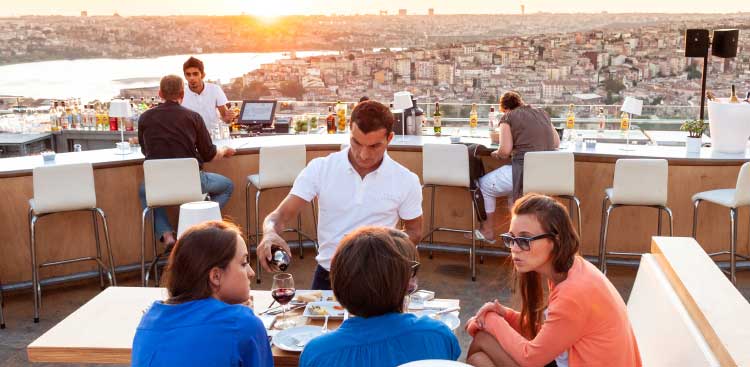
For the patients who are expected in Istanbul, lifting the evening and Sunday curfews changes the stay in concrete terms: evenings are free again, weekends too, and extending the trip to the Aegean coast or the Mediterranean between two stages of treatment becomes possible again.
21 June 2021: France takes Turkey off its red list
Since 9 June 2021, France has been sorting countries into three colour categories according to their epidemic situation, and has made the travel formalities depend both on that classification and on the vaccination status of the traveller. Turkey was on the red list when the scheme first came into operation.

On 17 June 2021, France removed Turkey from its red list. The official government page on travel abroad still shows Turkey among the red countries in the version archived on 17 June in the early afternoon; the version from the following day no longer mentions it, the classification having been updated as of 17 June. The direct consequence: no more compelling reason and no more quarantine for vaccinated people travelling to Turkey and returning to France.
You were vaccinated more than 14 days ago
- Travelling to Turkey: no compelling reason required, with a negative PCR test less than 72 hours old.
- Returning to France: with a negative PCR test less than 72 hours old, no quarantine.
You are not vaccinated, or not yet fully vaccinated
- Travelling to Turkey: with a compelling health reason, supported by a certificate, and a negative PCR test less than 72 hours old.
- Returning to France: with a negative PCR test less than 72 hours old and a sworn declaration undertaking to self-isolate for seven days.
For travellers who leave from Belgium or from Switzerland, the conditions remain the ones described further down this page.
On the Turkish side, the curfew remains in place: from 10pm to 5am from Monday to Saturday, and for the whole of Sunday, that is, from Saturday at 10pm through to Monday at 5am. Foreign visitors who are in the country for a short tourist stay are exempt from it, as long as they are able to show their passport. Masks remain compulsory in enclosed public spaces. Restaurants, cafés and patisseries serve at table from 7am to 9pm from Monday to Saturday, and then switch over to takeaway and to delivery until midnight. Shops and shopping centres open from 7am to 9pm, except on Sundays, and the open-air markets from 7am to 8pm; on Sundays, grocers, mini-markets, greengrocers and butchers open between 10am and 5pm.
To enter Turkey, travellers vaccinated at least 14 days earlier, or who have recovered from Covid-19 in the previous six months, are exempt from testing, provided they can prove it. Otherwise, a negative PCR test less than 72 hours old, or a negative antigen test less than 48 hours old, is enough. An online entry form, which issued the traveller with a health code, completed these formalities at the time.
Specific restrictions still apply to arrivals coming from several countries where the epidemic is picking up speed. The Turkish circular of 28 June 2021, applicable from 1 July, suspends flights from Bangladesh, Brazil, South Africa, India, Nepal and Sri Lanka, and imposes fourteen days of quarantine on anyone who has stayed in one of those countries; ten days for Afghanistan and for Pakistan; and a PCR test less than 72 hours old for the United Kingdom, Iran, Egypt and Singapore.
Correction to the original version: the text published in 2021 attributed these restrictions to the ‘Alpha, Beta, Delta and Gamma variants’. According to the World Health Organization’s historical table, the variant whose first documented samples come from India is Delta (lineage B.1.617.2, October 2020), the one from South Africa is Beta (B.1.351, May 2020) and the one from Brazil is Gamma (P.1, November 2020). Alpha (B.1.1.7) was documented for the first time in the United Kingdom in September 2020: it had no place on that list.
Finally, France, Switzerland and Belgium are all keeping their requirement for a negative PCR test on the way back from Turkey. Our assistants helped the patients obtain that test and the various certificates they needed for the journey.
2 June 2021: life resumes after the full lockdown
As in many European countries, the improvement in the health situation in Turkey allows a return to normal and makes it easier to welcome the foreign visitors who come to Istanbul for treatment.
The full lockdown, which came into force on 29 April 2021 at 7pm, was lifted on Monday 17 May 2021 at 5am. A first stage of gradual normalisation followed, until 1 June. The Presidential Cabinet of 31 May settled on the second stage, which came into effect on Tuesday 1 June 2021 at 5am. The schools are reopening gradually, and the parks, the café terraces and the beaches are filling up again.
Correction to the original version: the text published in 2021 dated this easing to ‘Monday 31 May’. 31 May is the date of the Cabinet meeting; the interior ministry circular sets the entry into force at Tuesday 1 June at 5am. The same text also presented the strict lockdown as covering ‘the whole month of Ramadan (13 April to 17 May)’: the partial measures began on 14 April and the full lockdown only on 29 April.
The curfew is maintained from 10pm to 5am from Monday to Saturday, and for the whole of Sunday. Foreigners who are passing through for a tourist stay are exempt from it; everyone else has to comply with it, on pain of a fine. Masks remain the rule in public places.
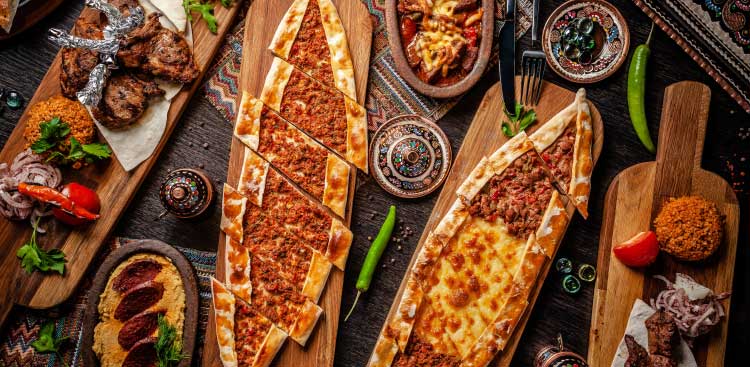
On the plus side, restaurants, cafés and patisseries go back to serving at table from 7am to 9pm, and sporting, tourist and cultural activities start up again in line with the protocols specific to each sector. Bars in the strict sense, shisha lounges and taverns, on the other hand, stay closed. As for shopping, the shops and the shopping centres open from 7am to 9pm from Monday to Saturday, while on Sundays the local food shops open between 10am and 5pm.
Correction to the original version: the circular sets the closing time for shops and shopping centres at 9pm, and not 8pm as the 2021 text stated; that text also announced the reopening of bars when their activity was in fact still suspended.
As for foreign visitors entering Turkey, travellers vaccinated more than 14 days earlier, or who have recovered in the previous six months, are exempt from the PCR test, provided they can prove it. Everyone else has to show a negative PCR test less than 72 hours old, or else a negative antigen test less than 48 hours old. The online entry form and the health code it issued completed these formalities for every arrival.
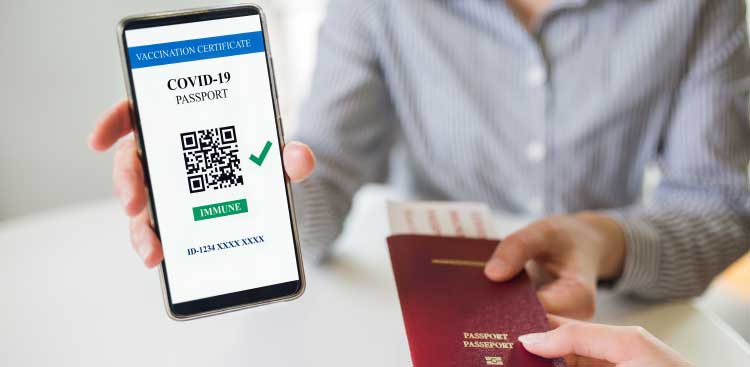
Most of the countries in Europe are announcing that the conditions for travelling abroad will shortly be relaxed, in particular for those of their people who have been vaccinated or who have recovered in the previous six months. From France, it is still necessary to show border control proof of a medical procedure supplied by the medical tourism agency, attesting to the compelling reason, together with an international travel certificate, a sworn declaration covering your state of health and the absence of any at-risk contact.
France, Switzerland and Belgium are keeping their requirement for a negative PCR test on the way back from Turkey.
8 May 2021: France tightens the return, Turkey comes out of its third wave
The measures for controlling travellers that were adopted on 8 May 2021 tighten up the formalities without banning medical tourism, which remains a compelling reason to travel.
New rules for entering and leaving France and Turkey
The indicators are falling on both sides. As of 9 May 2021, the World Health Organization records 109,666 cumulative deaths in France since the start of the pandemic, against 42,746 in Turkey, for a population that is roughly a quarter larger. The gap in cumulative mortality between the two countries is therefore considerable.
After the surge at the start of April 2021, the number of daily cases in Turkey is falling sharply: the WHO counts 166,733 cases for the week of 3 to 9 May, against 257,992 the week before, a drop of about 35% in a single week, at around 24,000 cases a day on average. The level remains high. The vaccination campaign is picking up speed in both countries, and the lockdown measures taken in Turkey from 14 April onwards, followed by the full lockdown of 29 April, have pushed the epidemic back. But the severity of the variant identified in India, designated Delta by the WHO a few weeks later, leads the health authorities to keep up their surveillance.
Correction to the original version: the 2021 text announced ‘20,000 cases a day on average’. The chart reproduced below, taken from the daily Turkish tracker as of 7 May 2021, itself shows a seven-day rolling average of 25,357 cases; the WHO’s weekly data give an average of 23,819 cases a day over the week of 3 to 9 May. The figure published underestimated reality by about a fifth.
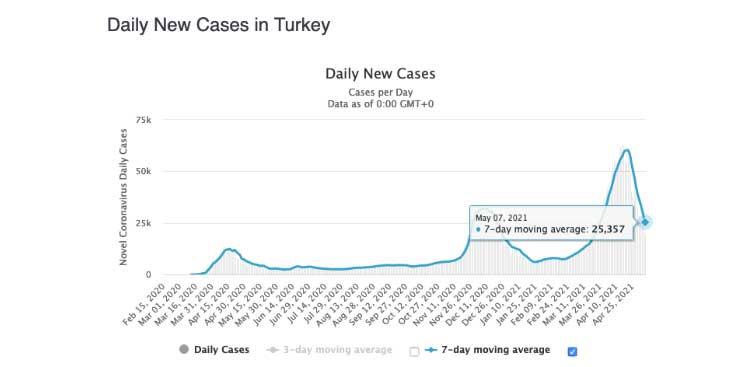
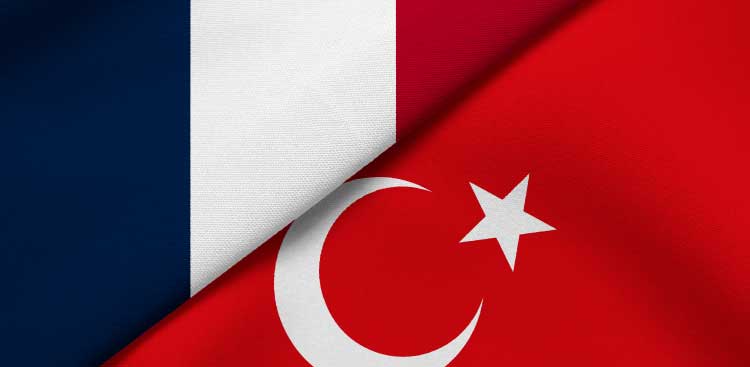
Since the weekend of 8 May, the French government has tightened up its checks on travellers arriving from seven countries, Turkey among them. The negative PCR test required for the return flight, until then less than 72 hours old, must now be less than 36 hours old. The quarantine imposed on return to France goes from seven to ten days. Travellers also have to produce proof of the address where that period of isolation will take place, together with a sworn declaration about their state of health and about their recent contacts. These measures apply to people who have already been vaccinated as well.
On the Turkish side, prospective travellers must fill in, within the 72 hours before arrival, an online form which issues a health code. Once there, foreign travellers are not subject to the movement restrictions imposed on residents: they move around freely, carrying their passport and the code.
For travellers leaving from Belgium and from Switzerland, the measures already in place do not change. Taken together, all these certificates foreshadow the European health pass, which was then in preparation.

Travelling to Turkey: the advice given at the time
Turkey’s borders remain open to nationals coming from France, Switzerland and Belgium, and the air links between these countries are still being operated. In French airports, however, getting through border control is inconsistent: our teams reported at the time that more than 75% of the patients they received in Istanbul had set off without any difficulty, but that some, despite holding all the necessary authorisations, had been refused boarding at the last minute.
Our advice at the time was as follows:
- if you are close to Belgium or Switzerland, choose a flight leaving from those countries, where the conditions are more flexible;
- if you are leaving from a French airport, ask your Body Expert client manager for the certificate confirming your scheduled medical treatment;
- if you are travelling as a pair or in a group, go through check-in and customs separately, each of you with your own named certificates, your medical documents and, where applicable, your proof of vaccination;
- explain the medical purpose of your trip clearly.
At the time, the documents requested at boarding were, when leaving France, the treatment certificate provided by our teams, a PCR test less than 72 hours old and the Turkish entry form; on the way back to France, a PCR test less than 36 hours old, proof of address for the ten-day isolation and the international travel certificate. When leaving Belgium, the treatment certificate, a PCR test less than 72 hours old and the Turkish entry form; when leaving Switzerland, the PCR test and the form.
3 April 2021: lockdowns on both sides
On the same day, in France and in Turkey, the presidents of the two countries announce new lockdown measures. The pandemic figures are alarming and living conditions are more and more constrained, but the underlying situation differs between the two countries.
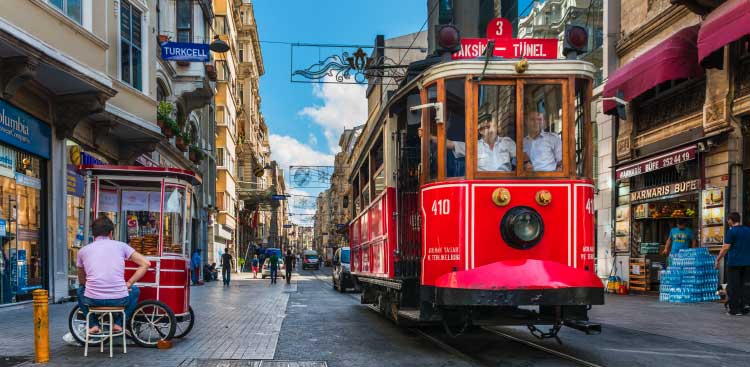
Medical travel from France is still possible
In France, the local measures are being tightened, but the travel restrictions that have been in force since the start of the year do not change: it is still possible to go abroad for a compelling reason, and medical travel is one of them, provided you hold the appropriate authorisations. Since 15 March, French nationals living abroad have also been able to come back to France, which had not been the case before.

Vaccination is progressing in Turkey
The Turkish vaccination campaign, which opened in the middle of January 2021 with the Sinovac vaccine, reaches 16.6 million doses administered as of 3 April 2021, as the official table reproduced above indicates. Those doses correspond to 9.48 million people who have had a first injection, or 11.1% of the population, and 7.12 million who have had two doses, or 8.4%. On the same date in France, 14.2% of the population had received a first dose and 4.7% a complete course.
Correction to the original version: the 2021 text announced ‘16 million people vaccinated out of a population of 84 million, or almost 14% against 4.3% in France’. The 16.6 million in the official table are doses, not people, and 16.6 out of 84 does not come to 14%. The comparison also set a Turkish dose total against a French rate of completed courses. Once both countries are measured in the same way, France was ahead on first doses and Turkey on second doses.
On the case figures, the Turkish situation was not the one that the announcement described. In early April 2021, Turkey was entering the most intense phase of its third wave: the WHO records 265,937 cases for the week ending 4 April, or close to 38,000 a day, a level comparable to the one France was seeing at the same moment, and the wave peaked on 16 April 2021 at 63,082 cases in a single day. Cumulative mortality, on the other hand, remained markedly lower than in Western Europe: 32,078 deaths in Turkey as of 4 April 2021, against 100,030 in France for a population a fifth smaller.
At that point, Turkish citizens have a health code, compulsory in particular for travel between cities. They are subject to a curfew from 9pm to 5am during the week and to a lockdown running from Friday at 9pm to Monday at 5am, while teaching has been done online for almost a year now. Mask wearing is universal. Cultural venues and places of entertainment are closed, but all the shops stay open during the day, including on Saturdays.
Waiting for Ramadan
Life goes on as Ramadan approaches; it is due to run from 13 April to 12 May 2021, a period during which restaurants and cafés provide takeaway or delivery only. This slowdown in social life does not affect foreign visitors, all the more so as the spring is a particularly pleasant season in Istanbul. The weekend curfew does not apply to international tourists, whose movements are not restricted. The only requirement is to carry your identity papers in case you are stopped, and to wear a mask.

Advice and preparations in the spring of 2021
Turkey’s borders remain open to nationals coming from France, Switzerland and Belgium, and the air links are still being operated. In French airports, getting through border control remains unpredictable, hence the same recommendations as the ones set out above: leave from Belgium or from Switzerland wherever that is possible, bring with you the treatment certificate issued by our teams, present yourself separately at the checks, and explain the medical purpose of the trip clearly.
Whether leaving from Belgium or from France, the documents expected at boarding are the treatment certificate, a PCR test less than 72 hours old and the Turkish entry form.
6 February 2021: medical treatment, a compelling reason to travel
Despite the closure of the French and Belgian borders, travel to Turkey remains possible. Our teams reported at the time that 95% of the patients expected had reached their destination in spite of the lockdown measures. The treatment planned in the partner clinics was maintained, because both countries regarded it as a compelling reason to travel. The treatment certificates were issued by the client managers; the plane ticket and the PCR test less than 72 hours old remained at the patient’s expense.
The health situation in Turkey in early 2021
The Turkish customs authorities have announced neither any restriction on travel nor any closure of the border. After several months of partial lockdown, with a weekday curfew and a weekend lockdown, the statistics are improving enough for the authorities to consider a return to normal in early March, with the reopening of bars, of the restaurants until then limited to takeaway, of hammams, museums and cultural venues. The shops stay open, even at the weekend for tourists: if you are stopped by the police, or on the way into a shopping centre, a passport is enough. Mask wearing remains compulsory, from the international airport through to the partner clinics. At the time, Body Expert organised the return PCR test, carried out the day before departure.
Travel conditions for Belgium and France
- Leaving from Belgium: a travel certificate for a medical reason or for the continuation of a treatment, to be requested from your client manager, a negative PCR test less than 72 hours old, and a sworn declaration of a compelling medical reason.
- Returning to Belgium: a certificate showing a negative PCR test less than 72 hours old, which our teams arranged on the day before the return journey.
- Leaving from France: a travel certificate for a medical reason, a negative PCR test less than 72 hours old, and a sworn declaration of a compelling medical reason.
- Returning to France: a certificate showing a negative PCR test less than 72 hours old, carried out on the day before the return journey, and a sworn declaration undertaking to self-isolate for seven days.
And today
This timeline ends in the summer of 2021. The Turkish curfews were lifted on 1 July 2021, the French country lists were changed several times over the following months, and all the Turkish health restrictions eventually disappeared: passengers arriving in Turkey no longer have to produce proof of vaccination, a certificate of recovery or a negative test. None of the instructions set out above should therefore be followed as they stand. To prepare for a stay, consult the travel advice published by the foreign affairs ministry of your country of residence and your airline.
Sources
Gouvernement français. (2021, 17 juin). Info Coronavirus Covid-19 : déplacements à l’étranger [page archivée]. Internet Archive. https://web.archive.org/web/20210617130107/https://www.gouvernement.fr/info-coronavirus/deplacements
Konings, F., Perkins, M. D., Kuhn, J. H., Pallen, M. J., Alm, E. J., Archer, B. N., Barakat, A., Bedford, T., Bhiman, J. N., Caly, L., Carter, L. L., Cullinane, A., de Oliveira, T., Druce, J., El Masry, I., Evans, R., Gao, G. F., Gorbalenya, A. E., Hamblion, E., … Van Kerkhove, M. D. (2021). SARS-CoV-2 Variants of Interest and Concern naming scheme conducive for global discourse. Nature Microbiology, 6(7), 821–823. https://doi.org/10.1038/s41564-021-00932-w
Mathieu, E., Ritchie, H., Ortiz-Ospina, E., Roser, M., Hasell, J., Appel, C., Giattino, C., & Rodés-Guirao, L. (2021). A global database of COVID-19 vaccinations. Nature Human Behaviour, 5(7), 947–953. https://doi.org/10.1038/s41562-021-01122-8
Organisation mondiale de la santé. (2023). Historical working definitions and primary actions for SARS-CoV-2 variants. https://www.who.int/publications/m/item/historical-working-definitions-and-primary-actions-for-sars-cov-2-variants
Organisation mondiale de la santé. (2026). WHO COVID-19 dashboard: Global data [Jeu de données]. https://data.who.int/dashboards/covid19/data
Oztig, L. I. (2022). Policy styles and pandemic management: The case of Turkey. European Policy Analysis, 8(3), 261–276. https://doi.org/10.1002/epa2.1155
République de Türkiye, ministère de l’Intérieur. (2021, 1er juin). Haziran ayı normalleşme tedbirleri genelgesi [Circulaire sur les mesures de normalisation du mois de juin]. https://www.icisleri.gov.tr/haziran-ayi-normallesme-tedbirleri-genelgesi
République de Türkiye, ministère de l’Intérieur. (2021, 27 juin). 81 il valiliğine kademeli normalleşme tedbirleri genelgesi gönderildi [Circulaire sur les mesures de normalisation progressive adressée aux 81 préfectures]. https://www.icisleri.gov.tr/81-il-valiligine-kademeli-normallesme-tedbirleri-genelgesi-gonderildi
République de Türkiye, ministère de l’Intérieur. (2021, 28 juin). 1 Temmuz sonrası ülkeye giriş tedbirleri genelgesi [Circulaire sur les mesures d’entrée dans le pays après le 1er juillet]. https://www.icisleri.gov.tr/1-temmuz-sonrasi-ulkeye-giris-tedbirleri-genelgesi
Service public fédéral Affaires étrangères, Commerce extérieur et Coopération au développement. (2026, 2 juillet). Santé et hygiène en Turquie. https://diplomatie.belgium.be/fr/pays/turquie/voyager-en-turquie-conseils-aux-voyageurs/sante-et-hygiene-en-turquie
Yavuz, M., & Etiler, N. (2022). The correlation between attack rates and urban health indicators during the third wave of the COVID-19 outbreak in Turkey. Frontiers in Public Health, 10, Article 986273. https://doi.org/10.3389/fpubh.2022.986273