In Istanbul, life goes on despite the second wave of COVID-19
Covid-19 in Turkey, November 2020
As the second wave of COVID-19 reaches its peak in Western Europe and in many other countries around the world, we would like to tell you how things stand in Turkey. No country has been spared by this health crisis, but the rules on lockdown and on the way patients are cared for vary a great deal from one country to another. According to the statistics available (https://coronavirus.jhu.edu/map.html), the situation appears to be under control in Turkey. By way of comparison, if we look at the cumulative figures since March 2020, France had passed the two million case mark by a wide margin on 24 November 2020 (with 50,237 deaths), while 460,916 cases had been recorded on the same date in Turkey (with 12,672 deaths). The two sets of figures cannot be compared like for like, however: until 25 November 2020, the Turkish statistics counted only patients who had symptoms and set aside positive tests without symptoms, something the health minister Fahrettin Koca had acknowledged on 30 September 2020. On the day the ministry returned to a full count, it reported 28,351 cases for 25 November alone.
Strict public health management
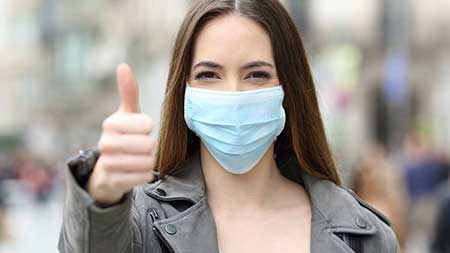
Face masks and social distancing have been compulsory in public spaces and shops since April 2020, and new measures to curb the spread of the pandemic have been in force since Friday 20 November, and will remain so at least until the end of December. Among other things, they introduce a partial curfew that varies according to age. On weekdays, adults between the ages of 20 and 65 may travel to work, and at the weekend they are allowed out only between 10am and 8pm. On weekdays and at weekends alike, the under-20s may go out between 1pm and 4pm, and the over-65s between 10am and 1pm.
Cafés and restaurants, open from 10am to 8pm, have to limit their business to takeaway and home delivery. Companies, shopping centres, food shops and service businesses (hairdressers, beauty salons, doctors’ surgeries, clinics and so on) remain open from 10am to 8pm on weekdays. In Istanbul, the museums are now closed, as are the public gardens and the cultural centres.

Not a single international client infected
As things stand today, Turkey’s borders are open, flights are still running, and no test is required on arrival at the border. Since the borders reopened in June 2020, our services and our partner clinics have been welcoming around a hundred patients a month from France, Switzerland and Belgium, and all our patients have been reassured by the sound management and the kind, warm welcome, with individual freedoms respected. To this day, not a single one of our clients has been infected with COVID-19 during their stay in Turkey. Some of our patients, won over by the quality of the service and feeling safe, even choose to extend their stay in Istanbul and enjoy the fact that there is no lockdown.
Our PCR protocol so that you can travel home without worry
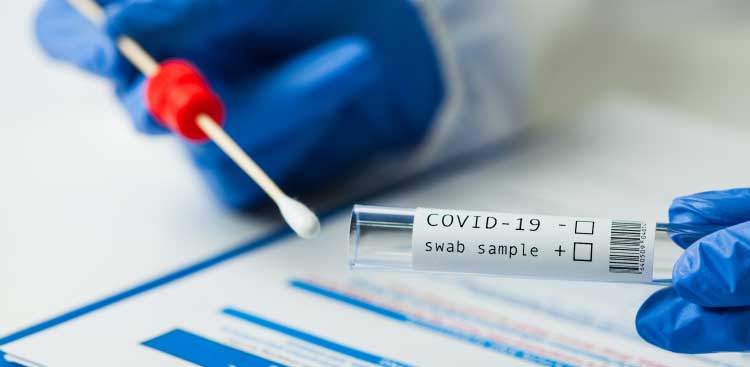
Since 10 November, for €50 at your own expense, we have been offering all our clients a protocol for taking the PCR test that some countries require for your return, so that your health or aesthetic stay is not disrupted and you lose as little time as possible. Twenty-four hours before you leave, our drivers collect you from your hotel and take you to one of our partner clinics, which will carry out your PCR test (20 minutes in all). Once the test is finished, our driver takes you back to your hotel and the result is delivered to you within 24 hours.
While we wait to welcome you, feel free to ask us any questions through our social media channels or your client manager at Bodyexpert.online.
Sources
Akyüz, A. (2024, 13 janvier). Quelle est la situation de la Covid-19 en Turquie ? Lepetitjournal.com Istanbul. https://lepetitjournal.com/istanbul/sante/quelle-est-la-situation-de-la-covid-19-en-turquie-275084
Guichard, T. (2020, 1er décembre). Covid-19 : en Turquie, une contamination record enfin dévoilée. La Croix. https://www.la-croix.com/Monde/Covid-19-Turquie-contamination-record-enfin-devoilee-2020-12-01-1201127610
Hale, T., Angrist, N., Goldszmidt, R., Kira, B., Petherick, A., Phillips, T., Webster, S., Cameron-Blake, E., Hallas, L., Majumdar, S., & Tatlow, H. (2021). A global panel database of pandemic policies (Oxford COVID-19 Government Response Tracker). Nature Human Behaviour, 5(4), 529–538. https://doi.org/10.1038/s41562-021-01079-8
Johns Hopkins University Center for Systems Science and Engineering. (2023). COVID-19 data repository [Jeu de données]. GitHub. https://github.com/CSSEGISandData/COVID-19
Santé publique France. (2020, 26 novembre). COVID-19 : point épidémiologique hebdomadaire du 26 novembre 2020. https://www.santepubliquefrance.fr/maladies-et-traumatismes/maladies-et-infections-respiratoires/infection-a-coronavirus/documents/bulletin-national/covid-19-point-epidemiologique-du-26-novembre-2020
Ucar, A., & Arslan, S. (2022). Estimation of excess deaths associated with the COVID-19 pandemic in Istanbul, Turkey. Frontiers in Public Health, 10, Article 888123. https://doi.org/10.3389/fpubh.2022.888123