Nose
Profile
Breathing
Facial harmony
Rhinoplasty
Aesthetic, functional or both at once: rhinoplasty reshapes the nose to bring it back into natural balance with the rest of the face. Our specialist surgeons stay with you from the first consultation through to the final result, with English-speaking support throughout.
Rhinoplasty at a glance
Hospital stay
1 day
Wait before showering
4 days
Procedure duration
1 to 3 hours

Medical validation

Understanding rhinoplasty
Rhinoplasty is still one of the most sought-after cosmetic operations in the world. According to ISAPS, close to 1.1 million rhinoplasties were performed in 2023, 21.6% more than the year before. And the typical patient is fairly young: nearly two-thirds (65.8%) are aged between 18 and 34.
The aim is to reshape the nose so it sits naturally with the proportions of the face. Depending on the case, the surgeon softens a bump, refines a tip that’s too round, straightens a deviated nose or eases breathing by correcting a deviation of the nasal septum (the wall that separates the two nostrils).
There are two broad families of operation. Primary rhinoplasty is the first operation carried out on the nose. Secondary rhinoplasty, also called revision rhinoplasty, comes later to put right the outcome or the complications of an earlier operation.
Thinking about a rhinoplasty in Turkey? Body Expert is with you from start to finish, from the first consultation through to post-operative follow-up, with an English-speaking team at every step.
From consultation to the final result
Consultation and pre-operative assessment
Your surgeon carries out a thorough examination of the nose and talks through what you’re hoping for. Digital photos and computer simulations let you picture the planned result. Blood tests and a consultation with the anaesthetist round off the preparation.
Getting ready for surgery
You should stop smoking at least 4 weeks before the operation. Aspirin and anti-inflammatories are paused in the days before, as directed by the anaesthetist. Our team gives you a detailed protocol so you can prepare with peace of mind.
The operation itself
Carried out under general anaesthetic, rhinoplasty takes between 1 and 3 hours depending on how much work is involved. The surgeon operates by the closed or the open approach, according to the corrections needed. A dressing and a splint go on at the end.
The first 48 hours
Bruising and swelling around the eyes are common and nothing to worry about. Pain stays moderate and is well managed by the painkillers you’re prescribed. Keep your head raised a little while you rest. The hospital stay is usually one night.
The first week
If internal packing is used, it usually comes out after 24 to 48 hours, and the nasal splint between day 5 and day 7. The bruising starts to fade. You can ease back into social life after about 10 to 14 days.
The first month
The swelling gradually goes down. Hard physical effort is best avoided for 4 to 6 weeks. Try not to wear glasses for 4 to 6 weeks, as they can press on a nose that’s still fragile and change its shape.
3 to 12 months: the final result
The nose settles into its final shape after about 6 months for the bridge and the middle third, and up to 12 months for the tip.

How much does a rhinoplasty cost
The price of a rhinoplasty comes down to several things: the technique chosen, how involved the corrections are, the type of anaesthetic and, above all, the country where you have it done. And it’s that last point that really makes the difference.
In Turkey, the operation costs a good deal less than in the UK, with up to 70% savings, and without giving anything up on the quality of care. The country has become one of the world’s major centres for rhinoplasty, with surgeons who operate on noses all year round.

At Body Expert, everything is organised for you: a 5-star hotel, VIP transfers, an English-speaking coordinator and 12 months of follow-up. No nasty surprises once you’re there. The detail of our rhinoplasty packages is on our page about rhinoplasty in Turkey.
One last word on touch-ups. Now and then a result needs a small adjustment: if so, a revision rhinoplasty is well within reach in Turkey, at a far gentler cost than elsewhere.

Your new profile starts here
Our expert rhinoplasty surgeons are with you for a natural result, with a free quote and no obligation.
Our prices and packages
Rhinoplasty
Offre et tarif : Rhinoplasty
Feel free to scroll through the different prices from right to left!
The types of rhinoplasty
-
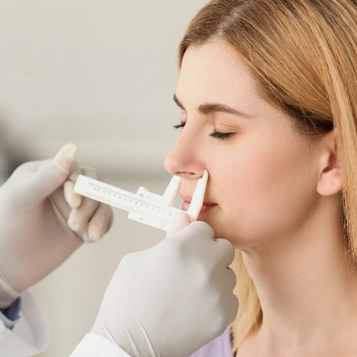 Cosmetic rhinoplasty
Reshaping the bump, the tip or the profile for a natural, balanced nose.
-
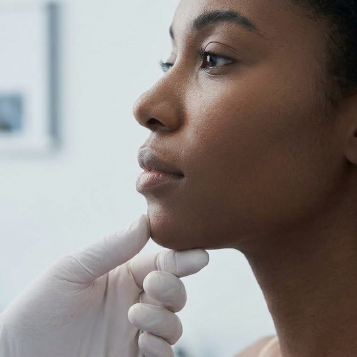 Ethnic rhinoplasty
Keeping your ethnic features while improving the balance of the face.
-
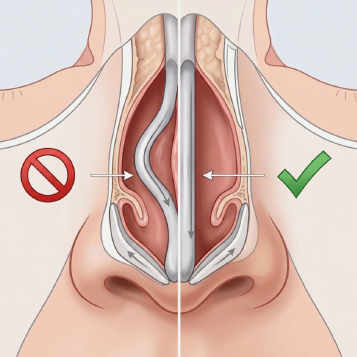 Septorhinoplasty
Cosmetic and functional correction in one go. It also sorts out breathing problems.
-
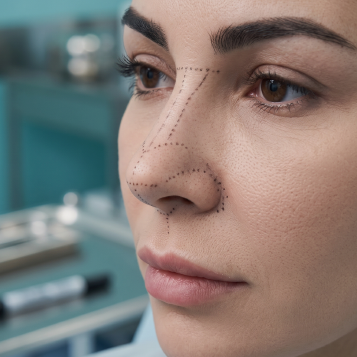 Revision rhinoplasty
A second operation after a first result that didn’t satisfy. Real expertise in revision surgery.


All about rhinoplasty
When rhinoplasty is the answer
Rhinoplasty corrects a wide range of imperfections in the nose, whether you’ve had them since birth, they follow a knock, or they’ve come with age. The most common requests concern a bump, a tip that’s too wide or bulbous, a deviated or asymmetric nose, or nostrils that feel too open.

The operation isn’t only about looks. A deviated nasal septum, or turbinates that are too large (the ridges lining the inside of the nose), can get well in the way of breathing. In that case the nose and the airflow are put right in the same operation: this is septorhinoplasty.
It’s best to wait until the nose has finished growing before going ahead, which is around 16 for women and 18 for men. At the other end of life, there’s no upper age limit as long as your health keeps up.
Today’s surgical techniques
The surgeon matches the technique to the shape of the nose and the corrections to be made.

Closed rhinoplasty (or endonasal) works through incisions inside the nostrils. No scar shows on the outside, and recovery tends to be quick: it suits moderate work on the bump or the tip.

Open rhinoplasty calls for a small incision on the columella, the thin strip of skin between the two nostrils. The surgeon then has a clear view of the structures of the nose, which makes it especially useful for complex cases and revisions. The scar is all but invisible after a few months.

Ultrasonic rhinoplasty (or piezoelectric) uses ultrasound instruments to reshape the bone of the nose with real precision, which can keep bruising and swelling down after the operation.
Anaesthetic and how long it takes
Rhinoplasty is most often done under general anaesthetic. Allow between 1 and 3 hours depending on how tricky the work is. Correcting a bump on its own goes fairly quickly; a full reshaping, taking in the tip, the septum and the nostrils, naturally takes longer.
Possible risks and complications
Like any surgery, rhinoplasty carries risks, even if serious complications stay rare. You might see some bleeding after the operation, swelling that lingers, or bruising that’s more marked than expected. A residual asymmetry is also possible and can be reason enough for a small touch-up.

On satisfaction, the figures are fairly reassuring. An analysis published in the Aesthetic Surgery Journal went through more than 2000 online patient reviews: overall satisfaction reached 83.6%, with a clear gap between women (87.6%) and men (56.1%). The disappointments most often came down to a leftover bump, or a tip that still looked round or under-rotated.
A cohort study published in 2024 in the Journal of Plastic, Reconstructive & Aesthetic Surgery, run on 380 patients, points the same way: six months after the operation, how patients rated the look of their nose climbed on average from 3.2 to 7.9 out of 10.

Choosing your surgeon well
The result of a rhinoplasty owes a great deal to the surgeon’s experience and eye. Take the time to check their qualifications, how much nose work they actually do, and to look at before-and-after photos of their own patients.
At Body Expert, our surgeons, experienced in nasal surgery, work in our partner clinic in Istanbul, selected for its facilities and its surgeons’ experience. They’ve mastered the full range of techniques, from ethnic rhinoplasty to the most delicate revisions, by way of functional surgery of the nose.

Realistic expectations, and a human touch
Rhinoplasty can genuinely change how you see yourself and give your confidence a lift. The trick is to approach the operation without fantasy: the simulations done in consultation help you picture things, but the final result also depends on your bone structure, your cartilage and the quality of your skin.
That’s where support counts. Being well looked after by the medical team helps you get calmly through the weeks when the nose, still swollen, hasn’t yet found its final shape.

In summary
Rhinoplasty, or cosmetic surgery of the nose, rebalances the profile and the whole face, and can also help you breathe better when the septum is to blame. A bump, an over-prominent tip, a deviated nose, wide nostrils, the after-effects of an injury: every nose has its story, and every operation is planned to measure. Depending on the corrections, the surgeon works by the closed or open approach, or with ultrasound, under general anaesthetic, in one to three hours.
The final nose doesn’t show itself overnight: allow a few weeks for the swelling to settle, several months for the final shape, up to a year for the tip. A little patience during recovery, and realistic expectations from the outset, make a real difference to how the whole thing feels.
Having your nose done in Turkey means bringing together very experienced surgeons, partner clinics in Istanbul selected against our quality criteria and up to 70% savings compared with the UK, with no compromise on quality. Body Expert is with you from end to end, in English, from your very first question through to post-operative follow-up.
Want to get a clear picture of your project, the technique suited to your nose and the budget to plan for? Ask for your free quote within 24 hours: our advisers look at your case and answer all your questions, with no obligation.
Sources and references
- International Society of Aesthetic Plastic Surgery. (2024). ISAPS International Survey on Aesthetic/Cosmetic Procedures Performed in 2023. https://www.isaps.org/discover/about-isaps/global-statistics/global-survey-2023-full-report-and-press-releases/
- Khansa, I., Khansa, L., & Pearson, G. D. (2016). Patient satisfaction after rhinoplasty: A social media analysis. Aesthetic Surgery Journal, 36(1), NP1-NP5. https://doi.org/10.1093/asj/sjv095
- Luong, K. P., Slijper, H. P., Stubenitsky, B., Hummelink, S., & Ulrich, D. J. O. (2024). Changes in patient-reported satisfaction and quality-of-life 6 months after rhinoplasty. Journal of Plastic, Reconstructive & Aesthetic Surgery, 91, 325-334. https://doi.org/10.1016/j.bjps.2024.02.038
Before & After
Discover our patients’ results
Rhinoplasty

Avant-après

Avant-après

Avant-après

Avant-après

Avant-après

Avant-après

Avant-après

Avant-après

Avant-après

Avant-après

Avant-après

Avant-après

Avant-après

Avant-après

Avant-après

Avant-après

Avant-après
Ready to take the plunge?
Our advisers answer your rhinoplasty questions and send you a personalised quote within 24 hours.
Our patients talk about us
-
 Nadia's
 -
 Laura's
 -
 Manon's
 -
 Marie's
 -
 Najat's


Common questions about rhinoplasty
What’s the minimum age for a rhinoplasty?
The nose needs to have finished growing first, which usually happens around 16 for women and 18 for men. After that there’s no real upper limit: as long as your health allows it, a rhinoplasty is on the table. We assess whether it’s right for you together at the initial consultation.
La rhinoplastie est-elle douloureuse aIs rhinoplasty painful?
Rest assured, rhinoplasty tends to hurt very little. Pain after the operation stays moderate and is well eased by painkillers. The bigger nuisance is often a blocked nose for a few days, while the swelling inside settles.
How long does the swelling last after a rhinoplasty?
Visible bruising and puffiness around the eyes usually fade within 2 to 3 weeks. Some swelling can linger on the tip for several months, though. The truly final result is judged between 6 and 12 months.
What’s the difference between open and closed rhinoplasty?
With the closed technique, the incisions are hidden inside the nostrils: no visible scar. With the open technique, a small incision under the nose gives the surgeon a better view of the structures, handy for more complex cases. Your surgeon picks the approach best suited to your nose.
Can you combine a rhinoplasty with other operations?
Many patients pair a rhinoplasty with a blepharoplasty (eyelid surgery) or a genioplasty (reshaping the chin) to balance the face as a whole. We’ll advise you on the combinations that make sense in your case.
What are the risks of a rhinoplasty?
Serious complications are rare. The most common minor niggles are some bleeding after the operation, bruising that lingers or a slight asymmetry. On satisfaction, the rate sits at around 84%, and it climbs higher still among women.
How long is the recovery?
You can get back to normal social life after 10 to 14 days. Light exercise can resume around 3 weeks, and strenuous effort around 4 to 6 weeks. For the full picture of recovery day by day, the recovery after rhinoplasty follows the timeline set out above.
Why choose Body Expert for your rhinoplasty?
Because everything is organised for you, in our partner clinic in Istanbul: surgeons who specialise in the nose, an English-speaking coordinator and 12 months of post-operative follow-up. All with up to 70% savings compared with the UK.
Let’s discuss your project