

Hollywood smile in Turkey
The entire visible area treated in a single session.
Veneers or crowns, depending on the condition of each tooth.
Savings of up to 70% compared to France.
Dedicated English-speaking assistant from start to finish.

They're talking about us


A project that covers the whole visible zone
The scope of the smile
A Hollywood smile is a cosmetic project that treats, in one go, every tooth that appears when you talk and smile. Shade, length, edge and outline are decided together, so that the smile reads evenly from one corner of the mouth to the other. One tooth lighter than its neighbour, one edge shorter than the one beside it, and the eye stops on the gap instead of following the line. The work is about closing those gaps, tooth after tooth, under a shared shade and a shared design.

Treating the teeth as one changes the nature of the job. On a single tooth, the clinician has to match a restoration to what is already there, and the shade and the wear are not theirs to choose. Across a whole zone, they choose them. The colour settled on, the height of the edges, the way each tooth stands apart from its neighbour become settings of the project rather than constraints to work around. That is what makes the opening decision matter as much as the work in the chair: once the shade is fixed for the whole set, every restoration will be made to it.
The visible zone is not the same from one person to the next. Some smiles show only the upper incisors and canines; others uncover the premolars, sometimes the edge of the lower teeth. The height of the upper lip, the way it lifts on a broad smile and the position of the arches all come into it. The dental surgeon at our partner clinic watches this in real conditions, in conversation first, then on a broad smile, before settling the list of teeth to treat. Going wider than the zone actually on show makes the treatment heavier without adding anything to the harmony, while too narrow a scope leaves a natural tooth sitting next to a restoration, and the difference in shade reads again.

The dental veneer is still the usual vehicle for this work: a shell bonded to the face on show, carrying the colour and the shape you want. Fitted on its own, it corrects a local fault, a stain, a small fracture, a chipped edge. A Hollywood smile commits to a decision across the set, and the clinician fixes its scope after the examination; the quote follows that same scope. What it covers depends on the state of each tooth as much as on the number of teeth on show, since a restoration already in place, a tooth too weakened or an inflamed gum all shift the boundary.
Our guide to dental veneers sets out the families of material and what each one is for. On a whole-smile project the question moves up a level: settle on one shade and one shared outline, then work out which teeth take a bonded shell and which need wider coverage. Body Expert places this work within the dental care arranged in Istanbul, at our partner clinic, with a stay mapped out and a quote drawn up before you leave.
Ten years of data on ceramic veneers
How well the work lasts weighs more heavily on a whole-smile project, because several ceramic pieces from the same smile age side by side: an early replacement on one tooth throws the whole composition out. Klein, Spitznagel, Zembic and colleagues brought together 29 studies in a meta-analysis of laminate veneers in feldspathic ceramic, leucite-reinforced glass-ceramic, lithium disilicate and zirconia. Survival there runs from 93.7% to 96.8% at 10.4 years depending on the material, with feldspathic ceramic reaching 96.13% and lithium disilicate 96.81%, and no significant difference held between the materials.

After a pooled follow-up of a little over ten years, most ceramic veneers fitted are still in service, and that holds for all four families compared. So the ceramic family has long-term data on exactly the kind of restoration a Hollywood smile repeats, which is what makes it the natural ground for a whole-smile project. Since survival does not separate the materials, the choice comes down to other clinical points: the translucency you are after, where the tooth sits in the smile, the thickness available, what the examination has shown.
The dental surgeon at our partner clinic reads those figures against your own file. A central incisor, full in the light and seen head on, does not necessarily call for the same ceramic as a premolar caught at three-quarters and rarely uncovered in full. The meta-analysis opens that discussion rather than closing it, since the four families studied share the same survival range. The clinician may go for leucite-reinforced glass-ceramic or zirconia when the examination points that way, expected lifespan not being the whole argument on its own.

For a Hollywood smile, the consequence is direct. The material is picked from the ceramic family first, the one with more than ten years of published data behind it, then narrowed down tooth by tooth according to the light each one takes, its immediate neighbours and the tissue left. That tooth-by-tooth detail is why the figure sent before you leave covers the project as a whole: it sets the scope and the framework, while the material-by-material detail is settled at the first appointment in Istanbul, once the mouth has been examined.
Composite or ceramic across a whole smile
Composite, a resin, is the other route. Lim, Tan, Li and colleagues reviewed composite resin laminate veneers and place them as a less durable option than ceramic, with higher complication rates. That review settles a material question: on lifespan as on mishaps, it puts composite behind ceramic.

The gap counts for more here than on a single tooth, because the same material is repeated across several teeth on show. A material that stains, wears or needs redoing more often affects the whole composition, and the harmony obtained on fitting day comes apart little by little, tooth after tooth. The imbalance shows up all the more because uniformity was the point. That is why the clinician usually steers towards a ceramic as soon as the whole visible zone is part of the project.
Composite keeps its place on a limited scope, where the file justifies it: a tooth less on show, a temporary situation, a particular constraint picked up at the examination. That split is settled before anything is made, so the shade of the whole set stays workable over time. The conversation beforehand is there to pin it down, file by file, rather than to apply a single rule.
The stay in Istanbul
Choosing the destination fits into something wider. The ISAPS global survey of aesthetic procedures carried out in 2024 puts Turkey among the countries with the highest proportion of foreign patients. That figure covers the share of patients coming from abroad across all the aesthetic procedures the society records, and it places Turkey as an established destination for this kind of project, well beyond dental care alone.

Body Expert takes on the organisation around the treatment plan. The 5-star hotel covers your nights and breakfast between appointments, and VIP transfers handle the airport arrival as well as the journeys to and from our partner clinic, so that nothing has to be improvised once you are there. A dedicated English-speaking coordinator or interpreter goes with you at the clinic: they carry the clinician’s instructions to you and your questions back the other way, whether about the shade agreed, the comfort of a prepared tooth or the way the restorations meet. Follow-up then runs for 12 months in English, on comfort, the margins of the restorations, the state of the gum and what you notice day to day, alongside the appointments your own dentist keeps up.
The quote prices this project, free and with no obligation, within 24 hours. It sets out the treatment plan, which belongs to the dental surgeon, separately from the organisation of the stay, which Body Expert carries. Air travel falls outside that scope and you book it yourself. Against the same work done privately in the UK, the difference can reach 70% savings, depending on how much of the smile is treated and which restorations are chosen; a badly weakened tooth, which needs wider coverage than a veneer, changes that figure, and the decision is taken at the clinic.

The opening file rests on an exchange of photographs. Shots of your smile, face on and in profile, let the clinician pick out the visible teeth, gauge the size of the project and put their first questions about the bite, the state of the gums and the restorations already there. A photograph gives the shade, the edge and the spaces; how loose a tooth is, whether an old margin still seals and the way the two arches meet on chewing are all judged in the mouth. So the quote that follows sets a framework which the first appointment in Istanbul then sharpens.
Some details wait for that appointment: how long the sessions run, how many visits to the clinic, the final split of the restorations. The dental surgeon settles them after the examination, with the photographs to hand. It is also when what the stay has to cover on the practical side falls into place, the hotel, the transfers and the English-speaking support, the treatment plan staying with the clinician at our partner clinic.
Sources
- Klein, P., Spitznagel, F. A., Zembic, A., et al. (2025). Survival and Complication Rates of Feldspathic, Leucite-Reinforced, Lithium Disilicate and Zirconia Laminate Veneers: A Systematic Review and Meta-analysis. Journal of Esthetic and Restorative Dentistry, 37(3), 601-619.
- Lim, T. W., Tan, S. K., Li, K. Y., et al. (2023). Survival and complication rates of resin composite laminate veneers: a systematic review and meta-analysis. Journal of Evidence-Based Dental Practice.
- ISAPS. (2025). ISAPS International Survey on Aesthetic/Cosmetic Procedures Performed in 2024. International Society of Aesthetic Plastic Surgery.

Ask for an assessment of your smile
A few photographs are enough to get a free, no-obligation quote within 24 hours.
Our prices and packages
Dental Veneers
Dental Crowns
Offre et tarif : Dental Crowns
Offre et tarif : Dental Veneers
Feel free to scroll through the different prices from right to left!
The decisions taken before fitting
-
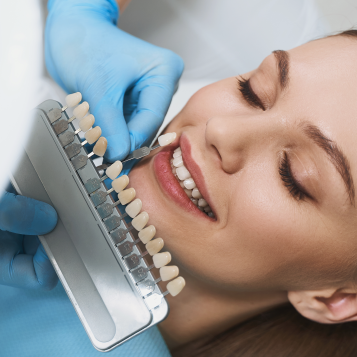 One shade for the whole visible zone
A single colour reference applies to every tooth being treated. The dental surgeon checks it in daylight and then under indoor lighting, two settings that do not show ceramic the same way.
-
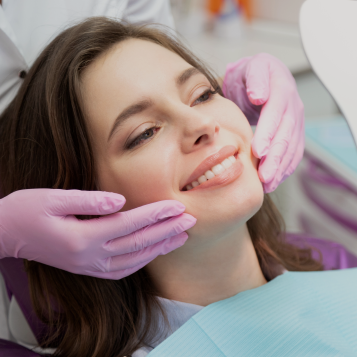 The smile line
The edge of the visible teeth follows the curve of the lower lip when you smile. That line, rather than the length of any single tooth, is what gives a smile its balance.
-
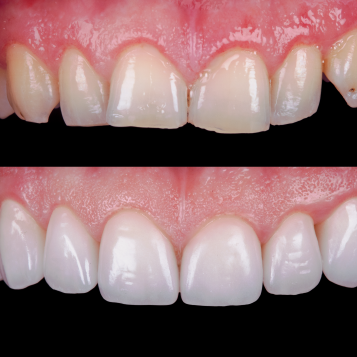 Veneer or full coverage, tooth by tooth
Each tooth gets the indication its condition calls for. The clinician looks at the walls that remain before choosing between a shell bonded to the surface and full coverage all the way round.
-
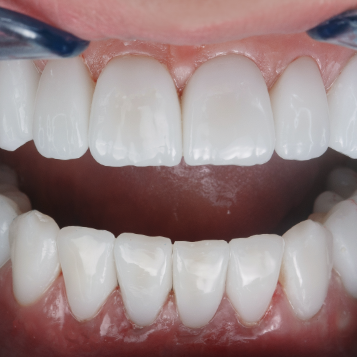 The try-in before bonding
The restorations are tried in the mouth before they are fixed for good. Outline, shade and contact points are adjusted at that stage, while changes are still possible.


From the first opinion to the follow-up once you are home
The situations that call for a whole-smile project
A Hollywood smile comes into play when what bothers you runs across the whole visible zone: a shade that no longer evens out, worn or uneven edges, gaps and slight rotations to put right in the same movement. The dental surgeon at our partner clinic starts by checking that the gums and the bite can take the work. Active gum inflammation, untreated clenching or a tooth too broken down all change the plan, sometimes tooth by tooth.

Some situations are out from the start. A tooth whose remaining structure can no longer carry a simple surface shell needs another kind of coverage; a sizeable mismatch between the arches, which calls for orthodontic treatment first, is discussed before any cosmetic decision. Those limits are judged in the mouth, and the first appointment in Istanbul confirms or revises the scope set out in the quote.

The project can stop at the upper arch when the smile does not show the lower one, or at the lower arch if that is what appears. The clinician shows you this at the clinic, getting you to talk and then smile broadly, so that the scope follows your own anatomy rather than a standard composition.
Restorations already in place come into this reading. An old veneer, a crown gone too opaque, a yellowed composite on an incisor: each may have to be redone for the new shade to hold from one end of the smile to the other. The quote mentions the ones the photographs make visible, and the examination in the mouth can turn up others.
Splitting between veneer and full coverage
Once the visible zone is settled, each tooth gets its own indication. A veneer suits as long as the walls hold and the correction stays on the face of the tooth that shows. When the tooth is fractured, badly broken down or already heavily restored, the clinician may go for a dental crown, which wraps the whole circumference. The aim across the set does not move for all that: shade and outline stay pinned to the same decision, whatever type of restoration ends up on any given tooth.

That split has a direct effect on tooth tissue. Covering a still-solid tooth completely removes more material than the project needs, while bonding a veneer to a tooth that is too weak leaves the walls without the support they need. The dental surgeon separates these cases from the clinical examination and the photographs, then passes the split to the laboratory, so that the colour of every piece is fixed in one go.
The material follows the same clinical logic. The clinician settles it once the mouth has been examined, taking account of the light the central teeth take and of the restorations already there. A mix stays possible when one particular tooth demands it, provided the file carries the reason and the shared shade holds despite the difference in material.
How the stay runs
In Istanbul, our partner clinic sees you for the examination, the preparation of the teeth involved, the smile records, the try-in and then the fitting. The number of sessions, their order and their length depend on the size of the project and on what the examination finds, so they are set on the spot. The quote, for its part, fixes the cost of the treatment and the content of the stay before you leave.

The dedicated English-speaking coordinator or interpreter sits in on every appointment with you. Their presence stops an instruction from the clinician or a question about the shade being left hanging for want of a shared language, including in the short sessions where the main points are covered in a few sentences. Between appointments, the rhythm of the stay depends on the stages the treatment plan sets, and VIP transfers cover the journeys between the 5-star hotel and the clinic.
The last check before you head home looks at the contacts, comfort on chewing and how the smile turns out. The clinician goes back over the hygiene routine suited to the new restorations, and the coordinator or interpreter repeats it in English, so that you can put it into practice once you are home and pass it on to your own dentist.
After you get home
Through the 12 months of follow-up, the English-speaking line opens access to the clinician who did the work as soon as something shows up: an irritated gum, a margin that catches the floss, sensitivity that settles in, a contact that feels too high. Flagged early, these are dealt with by the person who knows the file and fitted the restorations. Routine check-ups and scaling stay with your own dentist.

Daily hygiene weighs on how long the restorations last as much as the quality of the fitting does. Careful brushing, cleaning at the neck of the tooth where the ceramic meets the gum, and regular check-ups keep the margin sealed and inflammation at arm’s length; those two things are what decide whether the whole set stays stable over time. The clinician adapts this routine to your mouth, according to the materials fitted and the state of your gums.
If a restoration comes away, chips or stops sealing during that period, the English-speaking coordinator passes the situation to the dental surgeon at our partner clinic. What happens next depends on what they find: re-bonding, an adjustment, or a fresh discussion about the material. The follow-up is there to open that discussion quickly, so that the decision goes back to the person who created the smile.
The free, no-obligation quote is the concrete starting point. It sets the scope under consideration, the framework of the stay and the order of magnitude of the project, then leaves you time to judge whether this arrangement matches what you want from your smile.
Before & After
Discover our patients’ results
Dental Veneers

Avant-après

Avant-après

Avant-après

Avant-après

Avant-après
Avant-après
Avant-après
Avant-après

Avant-après

Avant-après

Avant-après

Avant-après

Avant-après

Avant-après

Avant-après

Avant-après

Avant-après
Avant-après
Avant-après
Talk your project through in English
An English-speaking adviser answers your questions about the teeth involved and about how the stay is organised.
Our patients talk about us
-
 Léa's
Léa's -
 Alexandre's
 -
 Charlie's
 -
 Stella's
 -
 Tiphanie's
 -
 Sébastien's
 -
 Marie's
 -
 Nadia's
 -
 Samah's
 -
 Laurent's
 -
 Laeticia's
 -
 Naouiri's
 -
 Antoine's
 -
 Lila's
 -
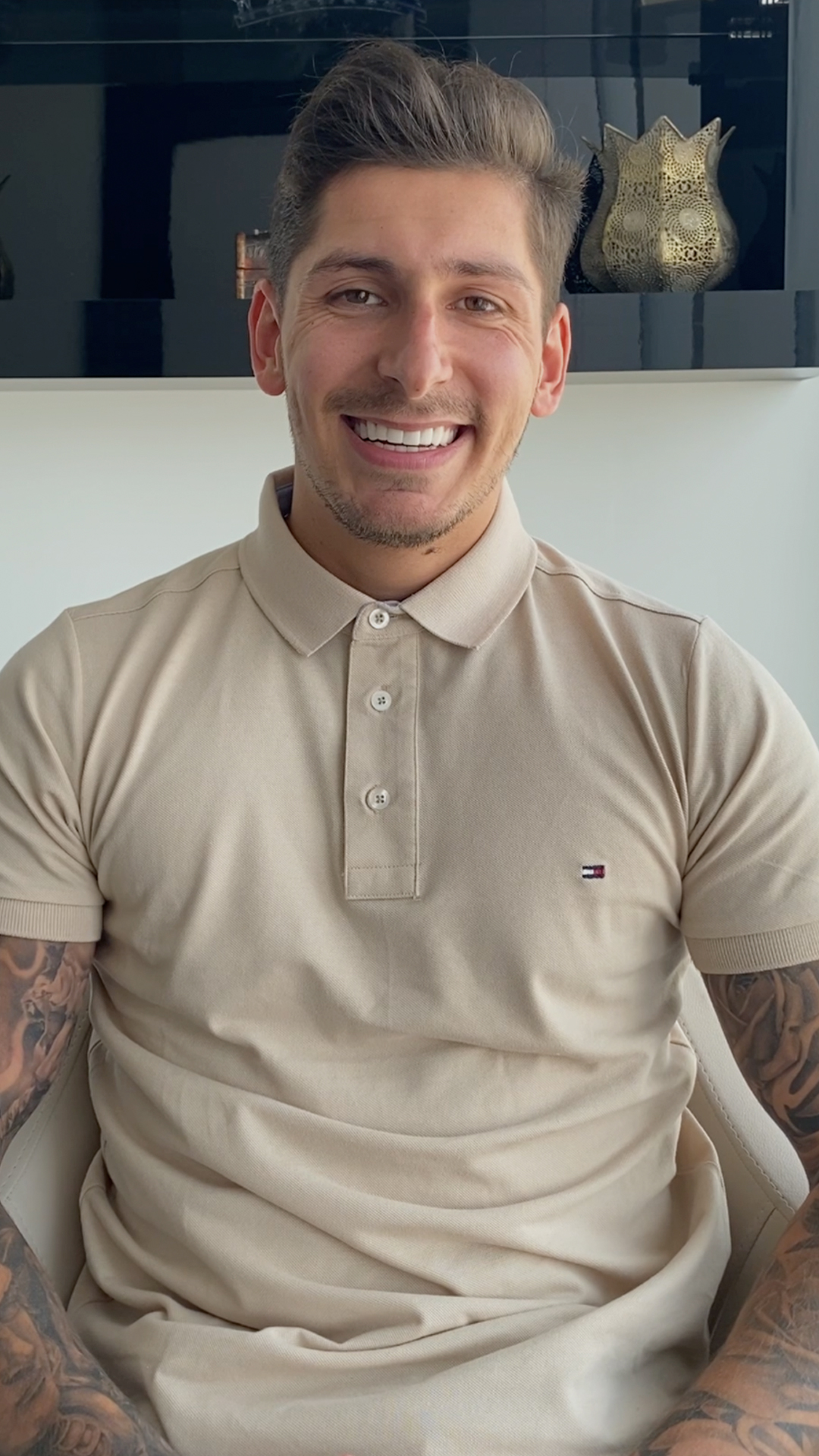 Geoffrey's
 -
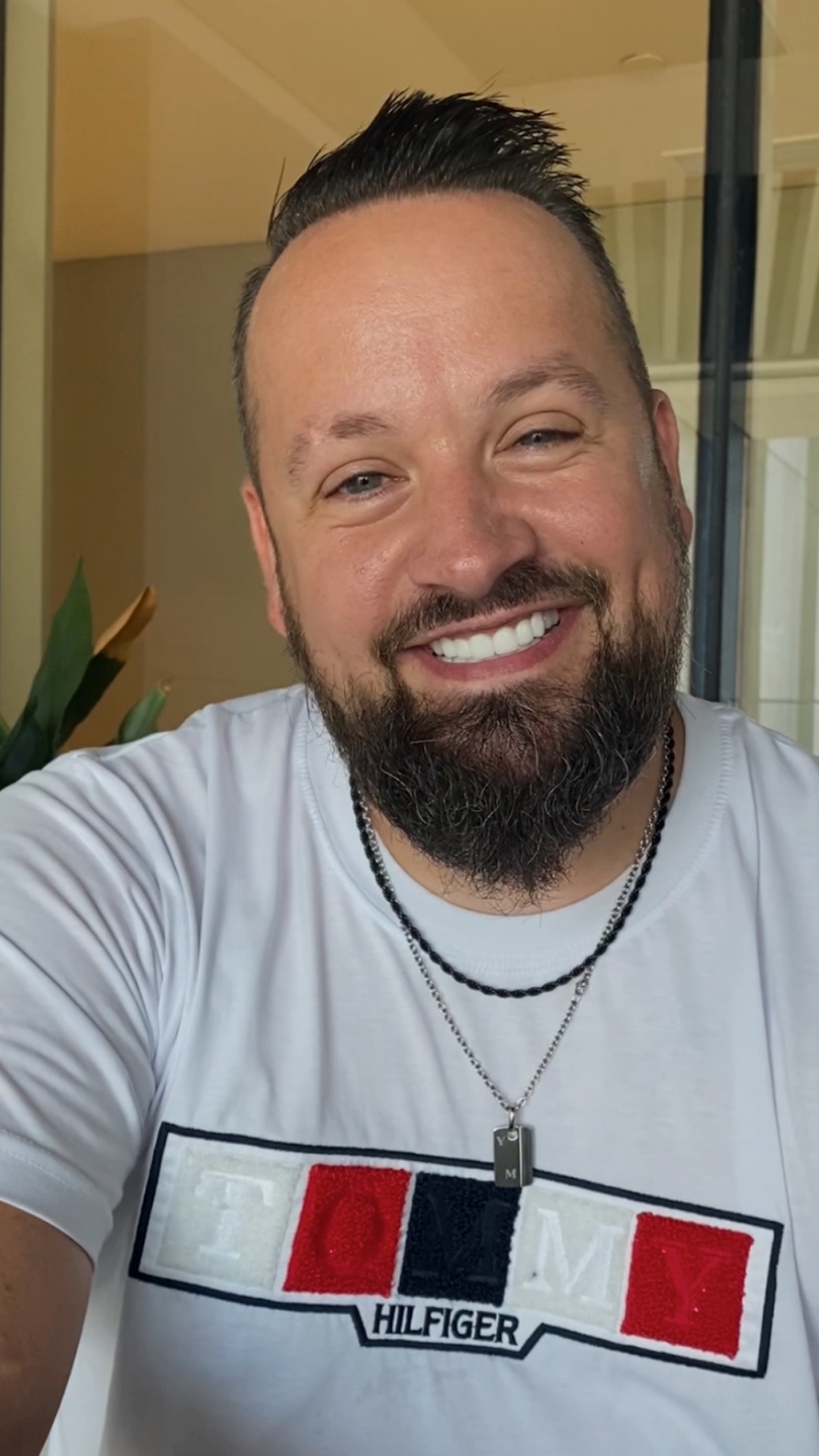 Andrew's
 -
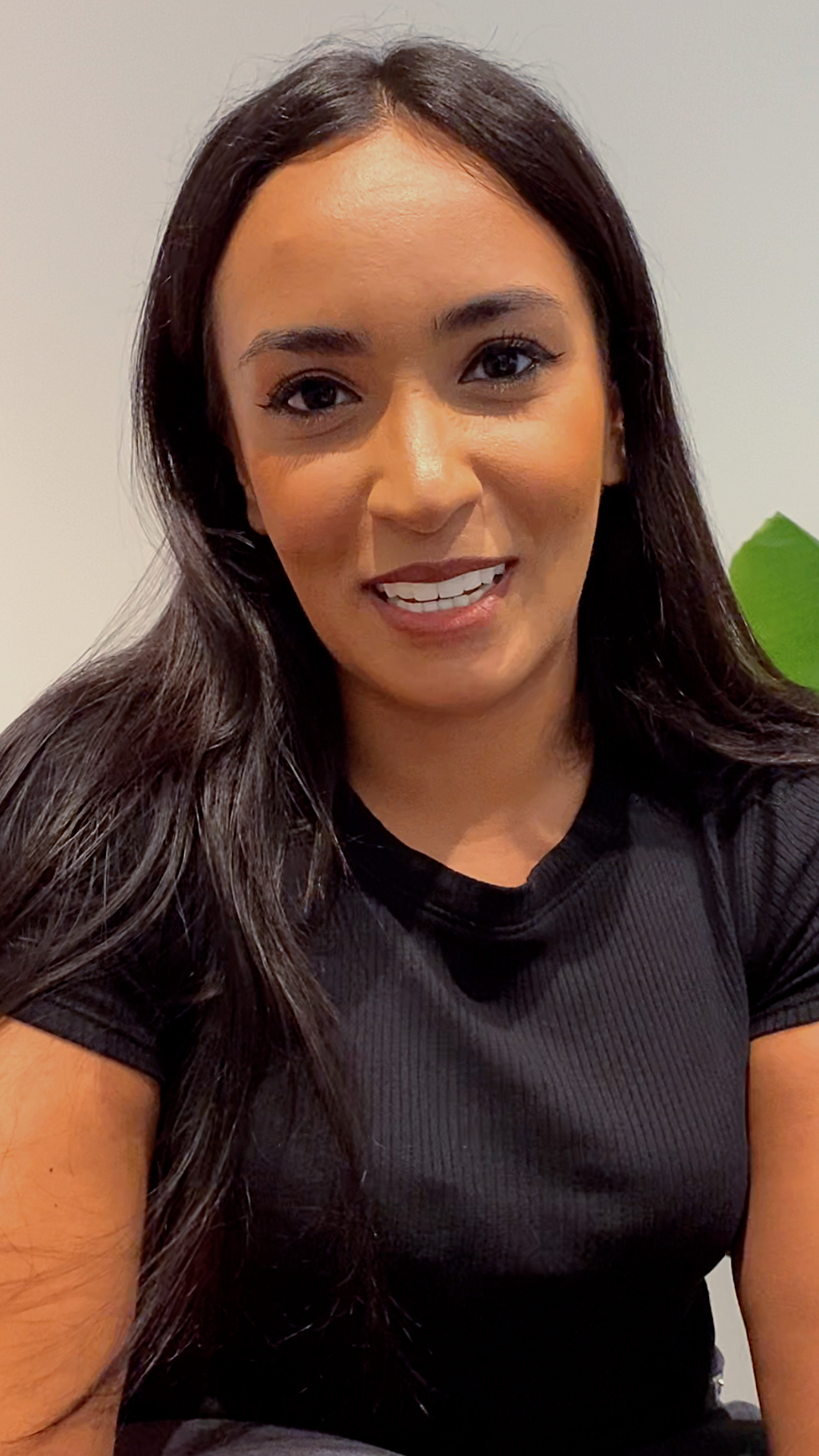 Louisa's
 -
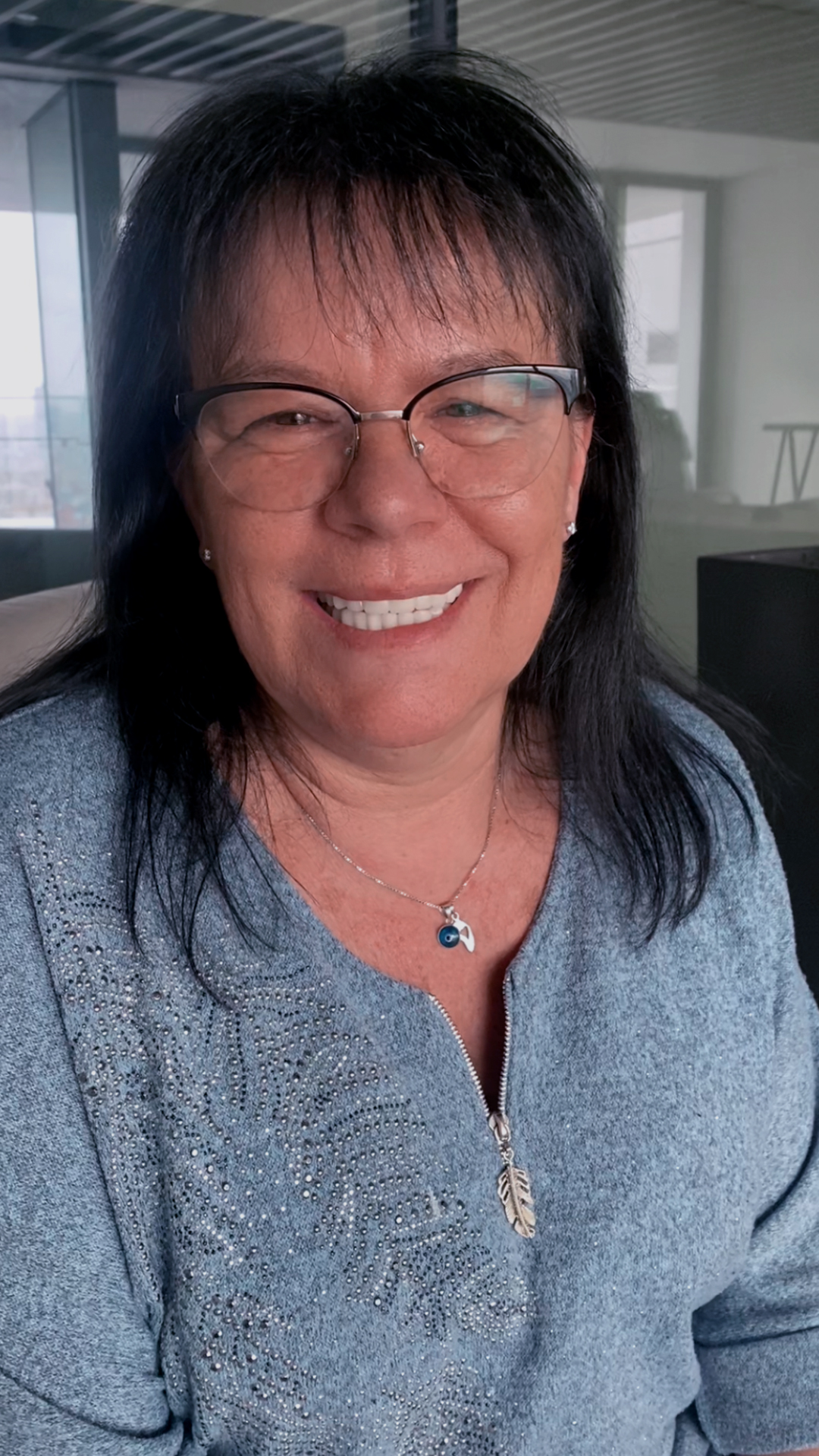 Véronique's


FAQ
Is a Hollywood smile the same thing as a few veneers?
The difference is one of scope. A few veneers put right faults picked out tooth by tooth, each one treated on its own terms and matched to its neighbours. A Hollywood smile sets a shade and an outline for the whole visible zone first, then spreads the restorations within that frame. The dental surgeon at our partner clinic marks out that zone during the examination, and the quote covers the same scope.
Ceramic or composite: how is the material decided?
Two things weigh on it. The review by Lim and colleagues found that composite resin lasts less well than ceramic and runs into more complications, which counts as soon as several visible teeth carry the same kind of restoration. The examination gives the second input, with the state of the walls and how much light each tooth takes. The clinician decides from those two.
What do the long-term follow-ups on ceramic show?
Among the ceramics compared by Klein and colleagues, lithium disilicate records the lowest complication rates, 6.1% on the technical side and 1.9% on the aesthetic side. Those figures describe how laminate veneers already in service behaved, across all the patients followed. The clinician uses them to weigh a risk when choosing the material, tooth by tooth.
How do you get a quote for a Hollywood smile?
You send a few recent photographs, taken face on and then at three-quarters, with your smile open. The dental surgeon at our partner clinic works out a first scope of treatment from them, along with the points to check in the mouth. Body Expert then sends you the quote, free and with no obligation, within 24 hours. The first appointment in Istanbul can still adjust that plan once the teeth have been looked at closely.
What does the stay arranged by Body Expert cover?
It covers the 5-star hotel with nights and breakfast, VIP transfers, a dedicated English-speaking coordinator or interpreter, and follow-up for 12 months once you are home. You book your own flight. The quote sets those items out separately from the treatment plan, so that each one stays readable before you leave.
Who looks after my restorations once I am home?
Your own dentist keeps hold of routine visits and day-to-day maintenance. Alongside that, the English-speaking line stays open for 12 months to the clinician who fitted the restorations, for anything showing up on the gum, on a margin or in the way the teeth meet. That double arrangement means a problem is dealt with by the person who did the work.
Does every visible tooth get a veneer?
The type of restoration is decided tooth by tooth, even though the shade and the outline hold for the whole smile. A tooth with solid walls usually calls for a veneer. A tooth that is fractured, badly broken down or already heavily restored may need full coverage all the way round. The clinician at our partner clinic sorts out those indications during the examination.
Why have this done in Turkey?
In its global survey covering 2024, ISAPS counts Turkey among the destinations where patients from abroad make up the largest share, a sign of settled practice. On the ground, Body Expert hands the treatment plan to the dental surgeon at our partner clinic in Istanbul and frames the stay around it. The free quote lets you set that against having the work done at home, with up to 70% savings.
We discuss your project