Hair transplant techniques
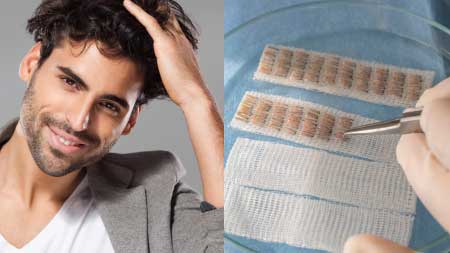
A manual FUE hair transplant is defined by one detail of the operation: the surgeon turns the harvesting punch by hand instead of letting a motor turn it. The punch itself is a hollow cylinder with a sharpened rim, usually 0.7 to 1 mm across, pushed around a follicular unit so that the graft can be lifted out with fine forceps. A motorised punch drives the same cylinder with a variable-speed motor, and a robotic system adds camera guidance to the same task. The surgical principle does not change between them.
Manual extraction is widely promoted as the gentler, more precise option, and priced accordingly. The published comparisons do not support that claim as a general rule. Where hand harvesting has been measured against a powered device, it was slower and cut more follicles, not fewer (Onda et al., 2008). What a hand-turned punch does offer is the ability to correct depth and angle follicle by follicle, which matters on curly hair, on firm scalps and on small, precise cases.
That distinction matters before you compare quotations. Punch diameter, incision depth, scalp texture, follicle curvature and how tired the team becomes across a long day all influence how many usable grafts reach the recipient area. The word “manual” on a treatment plan tells you about one of those variables.

A hair transplant that spares your hairstyle is possible, and several quite different procedures are sold under that heading. In the most common one, a narrow window is clipped at the back of the head, then hidden under the hair lifted above it. In the strictest one, nothing is clipped at all and grafts are removed with the shaft at full length. The two are not interchangeable, and they do not suit the same degree of hair loss.
The wording itself has become a problem. A group of hair restoration surgeons reviewed the published literature, clinic and media pages and the answers given by conversational assistants, and found the same term applied to opposing techniques, which makes informed consent harder to obtain (Jimenez et al., 2026). Their proposal is explicit: whether a procedure counts as shaven or unshaven should depend on the donor harvesting method alone, whatever happens to the recipient area.
This article sets out what each version clips, how large an area it can realistically cover, the extra time and money it takes, and what other people will still be able to see for a few weeks afterwards. If you are weighing up a hair transplant, these are the points to settle before shortlisting a clinic on the strength of the word “unshaven”.

Hair loss and androgenetic alopecia affect millions of people worldwide. Beyond the physical consequences, they can significantly impact self-esteem and confidence. Fortunately, hair transplant techniques have evolved considerably in recent years, offering effective and lasting solutions for regaining a thick, natural head of hair.
Among commonly used approaches are FUE (Follicular Unit Excision) and DHI (Direct Hair Implantation). These terms describe different stages: FUE is a harvesting method, while DHI describes implantation, usually after FUE harvesting. Here, the comparison is between FUE followed by placement into pre-made recipient sites and FUE followed by implanter-pen placement.

A hair transplant in Turkey is a commonly performed operation to treat the effects of androgenetic alopecia in men and women. This procedure involves two areas: the donor area, where the grafts are extracted, and the recipient area, which will then receive hair follicles taken from the donor area. The management of the donor area is a major element to benefit of a safe and successful hair transplant. Find out everything you need to know about the donor area, its preservation, its evaluation, and its impact on the outcome of the procedure.

A robotic hair transplant uses equipment to assist parts of hair restoration surgery, particularly the removal of grafts from the donor scalp. It is a form of follicular unit excision, or FUE, rather than a completely separate way of growing hair. The clinical team still assesses your hair loss, plans the operation and takes responsibility for treatment.
The practical question is whether the proposed system suits your hair and offers a useful advantage in the hands of your surgeon. Robotic assistance does not guarantee better growth, a scar-free scalp or a cheaper operation. Published research includes successful procedures, but limited comparative evidence does not establish that a robot consistently outperforms an experienced team using other FUE instruments.
This guide explains the equipment, what results research can tell you, and how to compare treatment plans and costs before choosing a clinic.
On discute de votre projet