Hair transplant techniques

A graft can contain several hairs, FUE describes how grafts are harvested, and DHI refers to placing them with an implanter pen. Knowing these distinctions helps you separate the quantity in a treatment proposal from the instruments being used and the outcome being discussed. Hair loss terminology matters too: the cause of alopecia needs to be assessed before surgery is considered.
When preparing for a hair transplant in Turkey, it helps to group the terms by what they explain: hair anatomy, the cause of hair loss, the surgical stages and recovery. At Body Expert, this vocabulary supports a more specific discussion with the team about the area you want covered and the donor supply available.

A “stem cell hair transplant” can describe several different procedures, some of which are still being evaluated. Certain research programmes aim to stimulate follicles already present in the scalp, while others explore the development of follicular structures in the laboratory. Published findings do not establish a promise of complete coverage, an endlessly replenished donor supply or an identical response for every patient.
If you are comparing these proposals with a hair transplant in Turkey, first establish what would actually be collected, prepared and administered. A commercial name does not adequately describe a treatment. The diagnosis behind your hair loss, the evidence for that specific procedure and the rules governing its use need clarification before you consider a quotation.

Most recent hair transplant innovations concern the instruments and the preparation of the procedure: implanter pens, sapphire blades, motorised punches, robot-assisted harvesting and close examination of the scalp by trichoscopy. They refine FUE without changing how it works. Alongside them come supporting treatments such as PRP or exosomes, as well as research into hair follicle cloning.
One rule has not moved: transplanted hair is taken from your donor area, which covers the back of the scalp and the sides above the ears, and keeps its characteristics once implanted. No device enlarges that reserve, and the result still depends on the diagnosis, the hairline design and the skill of the team. At Body Expert, our partner clinic performs each hair transplant in Turkey using one of three techniques, FUE, DHI with the Choi pen and Sapphire FUE, and the surgeon chooses the one that suits your case.
The level of evidence differs markedly from one family of innovations to another. Surgical instruments rely on a theoretical model or on small comparative studies, regenerative add-ons on uneven trials, and cloning has not yet left the laboratory.

A hybrid FUE DHI hair transplant brings together, in a single procedure, two ways of implanting grafts that have all been harvested by FUE. The Choi-type implanter used in DHI generally handles the areas where the angle of each hair shows, such as the hairline and the temples. Pre-made incisions then receive, with fine forceps, the grafts intended for the mid-scalp and the crown. The term does not refer to a standardised technique: each team sets its own division of the scalp, and the published literature describes these combinations without showing that they outperform a session carried out with a single placement method.
A combination makes most sense when one plan calls for both a finely designed hairline and coverage of a wide area, which mainly concerns advanced hair loss. It creates no additional grafts, and the donor supply remains the limit of the plan, however the grafts are placed. For a hair transplant in Turkey with Body Expert, the technique is decided after your photos have been reviewed and you have been examined on site, and the surgeon at our partner clinic in Istanbul only opts for a zone-by-zone approach if your scalp lends itself to one.

FUT (follicular unit transplantation) is the strip method of hair transplantation: the surgeon removes a band of scalp from the back of the head, the team cuts it under the microscope into follicular units of one to four hairs, and those grafts are then implanted into the thinning areas. FUE, by contrast, takes each unit out individually with a micro-punch. Both methods produce grafts of comparable quality; what mainly separates them is the mark left on the donor area, a linear scar with FUT and small dot-like scars with FUE (Gupta et al., 2020).
Strip surgery has lost ground to FUE, whose popularity rests on the absence of a linear scar (Garg & Garg, 2021). It still has advocates for a few specific situations, such as extensive hair loss that will call for a large number of grafts over the years, a refusal to shave the donor area, or very curly hair that is harder to extract unit by unit.
At Body Expert, transplants at our partner clinic in Istanbul use classic FUE, Sapphire FUE or DHI, and FUT is not among the techniques we offer. Knowing what the strip involves still helps when you weigh up the techniques proposed to you for a hair transplant in Turkey, and when you need to assess the scar left by an earlier operation.
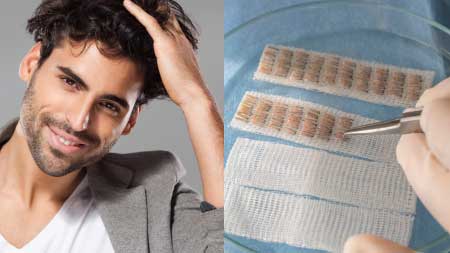
A manual FUE hair transplant is defined by one detail of the operation: the surgeon turns the harvesting punch by hand instead of letting a motor turn it. The punch itself is a hollow cylinder with a sharpened rim, usually 0.7 to 1 mm across, pushed around a follicular unit so that the graft can be lifted out with fine forceps. A motorised punch drives the same cylinder with a variable-speed motor, and a robotic system adds camera guidance to the same task. The surgical principle does not change between them.
Manual extraction is widely promoted as the gentler, more precise option, and priced accordingly. The published comparisons do not support that claim as a general rule. Where hand harvesting has been measured against a powered device, it was slower and cut more follicles, not fewer (Onda et al., 2008). What a hand-turned punch does offer is the ability to correct depth and angle follicle by follicle, which matters on curly hair, on firm scalps and on small, precise cases.
That distinction matters before you compare quotations. Punch diameter, incision depth, scalp texture, follicle curvature and how tired the team becomes across a long day all influence how many usable grafts reach the recipient area. The word “manual” on a treatment plan tells you about one of those variables.
On discute de votre projet