Hair transplant 10 days after: scabs shedding, grafts anchored and everyday life resuming

Ten days after a hair transplant, the scabs have mostly fallen away or come off in the wash, the forehead swelling has gone and the grafted area is still pink. The grafts are now anchored in the skin: in a study that measured how well they resisted pulling, none was still at risk of being dislodged from the ninth day (Bernstein & Rassman, 2006). Day 10 therefore sits just beyond the period when a careless movement could still pull a graft out.
This milestone changes your daily routine: washing can become a little firmer, sleeping positions can be relaxed and several activities return. The skin, however, keeps healing for several more weeks, so direct sun, hard exercise, swimming and anything that rubs the scalp still have to wait. After a hair transplant in Turkey, you spend day 10 at home, around the time you are thinking about going back to work, and your questions are as much about what you can do again as about how your scalp looks.
What does your scalp look like on day 10?
Healing has now passed its most visible phase. At the surface, the tiny incisions where the grafts were placed have closed, as have the small openings in the donor area, and the skin uncovered as the scabs fall stands out in pink against the rest of the scalp. The earlier stages, from the swelling of the first days to the first wash, are covered in our article on a hair transplant 5 days after.
What has gone since the first week
Romera de Blas et al. (2026) report in their review that a scab forming on day 2 or 3 falls off by itself somewhere between day 7 and day 10, provided the scalp is cared for properly. Your day 10 therefore coincides with the end of that window: most scabs have gone, and a few thicker ones may remain over part of the area.
Swelling of the forehead and around the eyes, at its worst on day 2 or 3, has usually gone by day 5 to 7, according to the same review. By day 10 there should be no trace of it, and swelling that lingers or returns is worth a message to the team.
What is still visible
Over the grafted area, the new skin stays pink and may flake slightly while the outer layer rebuilds itself. The short shafts sticking out of each graft are usually still there. They are not new growth, since fresh hairs only emerge after several months, around the fourth month according to the NHS.
A yellowish bruise may still mark the area around the eyes: the 2026 review notes that the bruising that sometimes accompanies swelling can remain visible for 10 to 15 days. At the back of the head, FUE extraction points form small pink dots, often hard to see once the surrounding hair has grown a few millimetres. After a strip procedure (FUT), stitches that do not dissolve are usually removed 10 to 14 days after surgery, according to the NHS.
| Checkpoint | Usual state on day 10 |
|---|---|
| Scabs on the grafted area | Almost all gone |
| Skin colour | Pink, gradually fading |
| Implanted shafts | Still in place |
| Forehead and eyelids | Settled since day 5 to 7 |
| Bruising around the eyes | Sometimes still yellowish |
| Stitches (FUT) | Removed on days 10 to 14 |
Are the grafts secure after ten days?
The published measurements point that way. Bernstein and Rassman (2006) applied a manual pull to a few grafts in each of 42 patients at several points during recovery, to find out when the grafts would no longer come out. Resistance increased over the first week, and in their series the risk of dislodgement had gone by the ninth day.
Their work also sheds light on the part scabs play. In the first days, tearing off a scab that was still stuck down meant tearing out the graft beneath it, hence the authors’ conclusion: crusting prolongs the phase in which a graft can be lost, and preventing it would let patients return to ordinary hair care earlier.
These measurements come from a small group and a single kind of stress, manual pulling. The NHS takes a wider margin: in its view the grafts are not yet secure during the first two weeks, so transplanted hair should be handled with great care until day 14. Until then, both benchmarks lead to the same practical rule: gentle contact is tolerated, while scratching and rubbing are still to be avoided.
Grafts anchored, skin still repairing
Graft anchoring and skin healing move at different speeds. In the classic description of skin repair, the proliferative phase, which closes the wound, forms new blood vessels and rebuilds the outer layer, runs until about the fourteenth day. Remodelling, which then reorganises collagen to restore the tissue’s strength, begins two to three weeks after the injury and can last a year or more (Gonzalez et al., 2016).
On day 10, the skin over the grafts has closed but has not regained its strength. That is why the precautions that protected against pulling grafts out are relaxed, while those that spare new skin from sun, heat and repeated friction stay in place.
Can you touch the grafted area?
Contact with the pads of your fingers, without nails, is compatible with the anchoring measured by day 9, and it is exactly how you wash. Avoid running your hand through your hair all day long, scratching, rubbing with a towel or tugging a shaft to check it holds. The hair transplant guide walks through the stages from extraction to implantation, how grafts are preserved in between and what their survival depends on.
How do you clear the last scabs without pulling them off?
Washing changes as the skin closes. For Romera de Blas et al. (2026), washing technique and pressure are adjusted step by step as re-epithelialisation, the rebuilding of the outer skin layer, progresses, under close follow-up. If your aftercare plan allows it, shampoo can now be worked into the grafted area with small circular movements of the fingertips, which helps softened scabs come away.
Lather the product in your hands before applying it, leave it on for the time the team has given you, then rinse with lukewarm water at a moderate flow. Pat dry with a clean towel or let the hair air-dry. Our feature on hair transplant scabs goes through the steps that soften them before, during and after washing.

Never use a fingernail or tweezers on a stubborn scab. To loosen scabs that stay stuck, the 2026 review mentions moist compresses, scalp soaks or an emollient gel, so ask the team which one suits you before using it. If scabs are still holding on beyond day 14, the authors advise having them assessed, as they can reflect delayed healing and encourage inflammation around the follicles.
From day 9 onwards, a pull no longer dislodged any graft in Bernstein and Rassman’s series, so on day 10 a hair that comes away with a scab is, as a rule, the shaft alone, while the root stays in the skin. The NHS also notes that grafted hair commonly sheds a few weeks after the operation, with regrowth following later.
Do tell the team about a scab pulled off before day 9 that bled, a direct knock to the grafted area or a small piece of tissue visible at the base of a shed hair. Note the date and what happened, then send a sharp photo of the area.
Itching, tightness, numbness: what do you feel on day 10?
Pain from the first days should have gone by now. The 2026 review describes it as generally mild, more marked in the donor area and well controlled by simple painkillers. Pain that returns or gets worse on day 10 does not fit this pattern: the authors list increasing pain among the signs that can point to infection, and it should be reported.
Itching, on the other hand, may still be noticeable at this stage. According to Romera de Blas et al., three causes combine: scabs coming away, a dry scalp and an outer skin layer that is being rebuilt. Common during the early healing phase, it starts in the first week, fades within days to a few weeks and lasts for months in only a small share of patients. Pre-existing seborrhoeic dermatitis or a harsh cleanser makes it worse.
To ease it without scratching, the authors list saline sprays, gentle washing, a suitable moisturising lotion and cool compresses. If the itch becomes intense or persists, the doctor may consider an antihistamine tablet or a mild steroid cream, after ruling out folliculitis or a reaction to a product.
A numb patch, pins and needles or, conversely, skin that is more sensitive to touch can also persist, especially on the donor side. These changes come from the small skin nerves that each tiny extraction cuts through. They usually settle, and when they linger, they generally clear completely within four to eight months. The review cites a large FUE series in which about 2% of patients described long-lasting numbness or tingling, mostly over the temples or the back of the scalp.
Tightness, finally, is one of the after-effects the NHS describes for the first few days, along with a sore, puffy scalp. By day 10 it has normally eased a good deal, and if it is getting stronger, mention it in your next message to the team.
What can you start again on day 10, and what still has to wait?
The timings below are common benchmarks in practice, which the team following you adjusts to the size of the grafted area and to the way your skin is healing. Day 10 mainly brings back everyday routines; activities that make you sweat, soak the scalp for long periods or expose it to the sun come later.
| Activity | Benchmark on day 10 |
|---|---|
| Washing the grafted area | Gentle fingertip massage |
| Sleep | Relaxed position, if agreed |
| Desk work | Return can be considered |
| Loose cap | Short outings, if agreed |
| Walking | Daily, without pushing |
| Gentle cardio | Once the scabs have gone |
| Heavy weights, contact sport | After the first month |
| Pool, sea, sauna | After the first month |
| Direct sun | No, wear a wide hat |
Sleep
Keeping your head raised mainly served to limit the swelling of the first days, which has since settled, and anchoring makes contact with the pillow far less risky for the grafts. You can ask the team whether you can return to your usual positions, going back to your side before your front, which presses the hairline into the pillowcase. For pillows and bedding, see our guidance on sleeping after a hair transplant.

Work and going out
The NHS says you may need one to two weeks off work after a hair transplant. On day 10 you are within that range: a desk job can generally resume, while work involving dust, heat or a helmet often needs a few more days. For going out, a loose cap that does not grip the scalp can be discussed from now on for short trips, with the team’s agreement.
Exercise
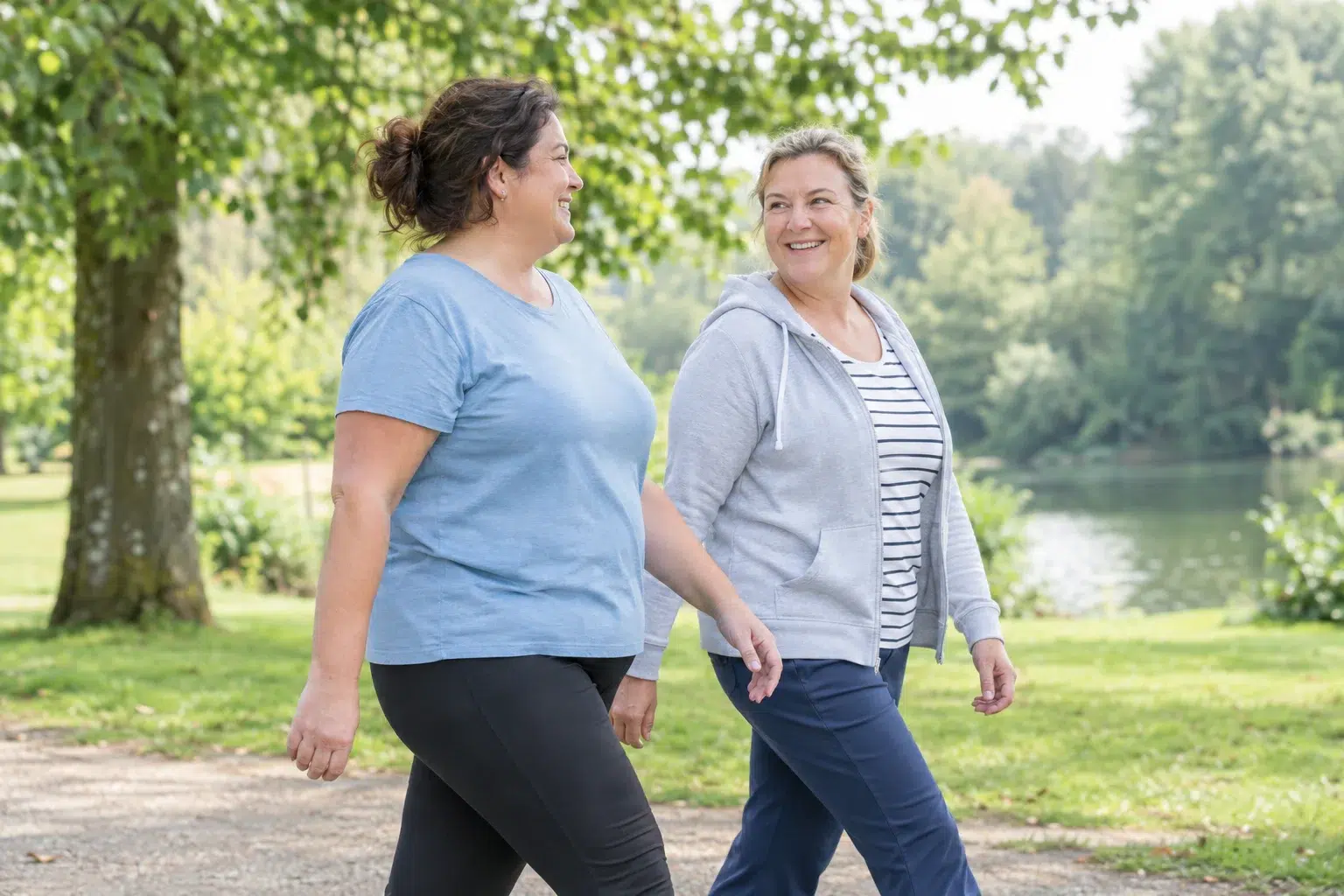
On day 10, physical activity can start to build up in stages. Once the scabs have gone and the grafted area is dry, with no oozing, gentle cardio can be discussed with the team, at a moderate intensity that keeps sweating down, whereas heavy lifting, swimming and any sport that risks a blow to the head are put off until after the first month. The NHS page also warns that you may be asked to scale back exercise throughout the first month, with scarring in mind. Our feature on exercise after a hair transplant gives benchmarks for each discipline, from running to weight training.
Sex
Sexual activity can resume gradually from this stage, provided nothing presses on or rubs the grafted area and the exertion stays moderate. Our page on sex after a hair transplant sets out this timeline week by week.
Sun, smoking and alcohol
Direct sun is still best avoided on skin that is finishing closing: a wide hat that does not touch the grafts spares you from rubbing a cream into such new skin, and sunscreen only takes over later, with the team’s agreement. Romera de Blas and colleagues list smoking among the risk factors for complications; the usual benchmark is not to smoke until at least day 14, and, where possible, to remain smoke-free until the first month is over. As for alcohol, our team waits until any medication prescribed after surgery is finished, and only considers an occasional drink from the third week.

On day 10, which signs fall outside normal healing?
Normal healing shows in its direction: each day there are fewer scabs, the skin is paler and the sensations settle. A step backwards, or a new symptom, calls for prompt contact.
| Sign on day 10 | What to do |
|---|---|
| Many scabs still there on day 14 | Photos to the team, assessment |
| Thick black scab, oozing | Contact the team the same day |
| Small spots around the hairs | Photo, without squeezing them |
| Pain or redness getting worse | Urgent GP appointment or NHS 111 |
| Fever, pus, tender glands | Medical advice straight away |
Red bumps or small pustules centred on the follicles suggest folliculitis. According to Romera de Blas and colleagues, it usually begins within the first month, one to four weeks after surgery, and a large multicentre study found it in about 12% of patients, affecting the donor area and the grafted area alike. It can be sterile or infected, and the doctor decides between local care and antibiotic treatment.
True infection remains rare: most published studies put it below 1% of patients. At this stage it mainly shows as a reversal in progress, with pain that comes back, swelling, redness creeping into healthy skin around the operated area, honey-yellow crusts, pus or tender glands. For a cut that is swollen, red and becoming more painful, that has pus coming out of it, or that leaves you feverish or generally unwell, the NHS recommends an urgent GP appointment or a call to NHS 111.

A rare complication, skin damage caused by a lack of blood supply first shows, according to the review, as dark, thick scabs in the first days, along with discharge that keeps increasing. When these scabs come away, around the second week, they can reveal an erosion or a small open wound. This picture calls for photos and a prompt examination, because early care limits how far it spreads.
What happens after day 10?
The weeks that follow change how the hair looks more than how the skin looks. Some of the transplanted hairs shed during this period, which the NHS describes as common, and this shedding comes before regrowth. Our article on a hair transplant 1 month after explains why the shafts fall out and what this stage means for what comes next.
To place these stages on the way to the final result, our page on the hair transplant timeline follows regrowth month by month. If you were using a hair loss treatment before surgery, such as minoxidil or finasteride, the doctor decides when you can restart it, depending on how your scalp is healing.

Your day 10 photos, reviewed by our team
This stage is part of the 12-month post-operative follow-up, carried out remotely, included in the Body Expert package, and you can still reach your dedicated English-speaking patient coordinator once you are back home. With most scabs gone, day 10 is a good moment for a set of photos: the doctors at our partner clinic can then judge the state of the skin in both operated areas, no longer hidden by scabs.
Photograph your scalp in daylight, facing the camera, in both profiles, from the top and from the back, with a mix of wide shots and close-ups. Say which day you have reached, what you are applying and what you feel. If a fever, pus or an area turning dark appears, do not wait for our reply: a doctor close to home can examine you, ideally with your operation report to hand.
If your hair transplant in Istanbul is still at the planning stage, you can raise these questions about remote follow-up and the photos expected after your return as soon as you request a quote, which we send free of charge and with no obligation within 24 hours.
Sources
Bernstein, R. M., & Rassman, W. R. (2006). Graft anchoring in hair transplantation. Dermatologic Surgery, 32(2), 198-204. https://doi.org/10.1111/j.1524-4725.2006.32033.x
Gonzalez, A. C. de O., Costa, T. F., Andrade, Z. de A., & Medrado, A. R. A. P. (2016). Wound healing – A literature review. Anais Brasileiros de Dermatologia, 91(5), 614-620. https://doi.org/10.1590/abd1806-4841.20164741
National Health Service. (2023, September 29). Hair transplant. NHS. https://www.nhs.uk/tests-and-treatments/cosmetic-procedures/cosmetic-surgery/hair-transplant/
National Health Service. (2026, April 2). Cuts and grazes. NHS. https://www.nhs.uk/conditions/cuts-and-grazes/
Romera de Blas, C., Vega Díez, D., Ricart Vayá, J. M., & Gómez Zubiaur, A. (2026). Complications in follicular unit excision hair transplantation: Current evidence and practical approaches. Frontiers in Medicine, 13, 1750989. https://doi.org/10.3389/fmed.2026.1750989